ter Meulen Jan, van den Brink Edward N, Poon Leo L M, Marissen Wilfred E, Leung Cynthia S W, Cox Freek, Cheung Chung Y, Bakker Arjen Q, Bogaards Johannes A, van Deventer Els, Preiser Wolfgang, Doerr Hans Wilhelm, Chow Vincent T, de Kruif John, Peiris Joseph S M, Goudsmit Jaap
Crucell Holland B.V., Leiden, Netherlands.
PLoS Med. 2006 Jul;3(7):e237. doi: 10.1371/journal.pmed.0030237.
Experimental animal data show that protection against severe acute respiratory syndrome coronavirus (SARS-CoV) infection with human monoclonal antibodies (mAbs) is feasible. For an effective immune prophylaxis in humans, broad coverage of different strains of SARS-CoV and control of potential neutralization escape variants will be required. Combinations of virus-neutralizing, noncompeting mAbs may have these properties.
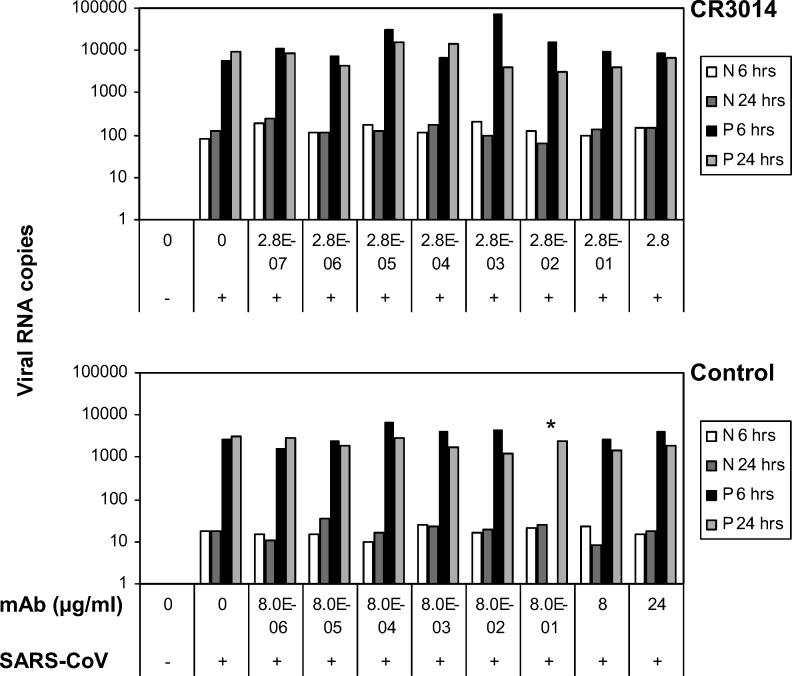
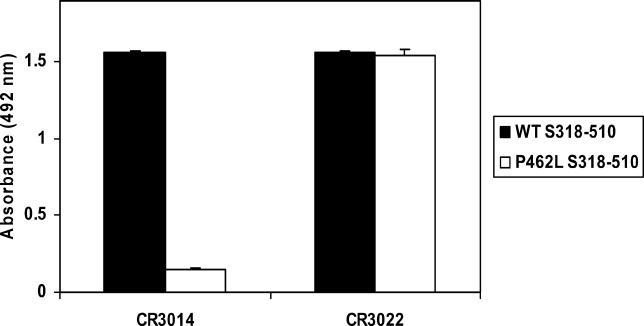
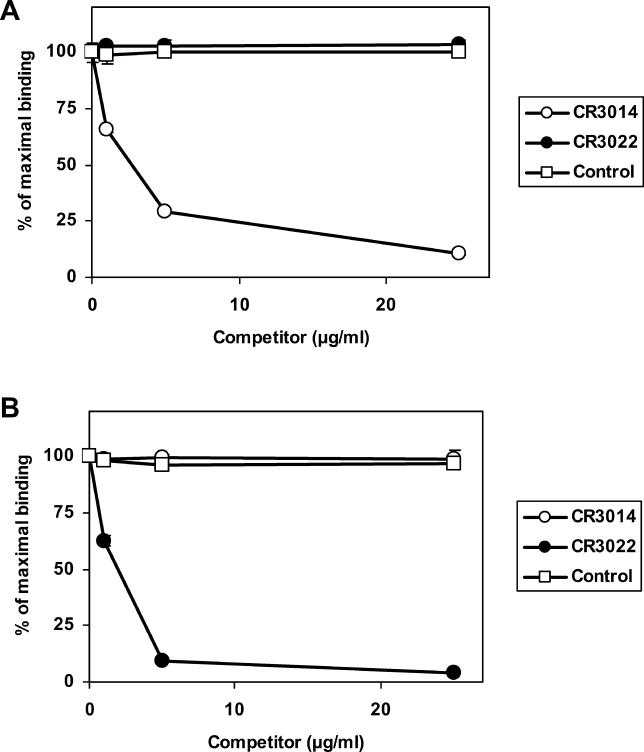
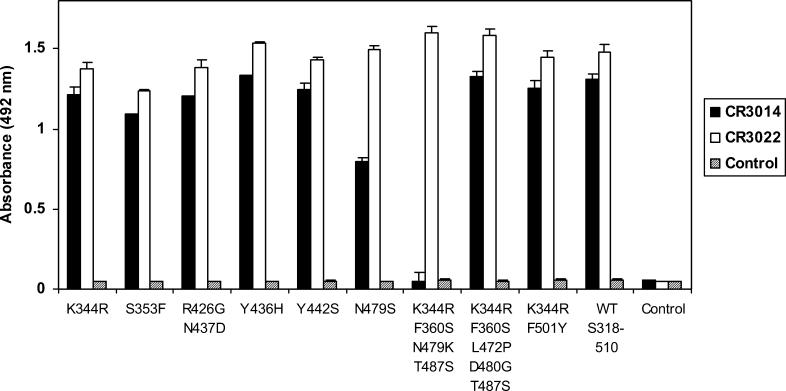
Human mAb CR3014 has been shown to completely prevent lung pathology and abolish pharyngeal shedding of SARS-CoV in infected ferrets. We generated in vitro SARS-CoV variants escaping neutralization by CR3014, which all had a single P462L mutation in the glycoprotein spike (S) of the escape virus. In vitro experiments confirmed that binding of CR3014 to a recombinant S fragment (amino acid residues 318-510) harboring this mutation was abolished. We therefore screened an antibody-phage library derived from blood of a convalescent SARS patient for antibodies complementary to CR3014. A novel mAb, CR3022, was identified that neutralized CR3014 escape viruses, did not compete with CR3014 for binding to recombinant S1 fragments, and bound to S1 fragments derived from the civet cat SARS-CoV-like strain SZ3. No escape variants could be generated with CR3022. The mixture of both mAbs showed neutralization of SARS-CoV in a synergistic fashion by recognizing different epitopes on the receptor-binding domain. Dose reduction indices of 4.5 and 20.5 were observed for CR3014 and CR3022, respectively, at 100% neutralization. Because enhancement of SARS-CoV infection by subneutralizing antibody concentrations is of concern, we show here that anti-SARS-CoV antibodies do not convert the abortive infection of primary human macrophages by SARS-CoV into a productive one.
The combination of two noncompeting human mAbs CR3014 and CR3022 potentially controls immune escape and extends the breadth of protection. At the same time, synergy between CR3014 and CR3022 may allow for a lower total antibody dose to be administered for passive immune prophylaxis of SARS-CoV infection.
实验动物数据表明,用人源单克隆抗体(mAb)预防严重急性呼吸综合征冠状病毒(SARS-CoV)感染是可行的。要在人类中实现有效的免疫预防,需要广泛覆盖不同株的SARS-CoV并控制潜在的中和逃逸变异体。病毒中和性、非竞争性单克隆抗体的组合可能具备这些特性。
人源单克隆抗体CR3014已被证明能完全预防感染雪貂的肺部病变并消除SARS-CoV的咽部脱落。我们在体外产生了能逃避CR3014中和作用的SARS-CoV变异体,这些变异体在逃逸病毒的糖蛋白刺突(S)上均有单个P462L突变。体外实验证实,CR3014与携带该突变的重组S片段(氨基酸残基318 - 510)的结合被消除。因此,我们从一名SARS康复患者的血液来源的抗体噬菌体文库中筛选与CR3014互补的抗体。鉴定出一种新型单克隆抗体CR3022,它能中和CR3014逃逸病毒,不与CR3014竞争结合重组S1片段,并能结合源自果子狸SARS-CoV样毒株SZ3的S1片段。用CR3022无法产生逃逸变异体。两种单克隆抗体的混合物通过识别受体结合域上的不同表位,以协同方式中和SARS-CoV。在100%中和时,CR3014和CR3022的剂量降低指数分别为4.5和20.5。由于亚中和抗体浓度增强SARS-CoV感染令人担忧,我们在此表明抗SARS-CoV抗体不会将SARS-CoV对原代人巨噬细胞的流产感染转变为有 productive 的感染。
两种非竞争性人源单克隆抗体CR3014和CR3022的组合可能控制免疫逃逸并扩大保护范围。同时,CR3014和CR3022之间的协同作用可能允许在SARS-CoV感染的被动免疫预防中使用更低的总抗体剂量。