Cankar Katarina, Stebih Dejan, Dreo Tanja, Zel Jana, Gruden Kristina
Department of Plant Physiology and Biotechnology, National Institute of Biology, Vecna pot 111, 1000 Ljubljana, Slovenia.
BMC Biotechnol. 2006 Aug 14;6:37. doi: 10.1186/1472-6750-6-37.
Real-time PCR is the technique of choice for nucleic acid quantification. In the field of detection of genetically modified organisms (GMOs) quantification of biotech products may be required to fulfil legislative requirements. However, successful quantification depends crucially on the quality of the sample DNA analyzed. Methods for GMO detection are generally validated on certified reference materials that are in the form of powdered grain material, while detection in routine laboratories must be performed on a wide variety of sample matrixes. Due to food processing, the DNA in sample matrixes can be present in low amounts and also degraded. In addition, molecules of plant origin or from other sources that affect PCR amplification of samples will influence the reliability of the quantification. Further, the wide variety of sample matrixes presents a challenge for detection laboratories. The extraction method must ensure high yield and quality of the DNA obtained and must be carefully selected, since even components of DNA extraction solutions can influence PCR reactions. GMO quantification is based on a standard curve, therefore similarity of PCR efficiency for the sample and standard reference material is a prerequisite for exact quantification. Little information on the performance of real-time PCR on samples of different matrixes is available.
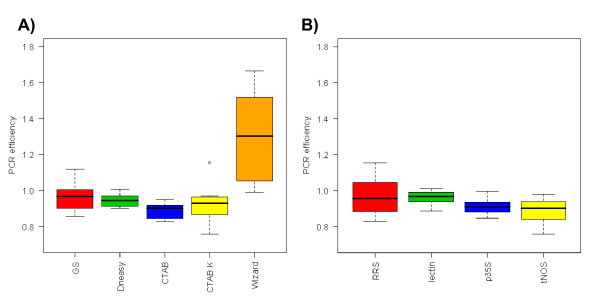
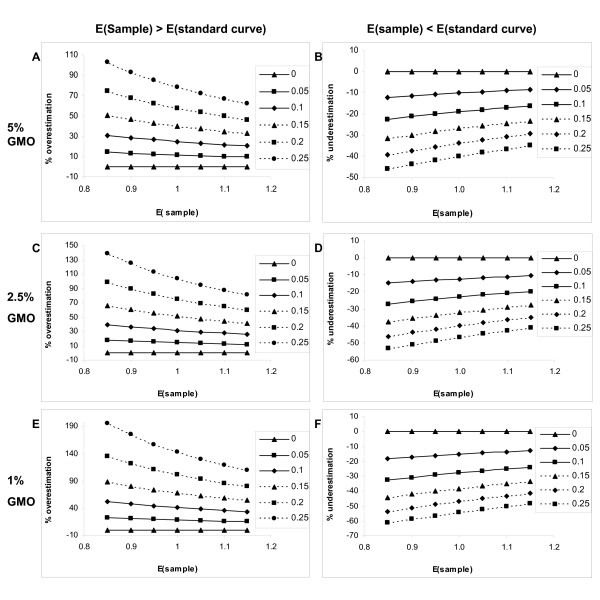
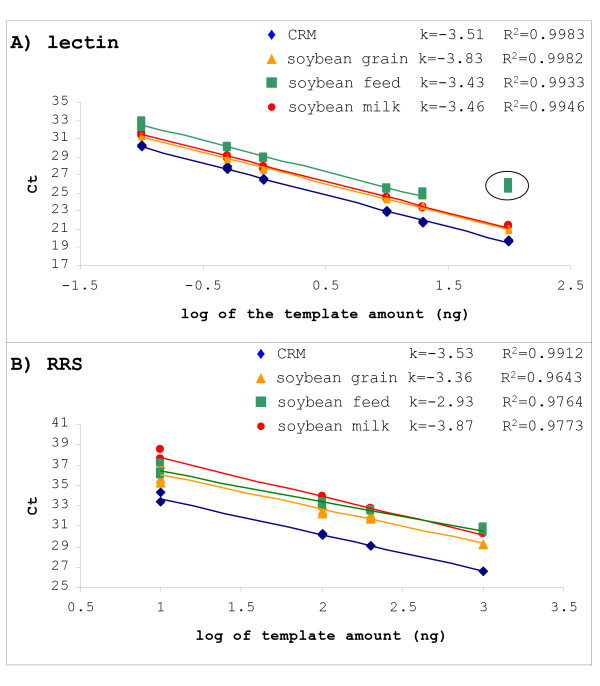
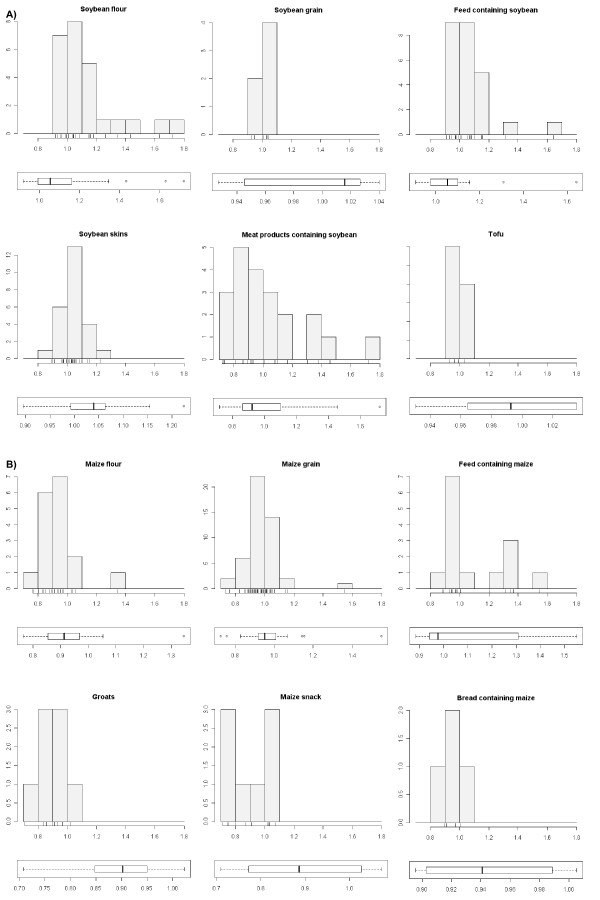
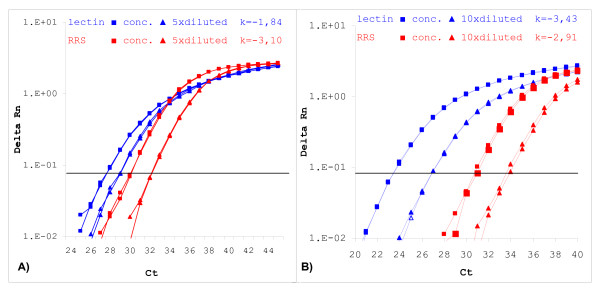
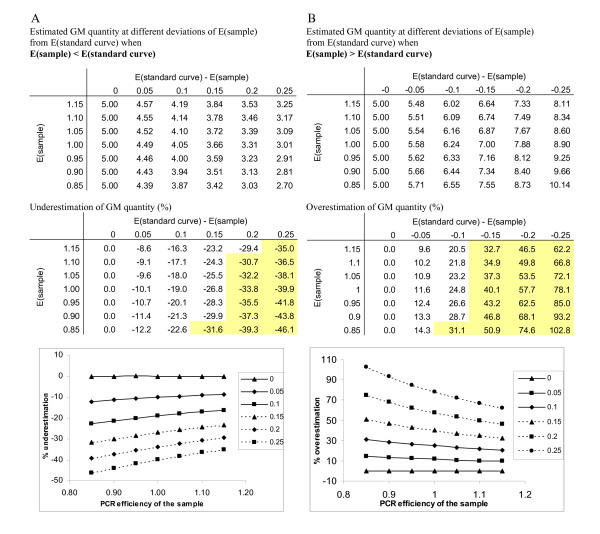
Five commonly used DNA extraction techniques were compared and their suitability for quantitative analysis was assessed. The effect of sample matrix on nucleic acid quantification was assessed by comparing 4 maize and 4 soybean matrixes. In addition 205 maize and soybean samples from routine analysis were analyzed for PCR efficiency to assess variability of PCR performance within each sample matrix. Together with the amount of DNA needed for reliable quantification, PCR efficiency is the crucial parameter determining the reliability of quantitative results, therefore it was chosen as the primary criterion by which to evaluate the quality and performance on different matrixes and extraction techniques. The effect of PCR efficiency on the resulting GMO content is demonstrated.
The crucial influence of extraction technique and sample matrix properties on the results of GMO quantification is demonstrated. Appropriate extraction techniques for each matrix need to be determined to achieve accurate DNA quantification. Nevertheless, as it is shown that in the area of food and feed testing matrix with certain specificities is impossible to define strict quality controls need to be introduced to monitor PCR. The results of our study are also applicable to other fields of quantitative testing by real-time PCR.
实时荧光定量PCR是核酸定量的首选技术。在转基因生物(GMO)检测领域,可能需要对生物技术产品进行定量以满足法规要求。然而,成功的定量分析关键取决于所分析样本DNA的质量。转基因生物检测方法通常在以粉末状谷物材料形式存在的认证参考物质上进行验证,而常规实验室中的检测必须在多种样本基质上进行。由于食品加工,样本基质中的DNA含量可能很低且会降解。此外,影响样本PCR扩增的植物来源或其他来源的分子会影响定量的可靠性。此外,多种样本基质给检测实验室带来了挑战。提取方法必须确保获得的DNA产量高且质量好,并且必须仔细选择,因为即使是DNA提取溶液的成分也会影响PCR反应。转基因生物定量基于标准曲线,因此样本与标准参考物质的PCR效率相似性是准确定量的前提。关于实时荧光定量PCR在不同基质样本上性能的信息很少。
比较了五种常用的DNA提取技术,并评估了它们对定量分析的适用性。通过比较4种玉米和4种大豆基质评估了样本基质对核酸定量的影响。此外,对205份来自常规分析的玉米和大豆样本进行了PCR效率分析,以评估每个样本基质内PCR性能的变异性。与可靠定量所需的DNA量一起,PCR效率是决定定量结果可靠性的关键参数,因此它被选为评估不同基质和提取技术的质量和性能的主要标准。展示了PCR效率对所得转基因生物含量的影响。
证明了提取技术和样本基质特性对转基因生物定量结果的关键影响。需要确定适合每种基质的提取技术以实现准确的DNA定量。然而,正如所示,在食品和饲料检测领域,具有某些特定特性的基质无法定义,需要引入严格的质量控制来监测PCR。我们的研究结果也适用于实时荧光定量PCR的其他定量检测领域。