Cannegieter Suzanne C, Doggen Carine J M, van Houwelingen Hans C, Rosendaal Frits R
Department of Clinical Epidemiology, Leiden University Medical Center, Leiden, Netherlands.
PLoS Med. 2006 Aug;3(8):e307. doi: 10.1371/journal.pmed.0030307.
Recent studies have indicated an increased risk of venous thrombosis after air travel. Nevertheless, questions on the magnitude of risk, the underlying mechanism, and modifying factors remain unanswered.
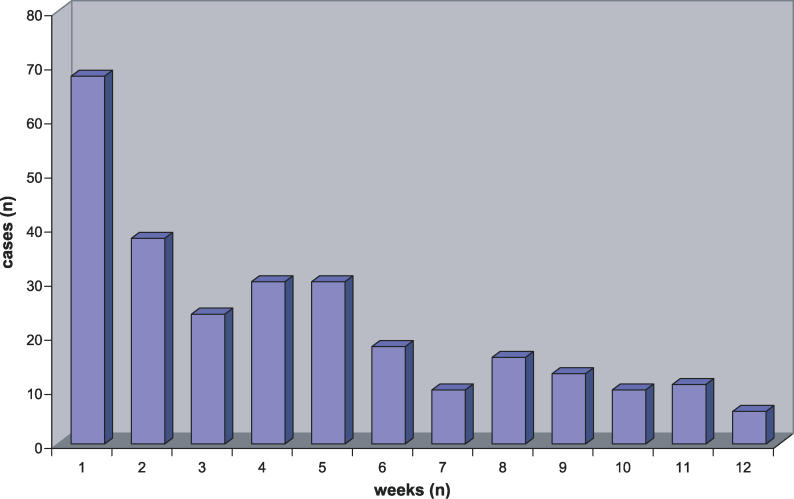
We studied the effect of various modes and duration of travel on the risk of venous thrombosis in a large ongoing case-control study on risk factors for venous thrombosis in an unselected population (MEGA study). We also assessed the combined effect of travel and prothrombotic mutations, body mass index, height, and oral contraceptive use. Since March 1999, consecutive patients younger than 70 y with a first venous thrombosis have been invited to participate in the study, with their partners serving as matched control individuals. Information has been collected on acquired and genetic risk factors for venous thrombosis. Of 1,906 patients, 233 had traveled for more than 4 h in the 8 wk preceding the event. Traveling in general was found to increase the risk of venous thrombosis 2-fold (odds ratio [OR] 2.1; 95% confidence interval [CI] 1.5-3.0). The risk of flying was similar to the risks of traveling by car, bus, or train. The risk was highest in the first week after traveling. Travel by car, bus, or train led to a high relative risk of thrombosis in individuals with factor V Leiden (OR 8.1; 95% CI 2.7-24.7), in those who had a body mass index of more than 30 kg/m(2) (OR 9.9; 95% CI 3.6-27.6), in those who were more than 1.90 m tall (OR 4.7; 95% CI 1.4-15.4), and in those who used oral contraceptives (estimated OR > 20). For air travel these synergistic findings were more apparent, while people shorter than 1.60 m had an increased risk of thrombosis after air travel (OR 4.9; 95% CI 0.9-25.6) as well.
The risk of venous thrombosis after travel is moderately increased for all modes of travel. Subgroups exist in which the risk is highly increased.
近期研究表明,航空旅行后静脉血栓形成风险增加。然而,关于风险程度、潜在机制及影响因素等问题仍未得到解答。
在一项正在进行的针对未选择人群静脉血栓形成危险因素的大型病例对照研究(MEGA研究)中,我们研究了不同旅行方式和旅行时长对静脉血栓形成风险的影响。我们还评估了旅行与血栓前突变、体重指数、身高及口服避孕药使用之间的联合作用。自1999年3月起,连续纳入年龄小于70岁的首次发生静脉血栓的患者参与研究,其配偶作为匹配对照个体。收集了静脉血栓形成的获得性和遗传危险因素信息。在1906例患者中,233例在事件发生前8周内旅行超过4小时。总体而言,旅行会使静脉血栓形成风险增加2倍(比值比[OR]2.1;95%置信区间[CI]1.5 - 3.0)。乘飞机旅行的风险与乘汽车、公共汽车或火车旅行的风险相似。旅行后第一周风险最高。对于携带因子V莱顿突变的个体,乘汽车、公共汽车或火车旅行会导致较高的血栓形成相对风险(OR 8.1;95% CI 2.7 -24.7),体重指数超过30 kg/m²的个体(OR 9.9;95% CI 3.6 - 27.6),身高超过1.90 m的个体(OR 4.7;95% CI 1.4 - 15.4)以及使用口服避孕药的个体(估计OR>20)。对于航空旅行,这些协同发现更为明显,同时身高低于1.60 m的人在航空旅行后血栓形成风险也增加(OR 4.9;95% CI 0.9 - 25.6)。
所有旅行方式后静脉血栓形成风险均适度增加。存在风险显著增加的亚组。