Osman Raed, L'Allier Philippe L, Elgharib Nader, Tardif Jean-Claude
Department of Medicine, Montreal Heart Institute, University of Montreal, Montreal, Quebec, Canada.
Vasc Health Risk Manag. 2006;2(3):221-37. doi: 10.2147/vhrm.2006.2.3.221.
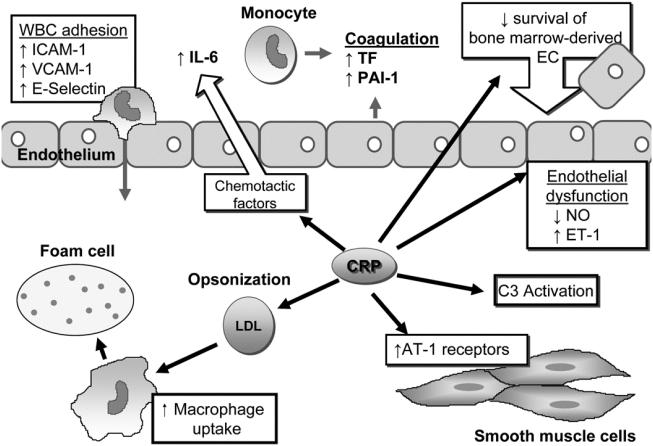
Clinicians involved in the care of patients with cardiovascular conditions have recently been confronted with an important body of literature linking inflammation and cardiovascular disease. Indeed, the level of systemic inflammation as measured by circulating levels of C-reactive protein (CRP) has been linked to prognosis in patients with atherosclerotic disease, congestive heart failure, atrial fibrillation, myocarditis, aortic valve disease and heart transplantation. In addition, a number of basic science reports suggest an active role for CRP in the pathophysiology of cardiovascular diseases. This article explores the potential role of CRP in disease initiation, progression, and clinical manifestations and reviews its role in the prediction of future events in clinical practice. Therapeutic interventions to decrease circulating levels of CRP are also reviewed.
参与心血管疾病患者护理的临床医生最近面临着大量将炎症与心血管疾病联系起来的文献。事实上,通过循环中C反应蛋白(CRP)水平测量的全身炎症水平已与动脉粥样硬化疾病、充血性心力衰竭、心房颤动、心肌炎、主动脉瓣疾病和心脏移植患者的预后相关。此外,一些基础科学报告表明CRP在心血管疾病的病理生理学中发挥着积极作用。本文探讨了CRP在疾病发生、发展和临床表现中的潜在作用,并回顾了其在临床实践中预测未来事件的作用。还综述了降低循环中CRP水平的治疗干预措施。