Center for East West Medicine, Department of Medicine and Division of General Internal Medicine and Health Services Research, David Geffen School of Medicine, University of California at Los Angeles Los Angeles, CA 90095, USA and RAND Corporation, Santa Monica, CA 90407, USA.
Evid Based Complement Alternat Med. 2007 Mar;4(1):107-13. doi: 10.1093/ecam/nel050. Epub 2006 Aug 12.
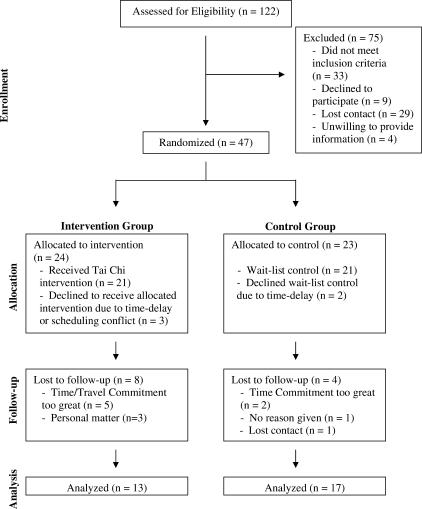
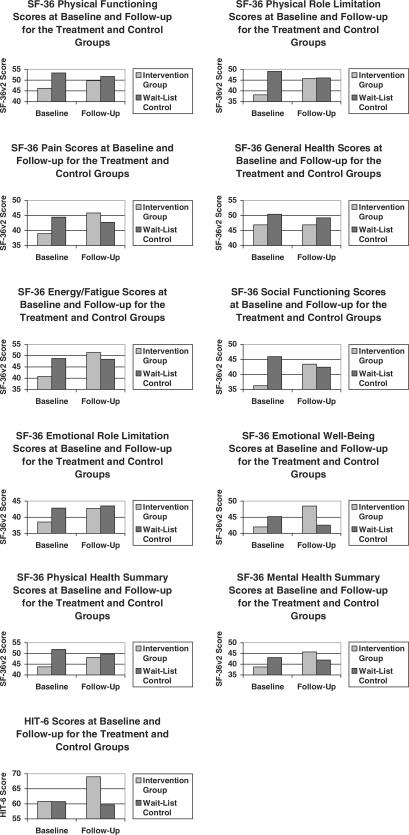
This study examined whether a traditional low-impact mind-body exercise, Tai Chi, affects health-related quality-of-life (HRQOL) and headache impact in an adult population suffering from tension-type headaches. Forty-seven participants were randomly assigned to either a 15 week intervention program of Tai Chi instruction or a wait-list control group. HRQOL (SF-36v2) and headache status (HIT-6trade mark) were obtained at baseline and at 5, 10 and 15 weeks post-baseline during the intervention period. Statistically significant (P < 0.05) improvements in favor of the intervention were present for the HIT score and the SF-36 pain, energy/fatigue, social functioning, emotional well-being and mental health summary scores. A 15 week intervention of Tai Chi practice was effective in reducing headache impact and also effective in improving perceptions of some aspects of physical and mental health.
本研究旨在探讨传统低强度身心锻炼——太极拳是否会影响患有紧张型头痛的成年人的健康相关生活质量(HRQOL)和头痛影响。47 名参与者被随机分配到太极拳指导 15 周干预组或候补名单对照组。在干预期间,基线时以及基线后 5、10 和 15 周时,使用 SF-36v2 和 HIT-6trade mark 获取 HRQOL(SF-36v2)和头痛状况。干预组在 HIT 评分和 SF-36 疼痛、能量/疲劳、社会功能、情绪健康和心理健康综合评分方面有统计学意义上的显著改善(P<0.05)。15 周的太极拳练习干预有效降低了头痛的影响,并且对改善身体和心理健康的某些方面的认知也有效。