Mouatcho Joel C, Hargreaves Keith, Koekemoer Lizette L, Brooke Basil D, Oliver Shüne V, Hunt Richard H, Coetzee Maureen
Vector Control Reference Unit, National Institute for Communicable Diseases, NHLS, Private Bag X4, Sandringham, Johannesburg 2131, South Africa.
Malar J. 2007 Mar 14;6:30. doi: 10.1186/1475-2875-6-30.
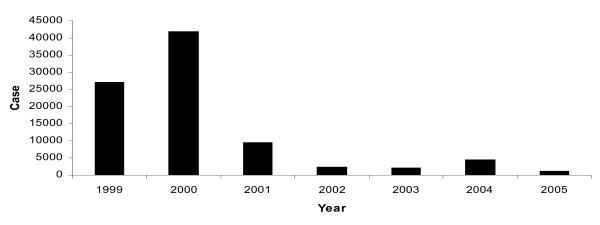
Insecticide resistance in malaria vector mosquitoes presents a serious problem for those involved in control of this disease. South Africa experienced a severe malaria epidemic during 1999/2000 due to pyrethroid resistance in the major vector Anopheles funestus. Subsequent monitoring and surveillance of mosquito populations were conducted as part of the malaria vector control programme.
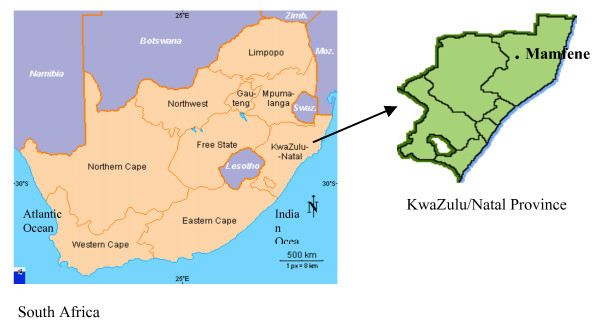
A sample of 269 Anopheles funestus s.l. was collected in Mamfene, northern KwaZulu-Natal, using exit window traps in pyrethroid sprayed houses between May and June 2005. Mosquitoes were identified to species level, assayed for insecticide susceptibility, analysed for Plasmodium falciparum infectivity and blood meal source.
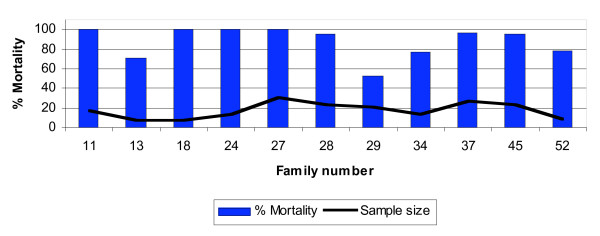
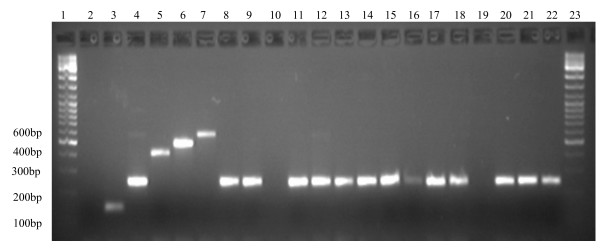
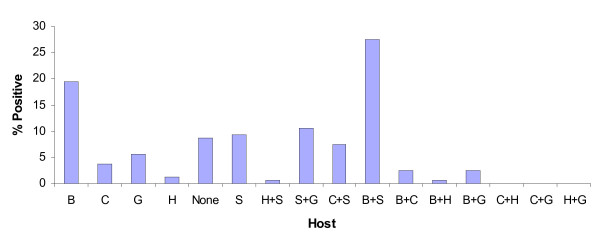
Of the 220 mosquitoes identified using the rDNA PCR method, two (0.9%) were An. funestus s.s. and 218 (99.1%) Anopheles parensis. Standard WHO insecticide susceptibility tests were performed on F1 progeny from wild caught An. parensis females and a significant survival 24 h post exposure was detected in 40% of families exposed to 0.05% deltamethrin. Biochemical analysis of F1 An. parensis showed no elevation in levels/activity of the detoxifying enzyme systems when compared with an insecticide susceptible An. funestus laboratory strain. Among the 149 female An. parensis tested for P. falciparum circumsporozoite infections, 13.4% were positive. All ELISA positive specimens (n = 20) were re-examined for P. falciparum infections using a PCR assay and none were found to be positive. Direct ELISA analysis of 169 blood meal positive specimens showed > 75% of blood meals were taken from animals. All blood fed, false positive mosquito samples for the detection of sporozoites of P. falciparum were zoophilic.
The combination of pyrethroid resistance and P. falciparum false-positivity in An. parensis poses a problem for vector control. If accurate species identification had not been carried out, scarce resources would have been wasted in the unnecessary changing of control strategies to combat a non-vector species.
疟疾病媒蚊子的杀虫剂抗性给参与该疾病防治的人员带来了严重问题。由于主要病媒冈比亚按蚊对拟除虫菊酯产生抗性,南非在1999/2000年期间经历了严重的疟疾疫情。随后,作为疟疾媒介控制计划的一部分,对蚊子种群进行了监测和 surveillance。
2005年5月至6月期间,在夸祖鲁 - 纳塔尔省北部的曼芬尼,使用安装在喷洒过拟除虫菊酯房屋的出口窗诱捕器收集了269只冈比亚按蚊复合组样本。将蚊子鉴定到物种水平,检测其对杀虫剂的敏感性,分析恶性疟原虫感染性和血餐来源。
使用rDNA PCR方法鉴定的220只蚊子中,两只(0.9%)为冈比亚按蚊指名亚种,218只(99.1%)为帕氏按蚊。对野外捕获的帕氏按蚊雌性的F1后代进行了标准的世卫组织杀虫剂敏感性测试,在暴露于0.05%溴氰菊酯的40%的家庭中,24小时后检测到显著的存活情况。与对杀虫剂敏感的冈比亚按蚊实验室菌株相比,F1帕氏按蚊的解毒酶系统水平/活性没有升高。在149只接受恶性疟原虫环子孢子感染检测的帕氏按蚊雌性中,13.4%呈阳性。所有ELISA阳性标本(n = 20)均使用PCR检测法重新检测恶性疟原虫感染,未发现阳性。对169份血餐阳性标本进行的直接ELISA分析显示,超过75%的血餐来自动物。所有吸食血液、检测恶性疟原虫子孢子呈假阳性的蚊子样本均为嗜动物性。
帕氏按蚊对拟除虫菊酯的抗性和恶性疟原虫假阳性的结合给病媒控制带来了问题。如果没有进行准确的物种鉴定,稀缺资源就会浪费在为对抗非病媒物种而不必要地改变控制策略上。