Olsen Shawn R, Bhandawat Vikas, Wilson Rachel I
Department of Neurobiology, Harvard Medical School, 220 Longwood Avenue, Boston, MA 02115, USA.
Neuron. 2007 Apr 5;54(1):89-103. doi: 10.1016/j.neuron.2007.03.010.
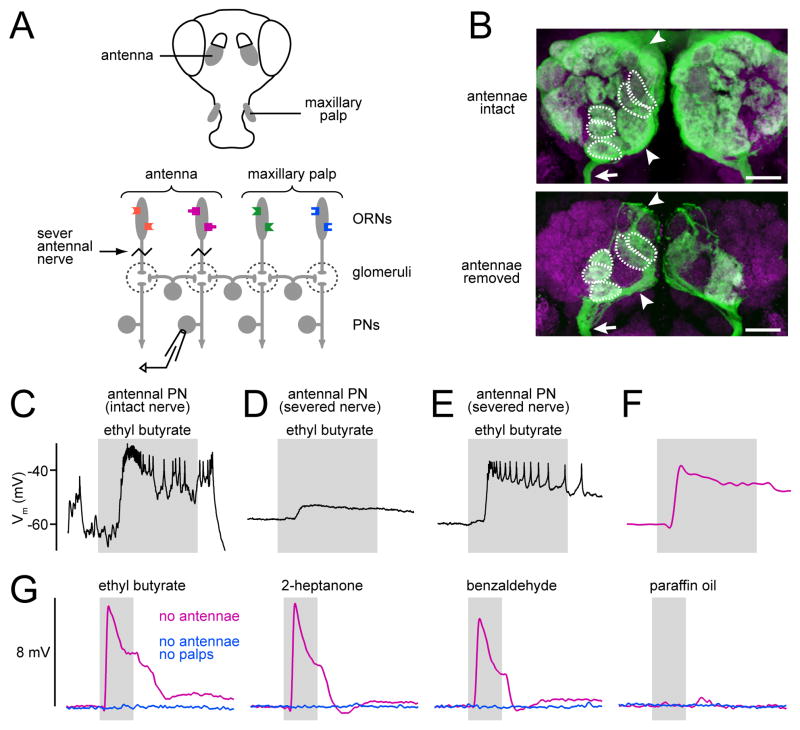
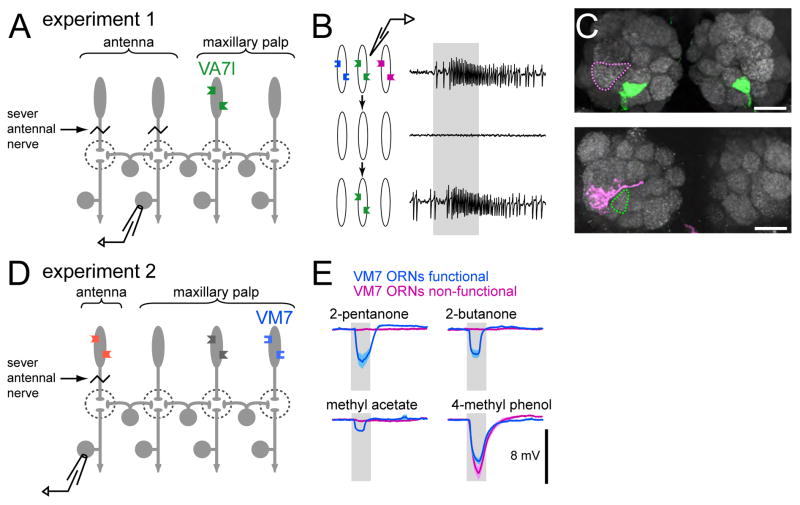
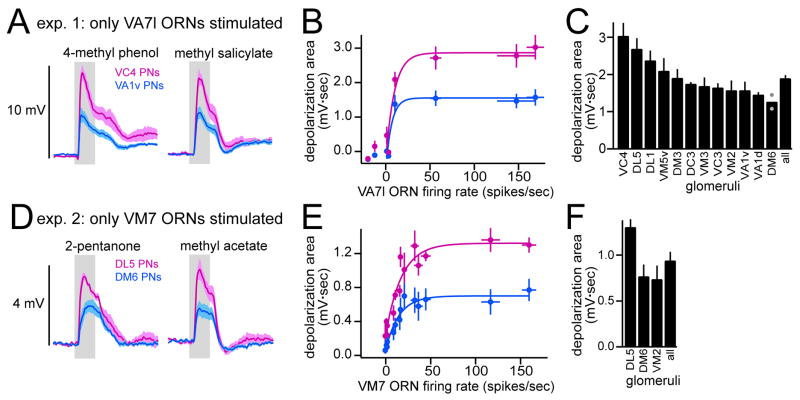
Each odorant receptor gene defines a unique type of olfactory receptor neuron (ORN) and a corresponding type of second-order neuron. Because each odor can activate multiple ORN types, information must ultimately be integrated across these processing channels to form a unified percept. Here, we show that, in Drosophila, integration begins at the level of second-order projection neurons (PNs). We genetically silence all the ORNs that normally express a particular odorant receptor and find that PNs postsynaptic to the silent glomerulus receive substantial lateral excitatory input from other glomeruli. Genetically confining odor-evoked ORN input to just one glomerulus reveals that most PNs postsynaptic to other glomeruli receive indirect excitatory input from the single ORN type that is active. Lateral connections between identified glomeruli vary in strength, and this pattern of connections is stereotyped across flies. Thus, a dense network of lateral connections distributes odor-evoked excitation between channels in the first brain region of the olfactory processing stream.
每个气味受体基因都定义了一种独特类型的嗅觉受体神经元(ORN)以及相应类型的二级神经元。由于每种气味都能激活多种类型的ORN,信息最终必须在这些处理通道间进行整合,以形成统一的感知。在此,我们表明,在果蝇中,整合始于二级投射神经元(PN)层面。我们通过基因手段使所有通常表达特定气味受体的ORN沉默,发现与沉默肾小球突触后的PN会从其他肾小球接收大量的侧向兴奋性输入。通过基因手段将气味诱发的ORN输入限制在仅一个肾小球,结果显示,其他肾小球突触后的大多数PN会从活跃的单一ORN类型接收间接兴奋性输入。已确定的肾小球之间的侧向连接强度各异,且这种连接模式在果蝇个体间是刻板固定的。因此,一个密集的侧向连接网络在嗅觉处理流的首个脑区的各通道间分配气味诱发的兴奋。