
简单序列DNA的滑动合成
Slippage synthesis of simple sequence DNA.
作者信息
Schlötterer C, Tautz D
机构信息
Institut für Genetik und Mikrobiologie, Universität München, FRG.
出版信息
Nucleic Acids Res. 1992 Jan 25;20(2):211-5. doi: 10.1093/nar/20.2.211.
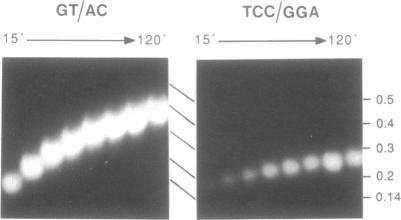
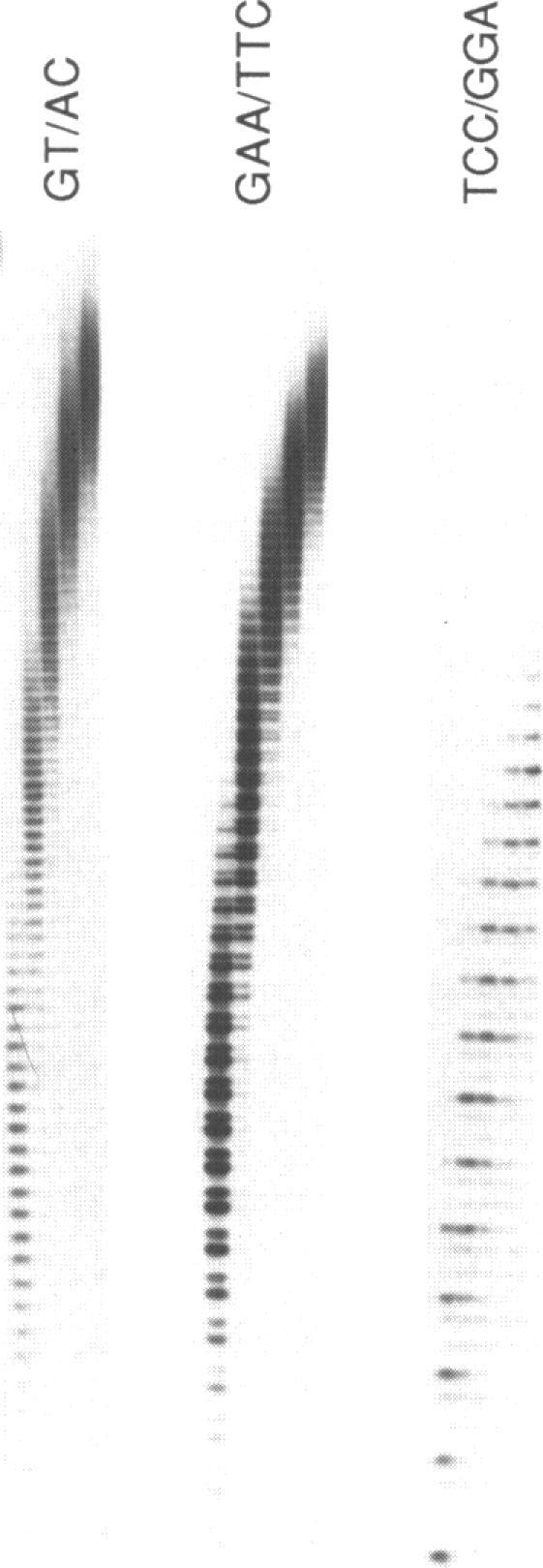
The analysis of slippage synthesis of simple sequence DNA in vitro sheds some light on the question of how simple sequences arise in vivo. We show that it is possible to synthesize all types of repetitious di- and trinucleotide motifs starting from short primers and a polymerase in vitro. The rate of this synthesis depends on a sequence specific slippage rate, but is independent of the length of the fragments being synthesized. This indicates that only the ends of the DNA fragments are involved in determining this rate and that slippage is accordingly a short range effect. Slippage synthesis occurs also on a fixed template where only one strand is free to move, a situation which resembles chromosome replication in vivo. It seems therefore likely that slippage during replication is the cause of the observed length polymorphism of simple sequence stretches between individuals of a population.
对体外简单序列DNA滑动合成的分析,为体内简单序列如何产生这一问题提供了一些线索。我们表明,从短引物和一种聚合酶开始,在体外有可能合成所有类型的重复二核苷酸和三核苷酸基序。这种合成的速率取决于序列特异性滑动速率,但与正在合成的片段长度无关。这表明只有DNA片段的末端参与确定该速率,因此滑动是一种短程效应。滑动合成也发生在固定模板上,其中只有一条链可以自由移动,这种情况类似于体内的染色体复制。因此,复制过程中的滑动似乎是群体中个体间观察到的简单序列片段长度多态性的原因。



 Zotero 插件