Till Bradley J, Cooper Jennifer, Tai Thomas H, Colowit Peter, Greene Elizabeth A, Henikoff Steven, Comai Luca
Fred Hutchinson Cancer Research Center, Seattle, WA 98107, USA.
BMC Plant Biol. 2007 Apr 11;7:19. doi: 10.1186/1471-2229-7-19.
Rice is both a food source for a majority of the world's population and an important model system. Available functional genomics resources include targeted insertion mutagenesis and transgenic tools. While these can be powerful, a non-transgenic, unbiased targeted mutagenesis method that can generate a range of allele types would add considerably to the analysis of the rice genome. TILLING (Targeting Induced Local Lesions in Genomes), a general reverse genetic technique that combines traditional mutagenesis with high throughput methods for mutation discovery, is such a method.
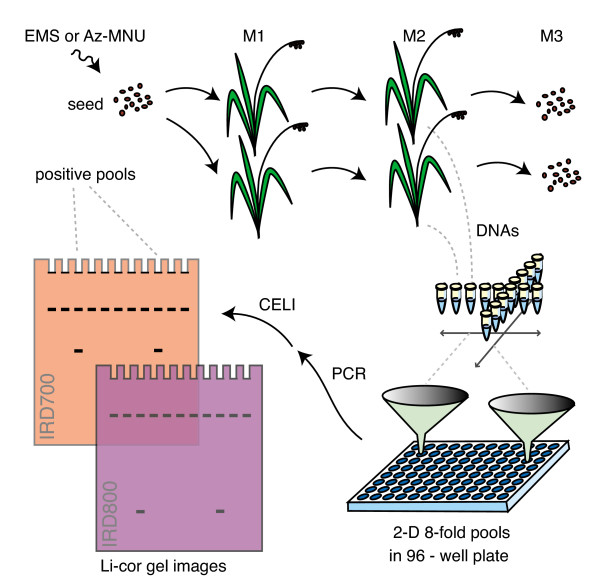
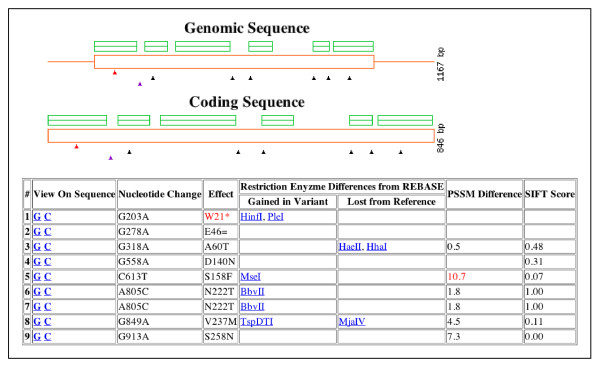
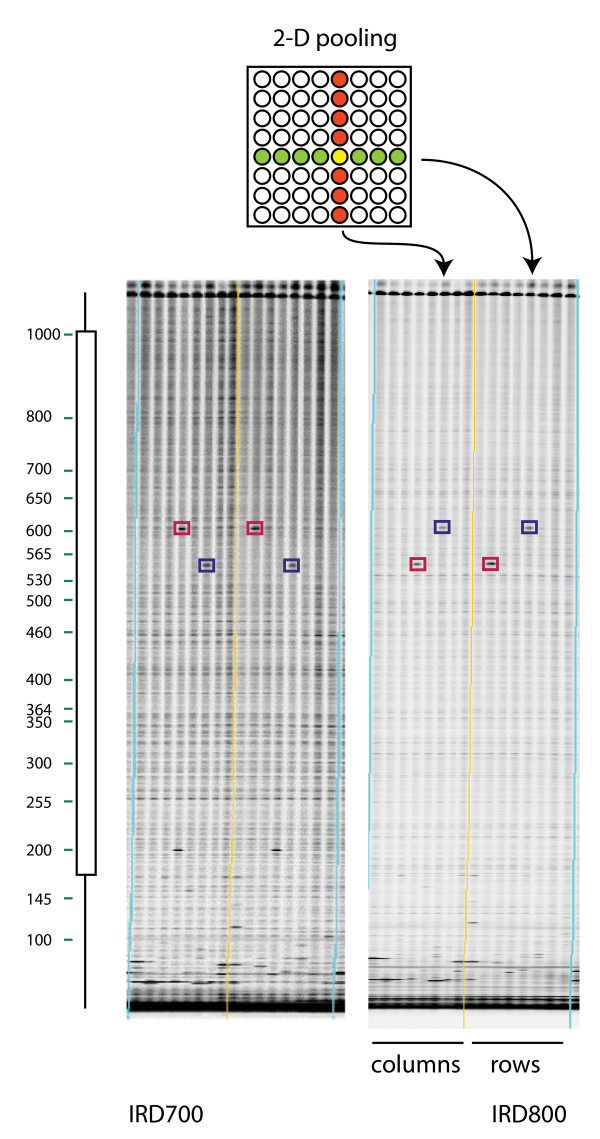
To apply TILLING to rice, we developed two mutagenized rice populations. One population was developed by treatment with the chemical mutagen ethyl methanesulphonate (EMS), and the other with a combination of sodium azide plus methyl-nitrosourea (Az-MNU). To find induced mutations, target regions of 0.7-1.5 kilobases were PCR amplified using gene specific primers labeled with fluorescent dyes. Heteroduplexes were formed through denaturation and annealing of PCR products, mismatches digested with a crude preparation of CEL I nuclease and cleaved fragments visualized using denaturing polyacrylamide gel electrophoresis. In 10 target genes screened, we identified 27 nucleotide changes in the EMS-treated population and 30 in the Az-MNU population.
We estimate that the density of induced mutations is two- to threefold higher than previously reported rice populations (about 1/300 kb). By comparison to other plants used in public TILLING services, we conclude that the populations described here would be suitable for use in a large scale TILLING project.
水稻既是世界上大多数人口的食物来源,也是一个重要的模式系统。现有的功能基因组学资源包括靶向插入诱变和转基因工具。虽然这些工具功能强大,但一种能够产生一系列等位基因类型的非转基因、无偏向性靶向诱变方法将极大地促进水稻基因组分析。TILLING(基因组靶向诱导局部损伤)是一种将传统诱变与高通量突变发现方法相结合的通用反向遗传学技术,就是这样一种方法。
为了将TILLING应用于水稻,我们构建了两个诱变水稻群体。一个群体通过化学诱变剂甲磺酸乙酯(EMS)处理构建,另一个群体通过叠氮化钠加甲基亚硝基脲(Az-MNU)组合处理构建。为了找到诱导突变,使用荧光染料标记的基因特异性引物对0.7 - 1.5千碱基的目标区域进行PCR扩增。通过PCR产物的变性和退火形成异源双链体,用CEL I核酸酶粗制品消化错配,并用变性聚丙烯酰胺凝胶电泳观察切割片段。在筛选的10个目标基因中,我们在EMS处理的群体中鉴定出27个核苷酸变化,在Az-MNU处理的群体中鉴定出30个核苷酸变化。
我们估计诱导突变的密度比先前报道的水稻群体(约1/300 kb)高两到三倍。与公共TILLING服务中使用的其他植物相比,我们得出结论,这里描述的群体适用于大规模TILLING项目。