Komurov Kakajan, White Michael
Department of Cell Biology, University of Texas Southwestern Medical Center, Dallas, TX 75390-9039, USA.
Mol Syst Biol. 2007;3:110. doi: 10.1038/msb4100149. Epub 2007 Apr 24.
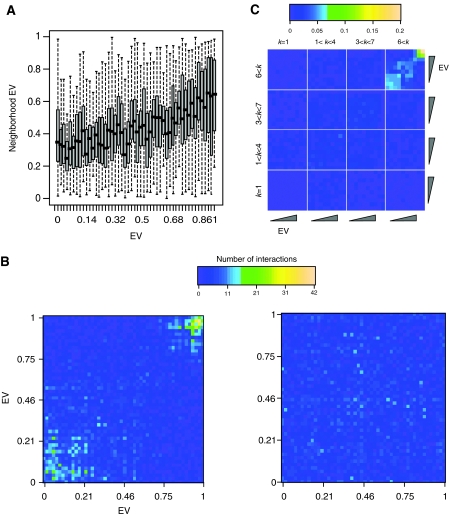
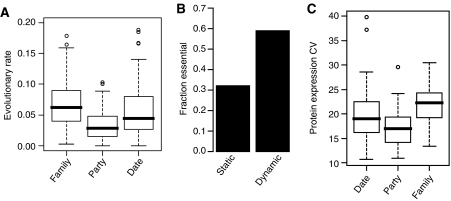
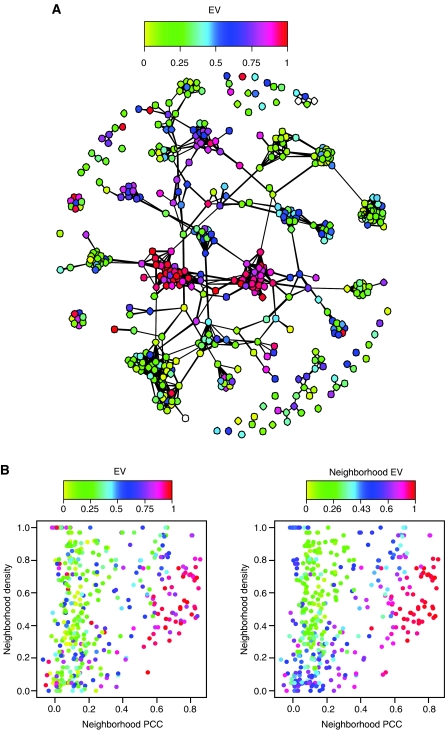
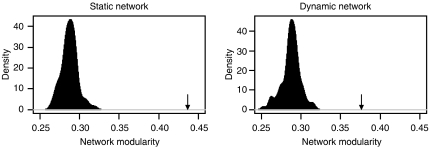
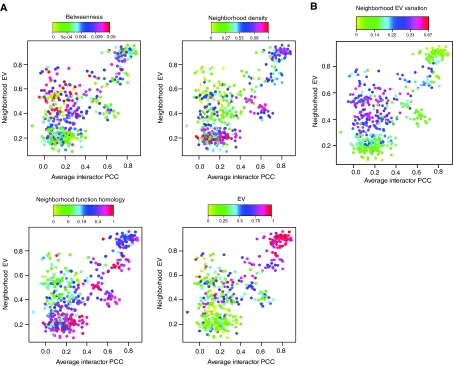
In an effort to understand the dynamic organization of the protein interaction network and its role in the regulation of cell behavior, positioning of proteins into specific network localities was studied with respect to their expression dynamics. First, we find that constitutively expressed and dynamically co-regulated proteins cluster in distinct functionally specialized network neighborhoods to form static and dynamic functional modules, respectively. Then, we show that whereas dynamic modules are mainly responsible for condition-dependent regulation of cell behavior, static modules provide robustness to the cell against genetic perturbations or protein expression noise, and therefore may act as buffers of evolutionary as well as population variations in cell behavior. Observations in this study refine the previously proposed model of dynamic modularity in the protein interaction network, and propose a link between the evolution of gene expression regulation and biological robustness.
为了理解蛋白质相互作用网络的动态组织及其在细胞行为调控中的作用,我们研究了蛋白质根据其表达动态定位到特定网络位置的情况。首先,我们发现组成型表达和动态共调控的蛋白质分别聚集在不同的功能特化网络邻域中,形成静态和动态功能模块。然后,我们表明,虽然动态模块主要负责细胞行为的条件依赖性调控,但静态模块为细胞提供了抵御基因扰动或蛋白质表达噪声的稳健性,因此可能充当细胞行为进化以及群体变异的缓冲器。本研究中的观察结果完善了先前提出的蛋白质相互作用网络动态模块化模型,并提出了基因表达调控进化与生物稳健性之间的联系。