Lenroot Rhoshel K, Gogtay Nitin, Greenstein Deanna K, Wells Elizabeth Molloy, Wallace Gregory L, Clasen Liv S, Blumenthal Jonathan D, Lerch Jason, Zijdenbos Alex P, Evans Alan C, Thompson Paul M, Giedd Jay N
Child Psychiatry Branch of the National Institute of Mental Health, NIMH/CHP 10 Center Drive, Bethesda, MD 20814-9692, USA.
Neuroimage. 2007 Jul 15;36(4):1065-73. doi: 10.1016/j.neuroimage.2007.03.053. Epub 2007 Apr 6.
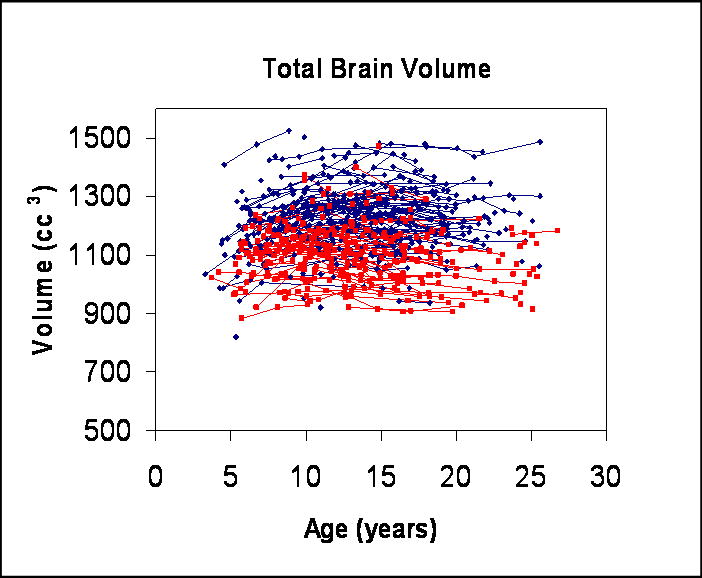
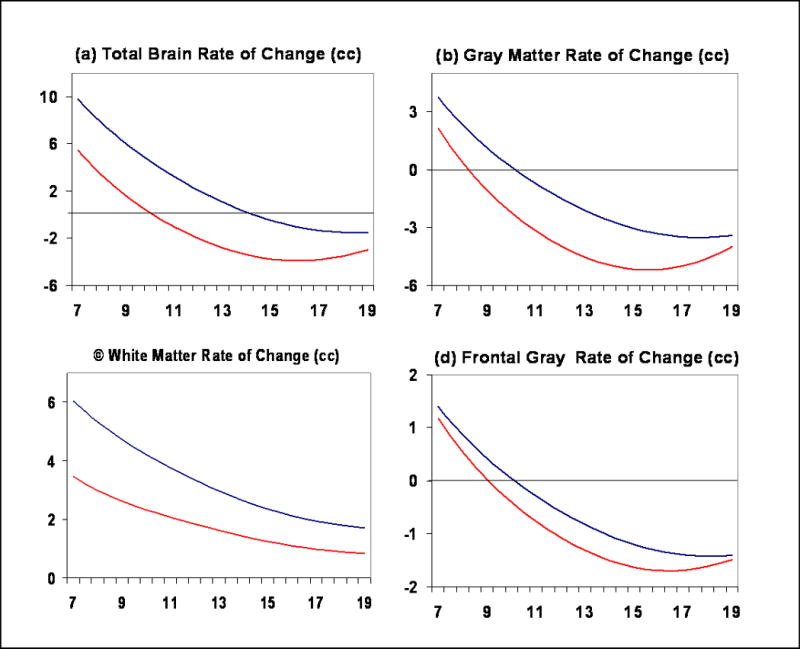
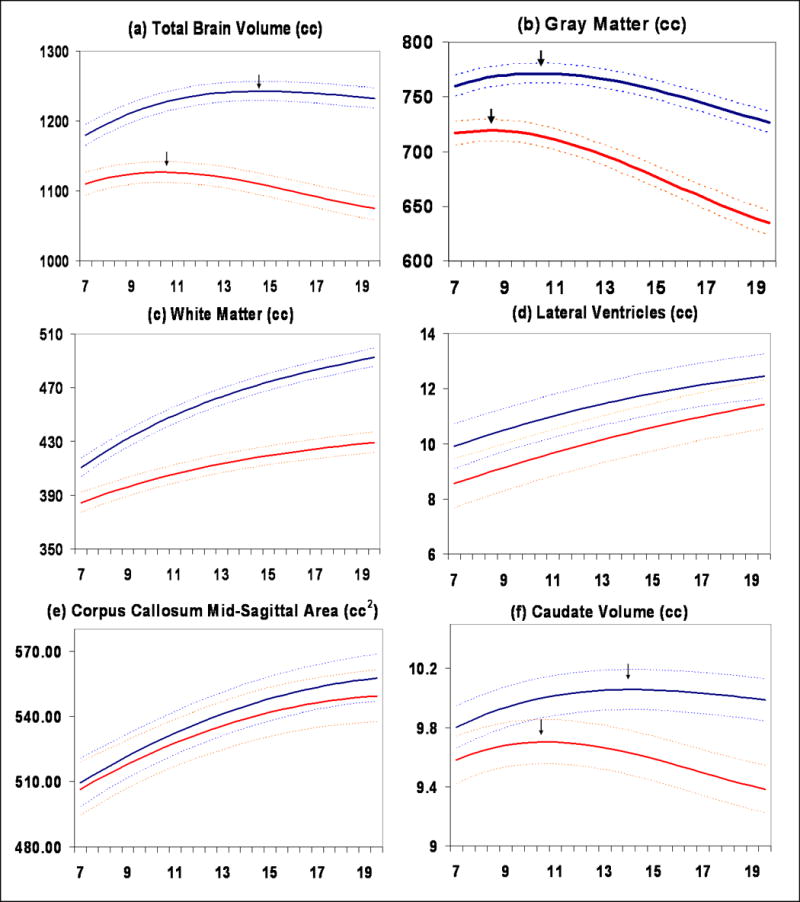
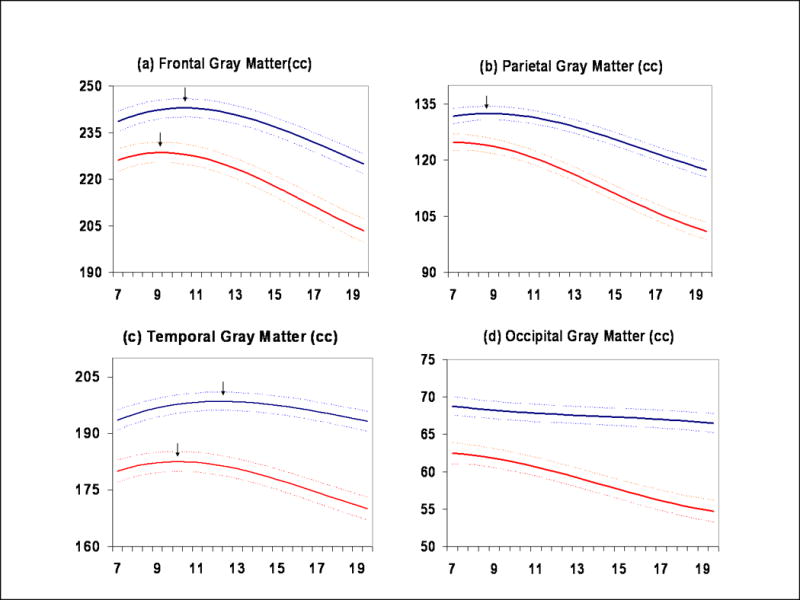
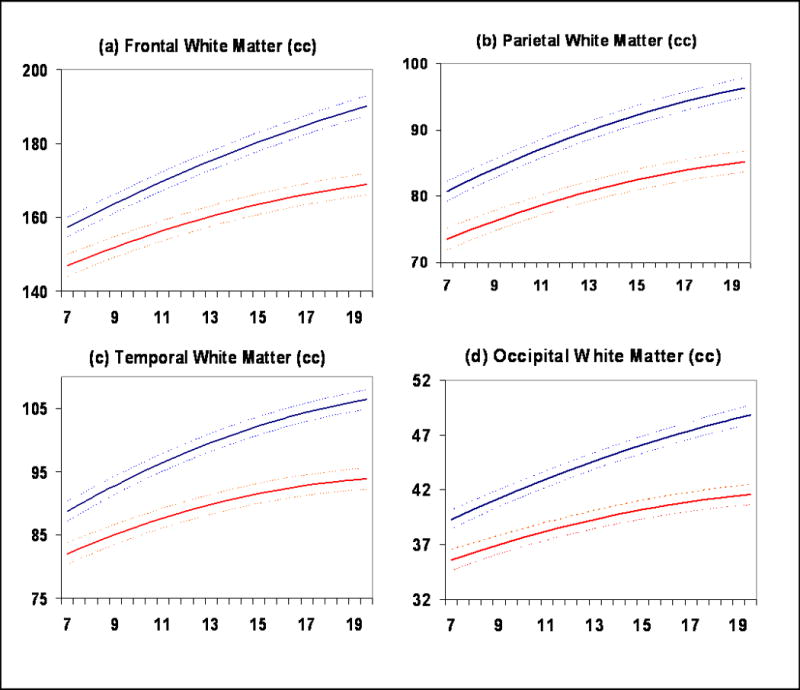
Human total brain size is consistently reported to be approximately 8-10% larger in males, although consensus on regionally specific differences is weak. Here, in the largest longitudinal pediatric neuroimaging study reported to date (829 scans from 387 subjects, ages 3 to 27 years), we demonstrate the importance of examining size-by-age trajectories of brain development rather than group averages across broad age ranges when assessing sexual dimorphism. Using magnetic resonance imaging (MRI) we found robust male/female differences in the shapes of trajectories with total cerebral volume peaking at age 10.5 in females and 14.5 in males. White matter increases throughout this 24-year period with males having a steeper rate of increase during adolescence. Both cortical and subcortical gray matter trajectories follow an inverted U shaped path with peak sizes 1 to 2 years earlier in females. These sexually dimorphic trajectories confirm the importance of longitudinal data in studies of brain development and underline the need to consider sex matching in studies of brain development.
一直以来,报告显示男性的全脑大小比女性大约大8 - 10%,不过对于区域特异性差异,目前尚未形成定论。在此,在迄今为止所报告的规模最大的纵向儿科神经影像学研究中(对387名年龄在3至27岁的受试者进行了829次扫描),我们证明了在评估性别差异时,研究脑发育的大小随年龄变化轨迹而非宽泛年龄范围内的组平均值得重要性。通过磁共振成像(MRI),我们发现轨迹形状存在明显的男性/女性差异,女性的全脑体积在10.5岁时达到峰值,男性则在14.5岁时达到峰值。在这24年期间,白质持续增加,男性在青春期的增加速率更快。皮层和皮层下灰质轨迹均呈倒U形,女性的峰值大小比男性早1至2年。这些性别差异轨迹证实了纵向数据在脑发育研究中的重要性,并强调了在脑发育研究中考虑性别匹配的必要性。