van der Zee Jouke, Kroneman Madelon W
NIVEL (Netherlands Institute of Health Services Research), Utrecht, The Netherlands.
BMC Health Serv Res. 2007 Jun 26;7:94. doi: 10.1186/1472-6963-7-94.
Health systems delivery systems can be divided into two broad categories: National Health Services (NHS) on the one hand and Social Security (based) Health care systems (SSH) on the other hand. Existing literature is inconclusive about which system performs best. In this paper we would like to improve the evidence-base for discussion about pros and cons of NHS-systems versus SSH-system for health outcomes, expenditure and population satisfaction.
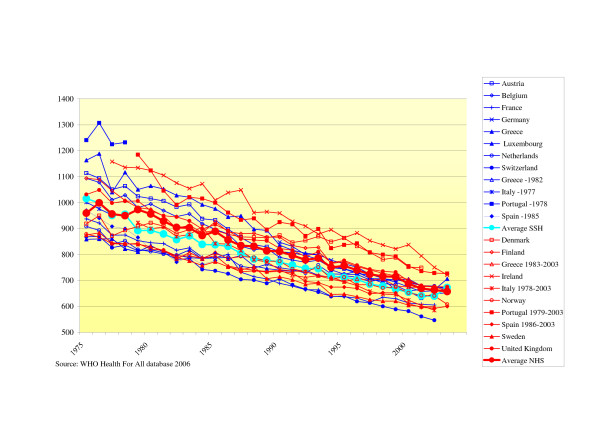
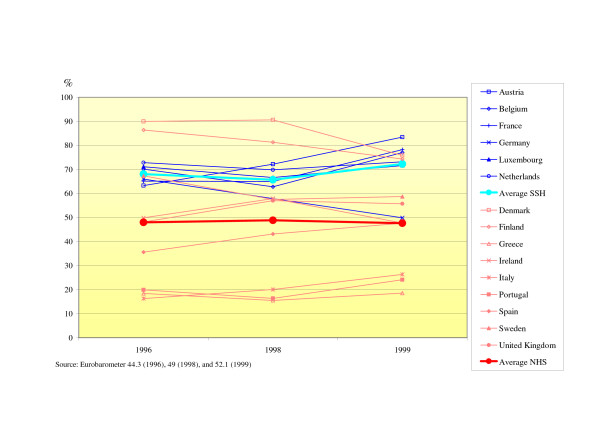
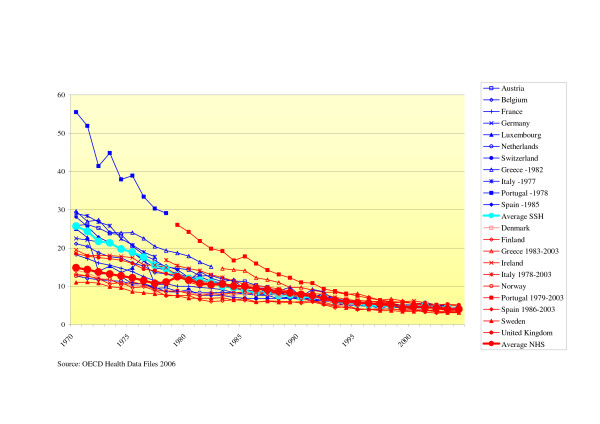
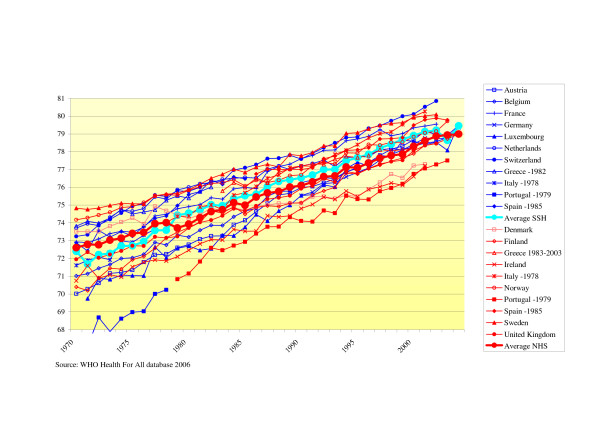
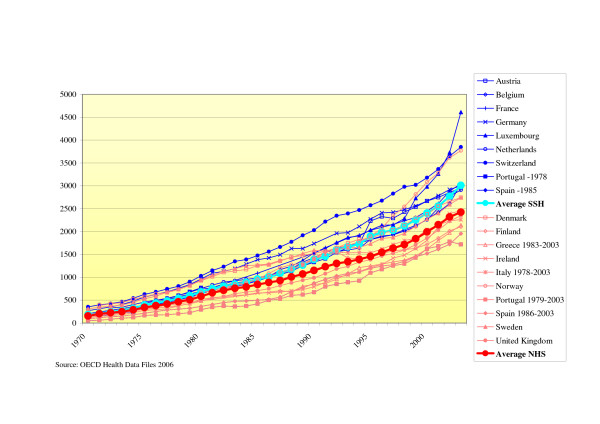
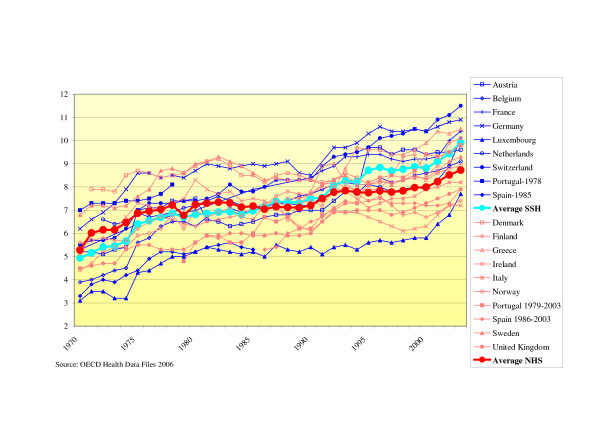
In this study we used time series data for 17 European countries, that were characterized as either NHS or SSH country. We used the following performance indicators: For health outcome: overall mortality rate, infant mortality rate and life expectancy at birth. For health care costs: health care expenditure per capita in pppUS$ and health expenditure as percentage of GDP. Time series dated from 1970 until 2003 or 2004, depending on availability. Sources were OECD health data base 2006 and WHO health for all database 2006. For satisfaction we used the Eurobarometer studies from 1996, 1998 and 1999.
SSH systems perform slightly better on overall mortality rates and life expectancy (after 1980). For infant mortality the rates converged between the two types of systems and since 1980 no differences ceased to exist.SSH systems are more expensive and NHS systems have a better cost containment. Inhabitants of countries with SSH-systems are on average substantially more satisfied than those in NHS countries.
We concluded that the question 'which type of system performs best' can be answered empirically as far as health outcomes, health care expenditures and patient satisfaction are concerned. Whether this selection of indicators covers all or even most relevant aspects of health system comparison remains to be seen. Perhaps further and more conclusive research into health system related differences in, for instance, equity should be completed before the leading question of this paper can be answered. We do think, however, that this study can form a base for a policy debate on the pros and cons of the existing health care systems in Europe.
卫生系统可分为两大类:一方面是国家卫生服务体系(NHS),另一方面是基于社会保障的医疗体系(SSH)。现有文献对于哪种体系表现最佳尚无定论。在本文中,我们希望完善证据基础,以便就NHS体系与SSH体系在健康结果、支出和民众满意度方面的利弊展开讨论。
在本研究中,我们使用了17个欧洲国家的时间序列数据,这些国家被归类为NHS国家或SSH国家。我们使用了以下绩效指标:对于健康结果:总体死亡率、婴儿死亡率和出生时预期寿命。对于医疗费用:以购买力平价美元计算的人均医疗支出以及医疗支出占国内生产总值的百分比。时间序列数据始于1970年,止于2003年或2004年,具体取决于数据可用性。数据来源为经合组织2006年卫生数据库和世界卫生组织2006年全民健康数据库。对于满意度,我们使用了1996年、1998年和1999年的欧洲晴雨表调查。
SSH体系在总体死亡率和预期寿命方面(1980年之后)表现略优。对于婴儿死亡率,两种体系的死亡率趋于一致,自1980年以来不再存在差异。SSH体系成本更高,而NHS体系在成本控制方面表现更佳。SSH体系国家的居民平均满意度显著高于NHS国家的居民。
我们得出结论,就健康结果、医疗保健支出和患者满意度而言,“哪种体系表现最佳”这一问题可以通过实证研究来回答。这种指标选择是否涵盖了卫生系统比较的所有甚至大多数相关方面,仍有待观察。或许在回答本文的核心问题之前,需要对卫生系统在公平性等方面的相关差异进行进一步且更具结论性的研究。然而,我们确实认为,本研究可为欧洲现有医疗体系利弊的政策辩论奠定基础。