
人连接蛋白的蛋白水解片段被单核细胞和B细胞摄取并处理。
A proteolytic fragment from human link protein is taken up and processed by monocytes and B cells.
作者信息
Martin H, Dean M
机构信息
Kennedy Institute of Rheumatology, Hammersmith, London, U.K.
出版信息
Biochem J. 1991 Dec 15;280 ( Pt 3)(Pt 3):679-86. doi: 10.1042/bj2800679.
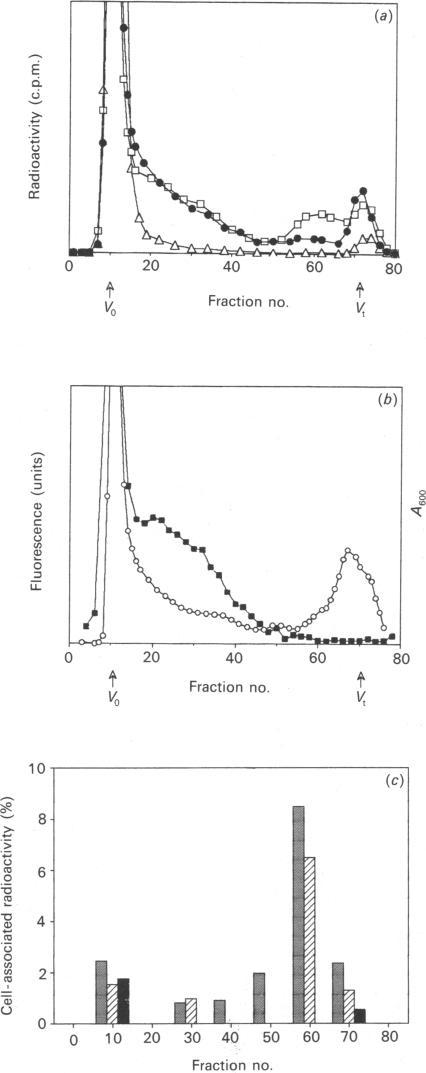
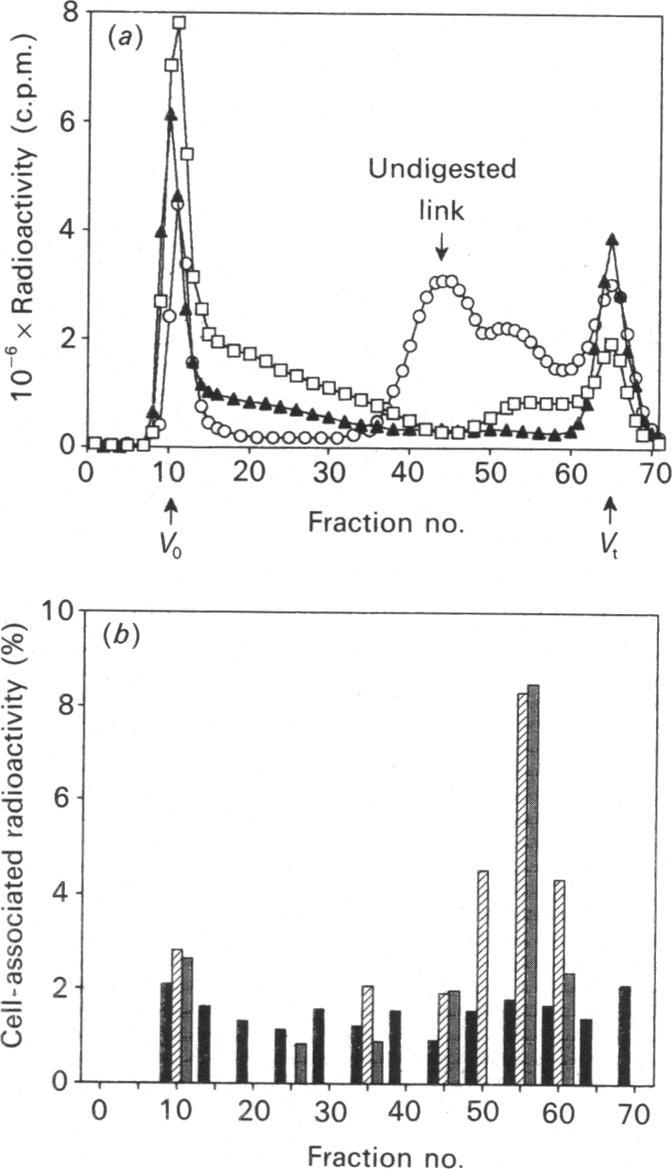
Mild digestion of 125I-labelled human proteoglycan aggregates with trypsin or stromelysin produced specific peptides that were taken up rapidly by THP-1 monocytes. SDS/PAGE of undigested aggregate showed that the three components of molecular mass 48, 44 and 41 kDa, corresponding to isoforms of link protein originally present, had been converted into a single component of 41 kDa by trypsin treatment, and that fragments of 6-12 kDa were present in fractions containing the high-uptake peptide. Separate proteolysis of isolated proteoglycan monomer and link protein confirmed that the specific high-uptake fragment was derived from link protein. Uptake of the link fragment was rapid, reaching a maximum after 5 min, and specific, since it was blocked by metabolic or serine proteinase inhibitors and at 4 degrees C. After uptake the cleaved fragment was processed further, with 50% of the radiolabel being released as degraded peptides within 5 min. In contrast, accumulation of whole aggregate reached a maximum after 45 min and only 50% had been released after 2 h. Uptake of aggregate was less affected by inhibitors or at low temperature, suggesting that a separate mechanism existed for its turnover. The aggregate was transported to lysosomes after uptake, although the link fragment did not sediment with either lysosomes or plasma membranes, suggesting that it was present in the cytoplasm or in very labile vesicles. However, the mode of handling of the peptide by the cells remains unclear. The link fragment was taken up by several different monocytic and B cell lines, but not by mouse fibroblasts or peritoneal macrophages. These data suggest that a surface serine proteinase on monocytes and B cells enables them to process and take up a fragment of link protein derived by extracellular proteolysis.
用胰蛋白酶或基质溶解素对125I标记的人蛋白聚糖聚集体进行轻度消化,产生了特定的肽段,这些肽段被THP-1单核细胞迅速摄取。未消化聚集体的SDS/PAGE显示,分子量为48、44和41 kDa的三个组分(对应于最初存在的连接蛋白异构体)经胰蛋白酶处理后已转化为单一的41 kDa组分,并且在含有高摄取肽的组分中存在6 - 12 kDa的片段。对分离的蛋白聚糖单体和连接蛋白进行单独的蛋白水解证实,特定的高摄取片段源自连接蛋白。连接片段的摄取迅速,5分钟后达到最大值,且具有特异性,因为它会被代谢或丝氨酸蛋白酶抑制剂阻断,并且在4℃时也会被阻断。摄取后,裂解片段会进一步被处理,5分钟内50%的放射性标记以降解肽的形式释放。相比之下,完整聚集体的积累在45分钟后达到最大值,2小时后仅释放了50%。聚集体的摄取受抑制剂或低温的影响较小,这表明其周转存在不同的机制。摄取后,聚集体被转运到溶酶体中,尽管连接片段既不与溶酶体也不与质膜一起沉淀,这表明它存在于细胞质或非常不稳定的囊泡中。然而,细胞处理该肽的方式仍不清楚。连接片段被几种不同的单核细胞系和B细胞系摄取,但不被小鼠成纤维细胞或腹膜巨噬细胞摄取。这些数据表明,单核细胞和B细胞表面的丝氨酸蛋白酶使其能够处理并摄取细胞外蛋白水解产生的连接蛋白片段。



 Zotero 插件