Weart Richard B, Lee Amy H, Chien An-Chun, Haeusser Daniel P, Hill Norbert S, Levin Petra Anne
Department of Biology, Washington University, St. Louis, MO 63130, USA.
Cell. 2007 Jul 27;130(2):335-47. doi: 10.1016/j.cell.2007.05.043.
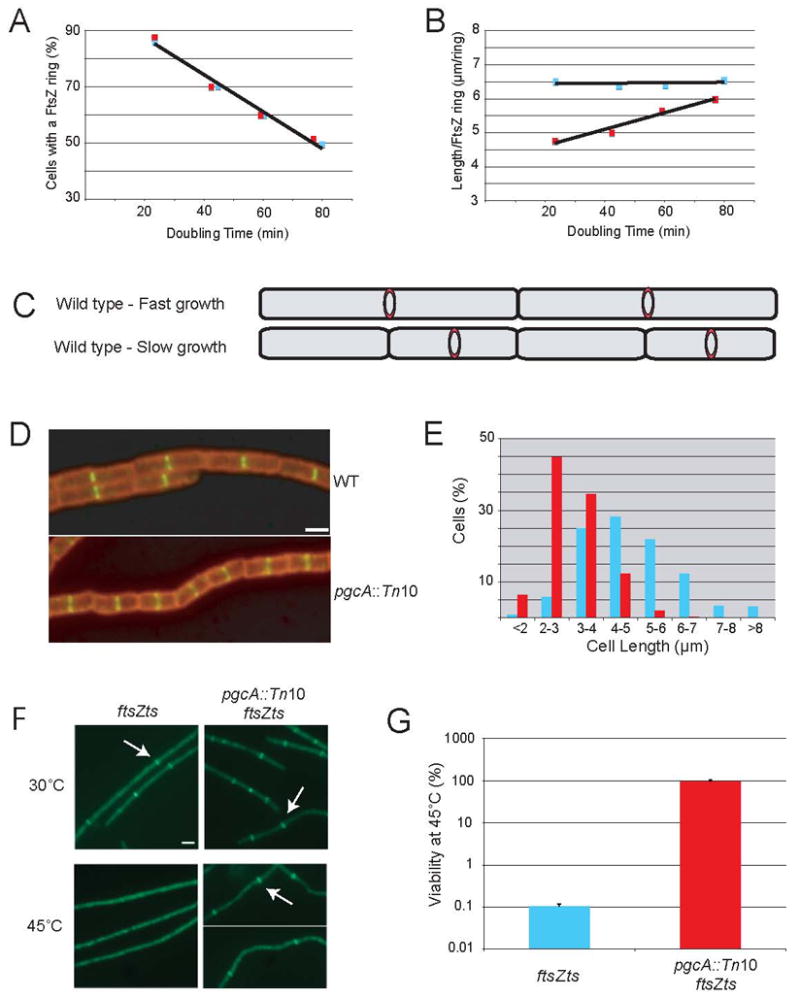
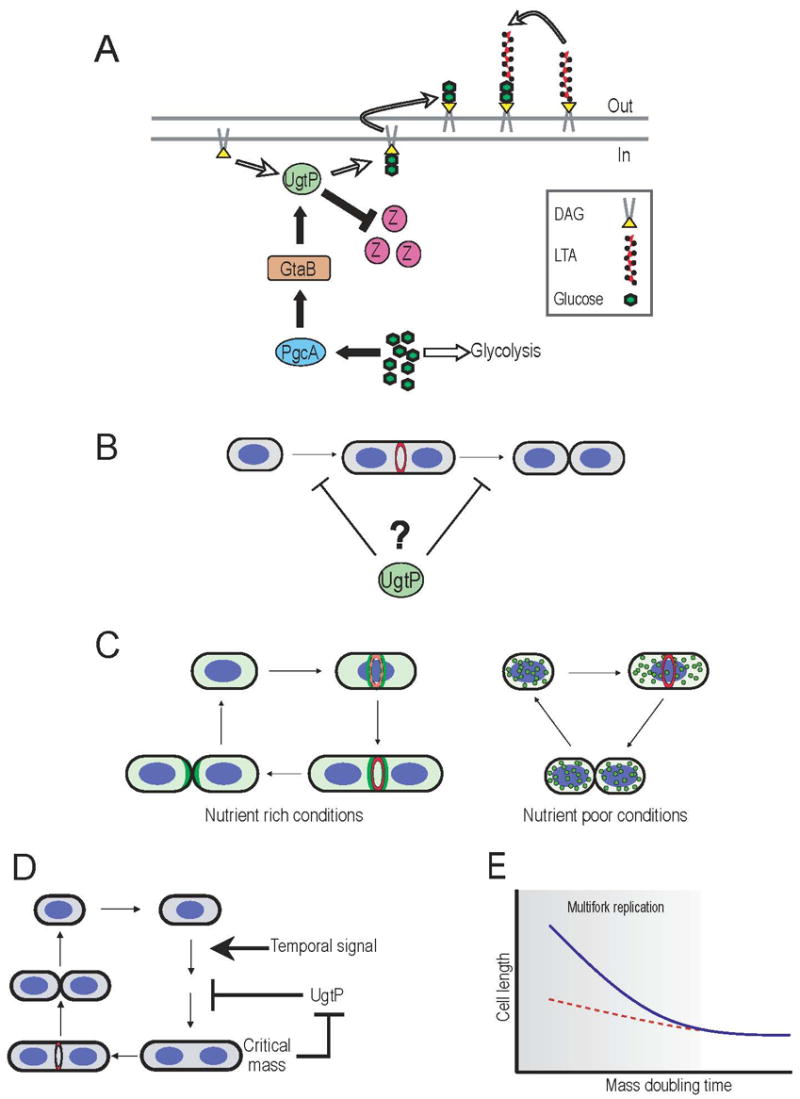
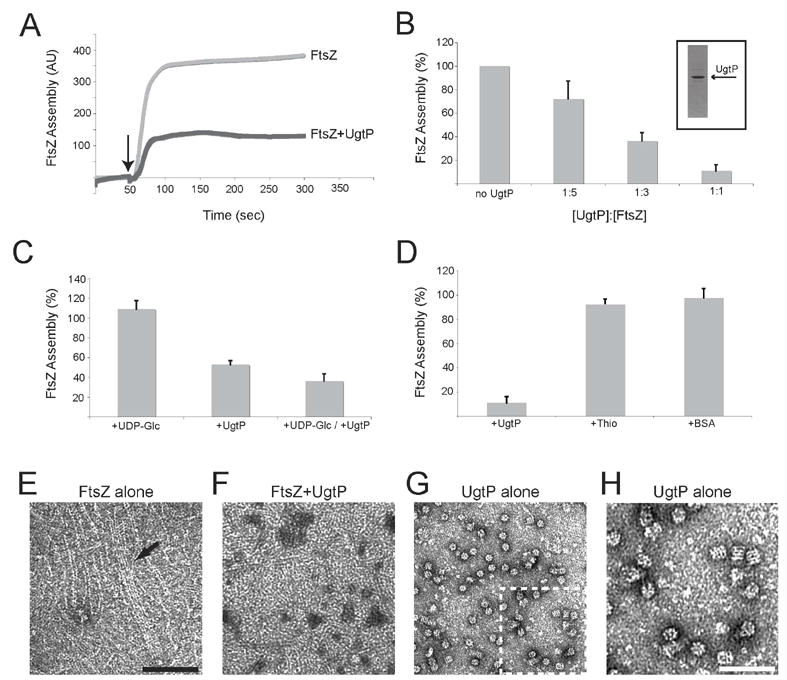
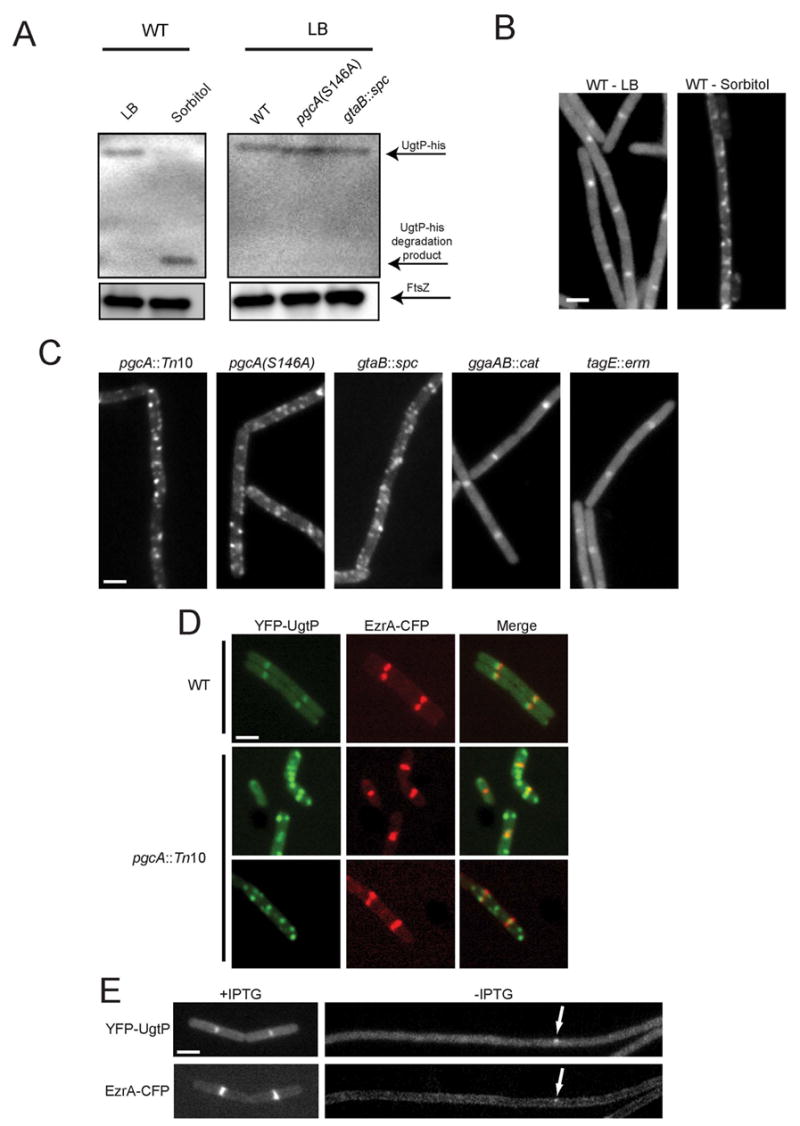
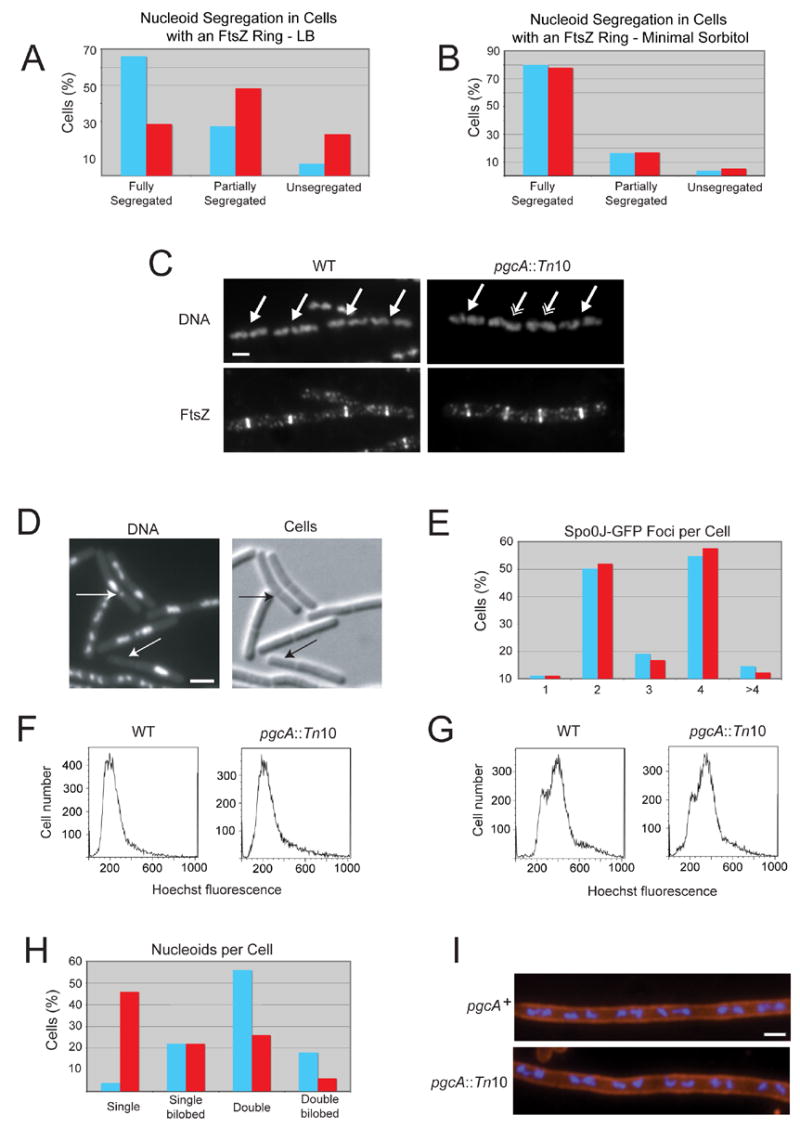
Nutrient availability is one of the strongest determinants of cell size. When grown in rich media, single-celled organisms such as yeast and bacteria can be up to twice the size of their slow-growing counterparts. The ability to modulate size in a nutrient-dependent manner requires cells to: (1) detect when they have reached the appropriate mass for a given growth rate and (2) transmit this information to the division apparatus. We report the identification of a metabolic sensor that couples nutritional availability to division in Bacillus subtilis. A key component of this sensor is an effector, UgtP, which localizes to the division site in a nutrient-dependent manner and inhibits assembly of the tubulin-like cell division protein FtsZ. This sensor serves to maintain a constant ratio of FtsZ rings to cell length regardless of growth rate and ensures that cells reach the appropriate mass and complete chromosome segregation prior to cytokinesis.
营养物质的可利用性是细胞大小的最强决定因素之一。当在丰富培养基中生长时,诸如酵母和细菌等单细胞生物的大小可达其生长缓慢的同类生物的两倍。以营养物质依赖的方式调节大小的能力要求细胞:(1)检测它们何时达到给定生长速率下的合适质量,以及(2)将此信息传递给分裂装置。我们报告了在枯草芽孢杆菌中鉴定出一种将营养可利用性与分裂相耦合的代谢传感器。该传感器的一个关键组分是效应器UgtP,它以营养物质依赖的方式定位于分裂位点,并抑制微管蛋白样细胞分裂蛋白FtsZ的组装。该传感器用于维持FtsZ环与细胞长度的恒定比例,而不管生长速率如何,并确保细胞在胞质分裂之前达到合适的质量并完成染色体分离。