Department of Nutrition, Food Science and Hospitality, South Dakota State University, Brookings, SD 57006, USA.
Department of Nutritional Sciences, Oklahoma State University, Stillwater, OK 74078, USA.
J Inflamm (Lond). 2007 Sep 7;4:17. doi: 10.1186/1476-9255-4-17.
Evidence from epidemiological, clinical and animal studies suggests a link may exist between low bone density and cardiovascular disease, with inflammatory mediators implicated in the pathophysiology of both conditions. This project examined whether supplementation with soy isoflavones (IF), shown to have anti-inflammatory properties, could prevent tissue expression of TNF-alpha and the development of skeletal pathology in an animal model of chronic inflammation.
Eight-week old, intact, female C57BL/6J mice were used. In Phase 1, a lipopolysaccharide (LPS)-dose response study (0, 0.133, 1.33 and 13.3 mug/d) was conducted to determine the LPS dose to use in Phase 2. The results indicated the 1.33 mug LPS/d dose produced the greatest decrease in lymphocytes and increase in neutrophils. Subsequently, in Phase 2, mice were randomly assigned to one of six groups (n = 12-13 per group): 0 or 1.33 mug LPS/d (placebo or LPS) in combination with 0, 126 or 504 mg aglycone equivalents of soy IF/kg diet (Control, Low or High dose IF). Mice were fed IF beginning 2 wks prior to the 30-d LPS study period.
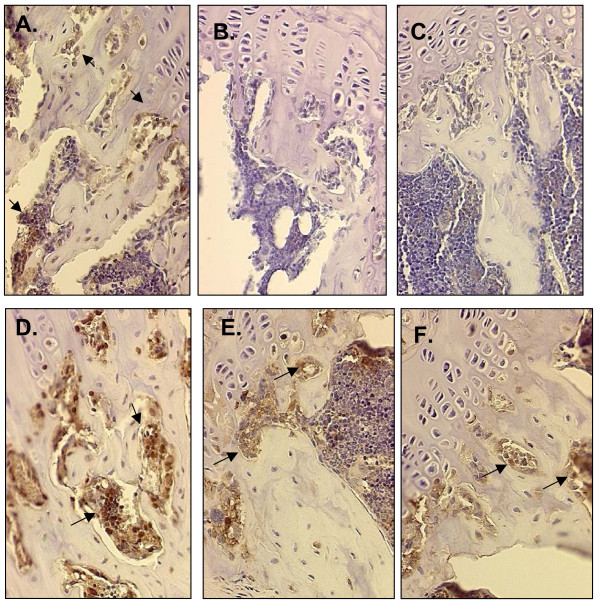
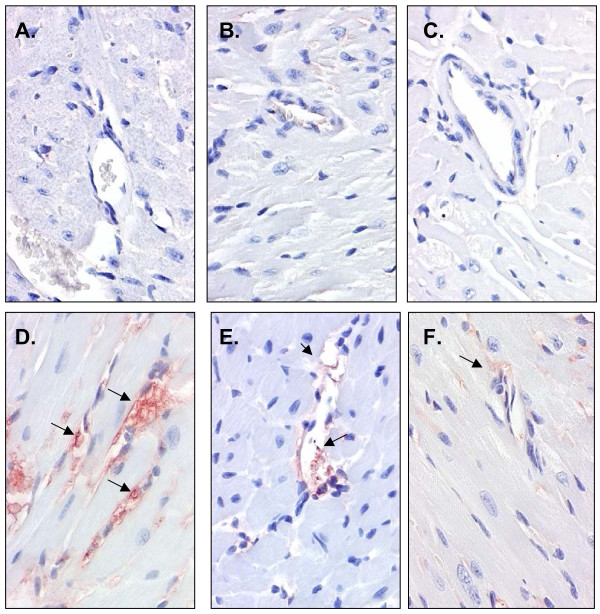
At the end of the study, no differences were detected in final body weights or uterine weights. In terms of trabecular bone microarchitecture, muCT analyses of the distal femur metaphysis indicated that LPS significantly decreased trabecular bone volume (BV/TV) and number (TbN), and increased separation (TbSp). Trabecular bone strength (i.e. total force) and stiffness were also compromised in response to LPS. The High IF dose provided protection against these detrimental effects on microarchitecture, but not biomechanical properties. No alterations in trabecular thickness (TbTh), or cortical bone parameters were observed in response to the LPS or IF. Immunohistomchemical staining showed that tumor necrosis factor (TNF)-alpha was up-regulated by LPS in the endothelium of small myocardial arteries and arterioles as well as the tibial metaphysis and down-regulated by IF.
These results suggest IF may attenuate the negative effects of chronic inflammation on bone and cardiovascular health. Additional research is warranted to examine the anti-inflammatory properties of the soy isoflavones and the mechanisms underlying their prevention of chronic inflammation-induced bone loss.
流行病学、临床和动物研究的证据表明,低骨密度与心血管疾病之间可能存在关联,炎症介质与这两种疾病的病理生理学有关。本项目研究了补充具有抗炎特性的大豆异黄酮(IF)是否可以预防慢性炎症动物模型中组织表达 TNF-α和骨骼病理学的发展。
使用 8 周龄、完整、雌性 C57BL/6J 小鼠。在第 1 阶段,进行了脂多糖(LPS)剂量反应研究(0、0.133、1.33 和 13.3μg/d),以确定第 2 阶段使用的 LPS 剂量。结果表明,1.33μg LPS/d 剂量可使淋巴细胞减少和中性粒细胞增加最大。随后,在第 2 阶段,将小鼠随机分为六组中的一组(每组 12-13 只):0 或 1.33μg LPS/d(安慰剂或 LPS)与 0、126 或 504mg 苷元当量的大豆 IF/kg 饮食(对照、低或高剂量 IF)。小鼠在开始 30 天 LPS 研究之前 2 周开始补充 IF。
研究结束时,最终体重或子宫重量没有差异。就皮质骨微结构而言,远端股骨干骺端 muCT 分析表明,LPS 显著降低了皮质骨体积(BV/TV)和数量(TbN),并增加了分离(TbSp)。皮质骨强度(即总力)和刚度也因 LPS 而受损。高 IF 剂量可防止这些对微结构的不利影响,但不能防止生物力学性能受损。LPS 或 IF 均未观察到皮质骨参数的骨小梁厚度(TbTh)或变化。免疫组织化学染色显示,LPS 在上皮细胞中小动脉和小动脉以及胫骨干骺端的内皮上调了肿瘤坏死因子(TNF)-α,IF 下调了 TNF-α。
这些结果表明,IF 可能减轻慢性炎症对骨骼和心血管健康的负面影响。需要进一步研究以检查大豆异黄酮的抗炎特性及其预防慢性炎症引起的骨丢失的机制。