Autism Research Centre, Department of Psychiatry, University of Cambridge, Cambridge, United Kingdom.
PLoS One. 2007 Sep 12;2(9):e883. doi: 10.1371/journal.pone.0000883.
Individuals with autism spectrum conditions (ASC) have profound impairments in the interpersonal social domain, but it is unclear if individuals with ASC also have impairments in the intrapersonal self-referential domain. We aimed to evaluate across several well validated measures in both domains, whether both self-referential cognition and empathy are impaired in ASC and whether these two domains are related to each other.
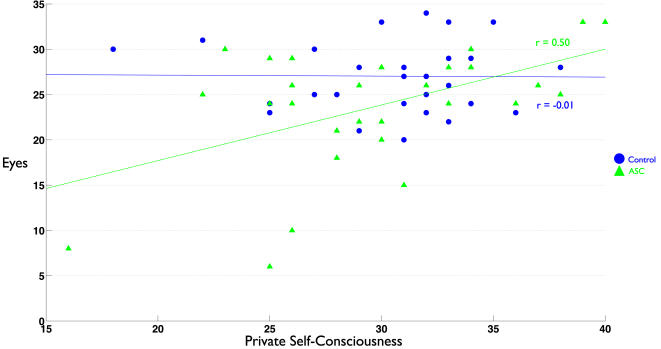
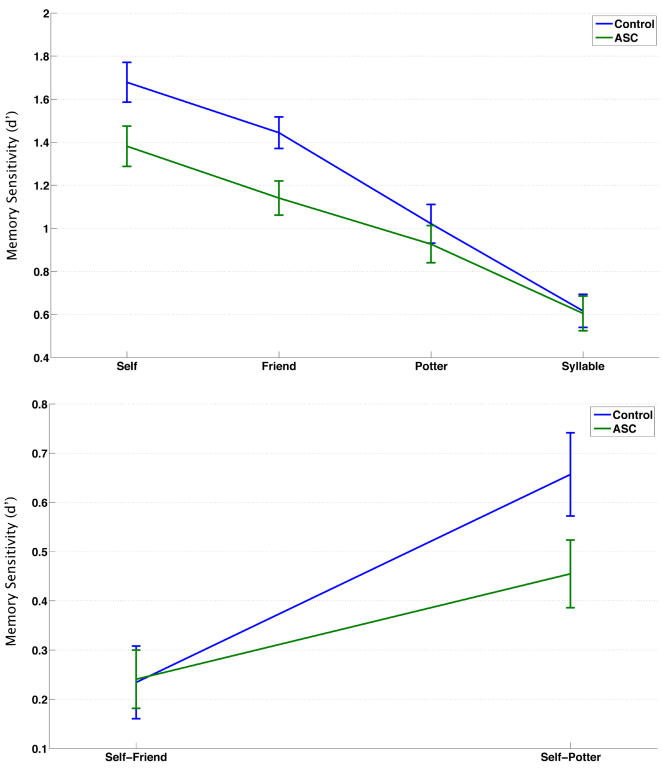
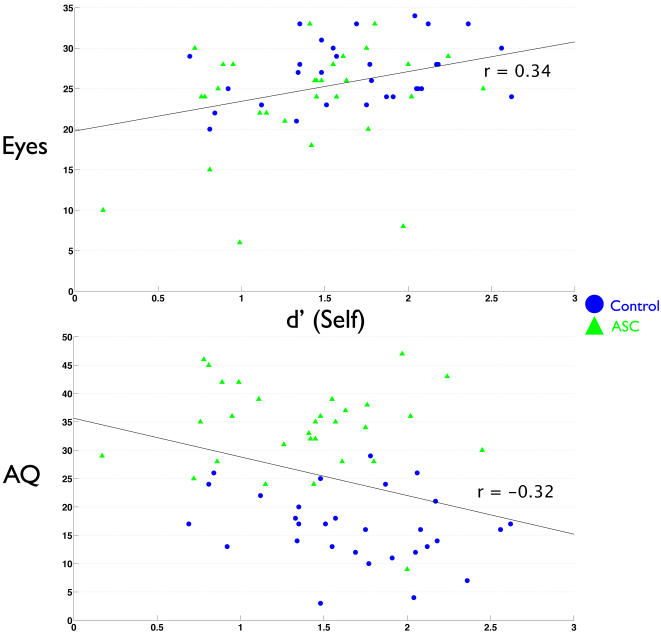
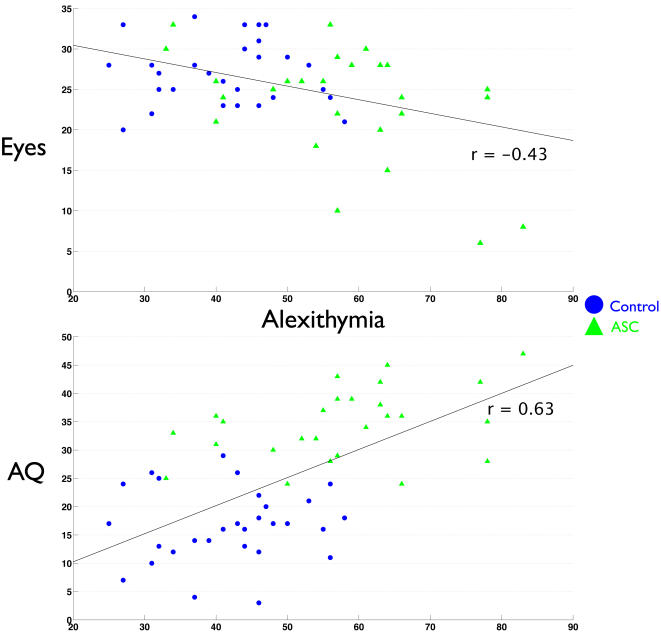
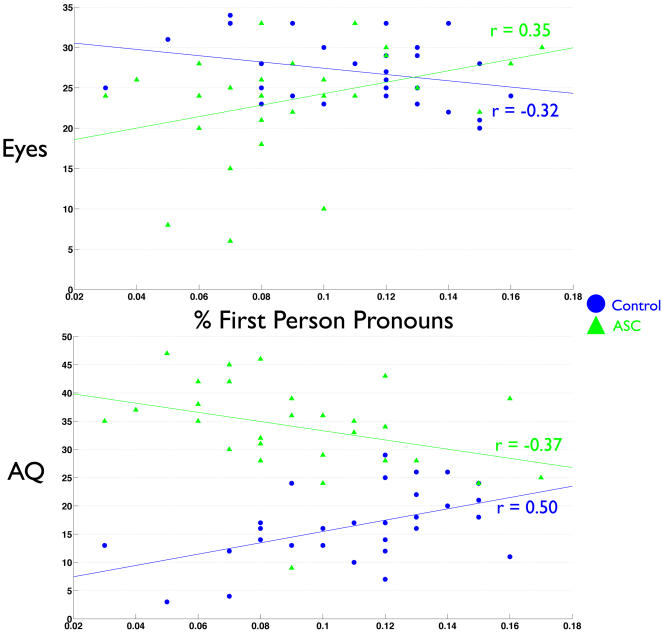
METHODOLOGY/PRINCIPAL FINDINGS: Thirty adults aged 19-45, with Asperger Syndrome or high-functioning autism and 30 age, sex, and IQ matched controls participated in the self-reference effect (SRE) paradigm. In the SRE paradigm, participants judged adjectives in relation to the self, a similar close other, a dissimilar non-close other, or for linguistic content. Recognition memory was later tested. After the SRE paradigm, several other complimentary self-referential cognitive measures were taken. Alexithymia and private self-consciousness were measured via self-report. Self-focused attention was measured on the Self-Focus Sentence Completion task. Empathy was measured with 3 self-report instruments and 1 performance measure of mentalizing (Eyes test). Self-reported autistic traits were also measured with the Autism Spectrum Quotient (AQ). Although individuals with ASC showed a significant SRE in memory, this bias was decreased compared to controls. Individuals with ASC also showed reduced memory for the self and a similar close other and also had concurrent impairments on measures of alexithymia, self-focused attention, and on all 4 empathy measures. Individual differences in self-referential cognition predicted mentalizing ability and self-reported autistic traits. More alexithymia and less self memory was predictive of larger mentalizing impairments and AQ scores regardless of diagnosis. In ASC, more self-focused attention is associated with better mentalizing ability and lower AQ scores, while in controls, more self-focused attention is associated with decreased mentalizing ability and higher AQ scores. Increasing private self-consciousness also predicted better mentalizing ability, but only for individuals with ASC.
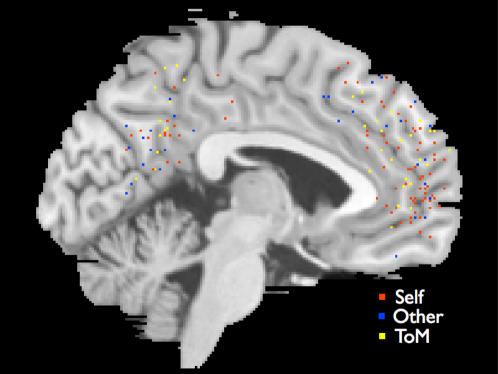
CONCLUSIONS/SIGNIFICANCE: We conclude that individuals with ASC have broad impairments in both self-referential cognition and empathy. These two domains are also intrinsically linked and support predictions made by simulation theory. Our results also highlight a specific dysfunction in ASC within cortical midlines structures of the brain such as the medial prefrontal cortex.
自闭症谱系障碍(ASC)个体在人际社交领域存在严重障碍,但不清楚 ASC 个体是否在自我参照领域也存在障碍。我们旨在通过多个经过充分验证的测量工具,评估自我参照认知和同理心是否在 ASC 中受损,以及这两个领域是否相互关联。
方法/主要发现:30 名 19-45 岁的阿斯伯格综合征或高功能自闭症患者和 30 名年龄、性别和智商匹配的对照组参与者参与了自我参照效应(SRE)范式。在 SRE 范式中,参与者根据自我、相似的亲近他人、不相似的非亲近他人或语言内容来判断形容词。之后进行了识别记忆测试。在 SRE 范式之后,还进行了其他一些补充性的自我参照认知测试。通过自我报告测量述情障碍和私人自我意识。通过自我聚焦句子完成任务测量自我聚焦注意力。同理心通过 3 个自我报告工具和 1 个心理化的绩效测量(Eyes 测试)进行测量。也使用自闭症谱系商数(AQ)自我报告了自闭症特征。尽管 ASC 个体在记忆中表现出显著的 SRE,但与对照组相比,这种偏差减小了。ASC 个体也表现出对自我和相似亲近他人的记忆减少,并且在述情障碍、自我聚焦注意力以及所有 4 项同理心测量方面都存在同时的损伤。自我参照认知的个体差异预测了心理化能力和自我报告的自闭症特征。无论诊断如何,更多的述情障碍和更少的自我记忆预示着更大的心理化损伤和 AQ 分数。在 ASC 中,更多的自我聚焦注意力与更好的心理化能力和更低的 AQ 分数相关,而在对照组中,更多的自我聚焦注意力与更差的心理化能力和更高的 AQ 分数相关。增加私人自我意识也预测了更好的心理化能力,但仅适用于 ASC 个体。
结论/意义:我们的结论是,ASC 个体在自我参照认知和同理心两个领域都存在广泛的损伤。这两个领域也存在内在联系,并支持模拟理论的预测。我们的结果还突出了 ASC 中大脑皮质中线结构(如内侧前额叶皮层)的特定功能障碍。