Department of Life, Health and Chemical Sciences, The Open University, Milton Keynes MK7 6AA, UK.
Neuropsychologia. 2013 Jan;51(1):98-105. doi: 10.1016/j.neuropsychologia.2012.11.013. Epub 2012 Nov 19.
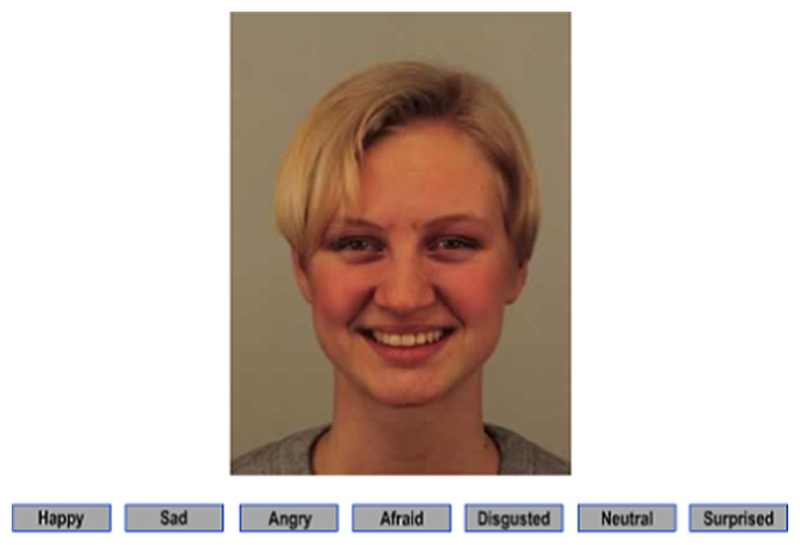
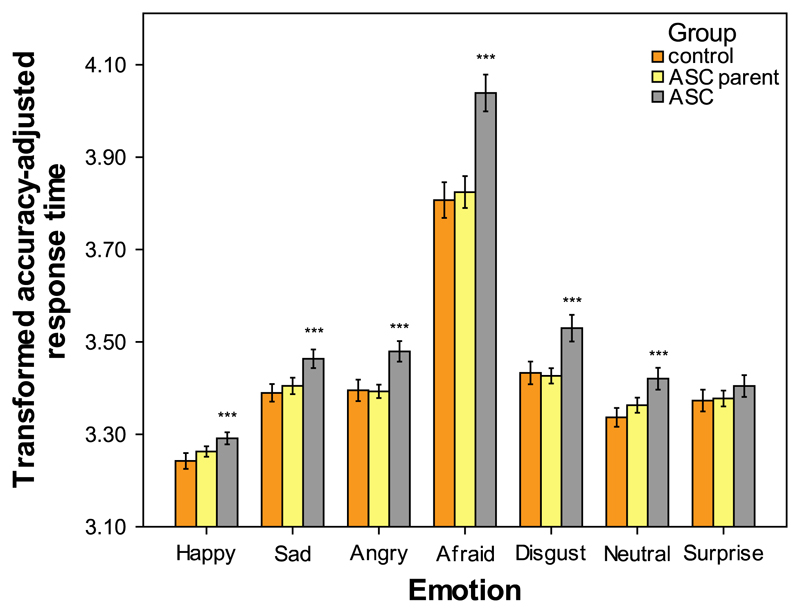
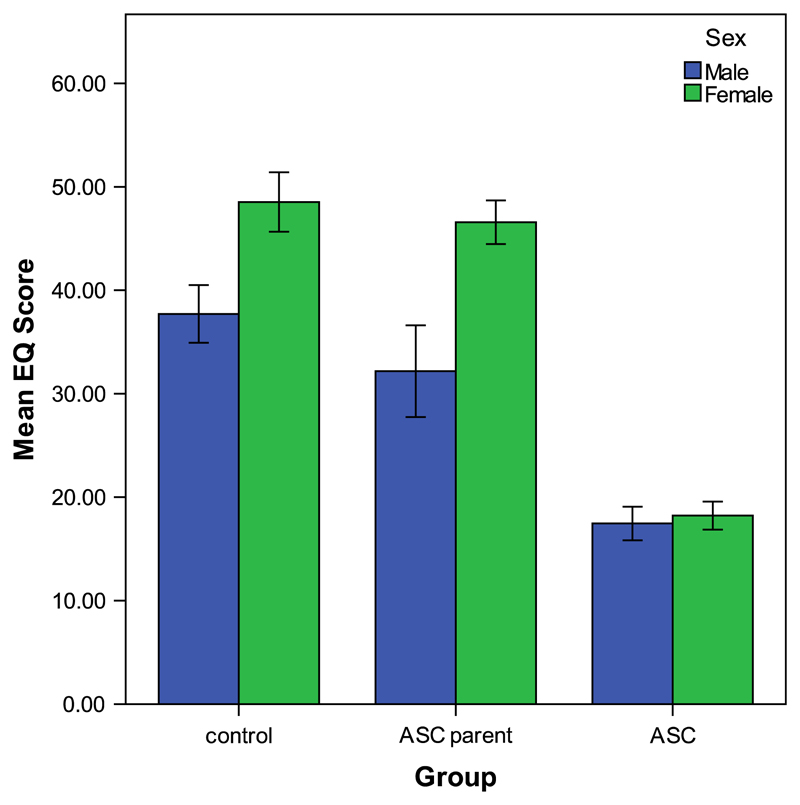
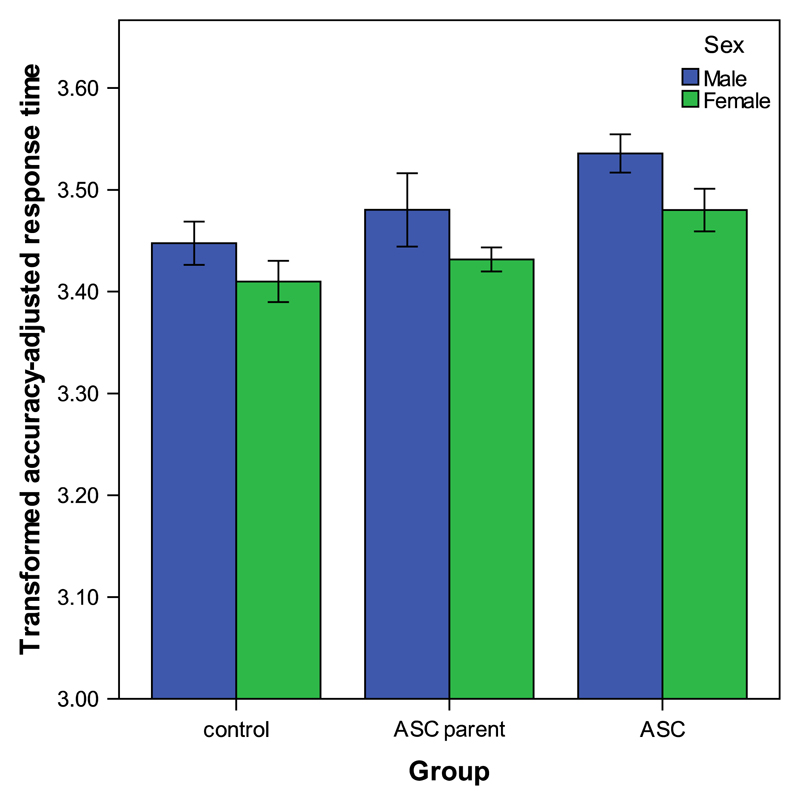
Empathy is the lens through which we view others' emotion expressions, and respond to them. In this study, empathy and facial emotion recognition were investigated in adults with autism spectrum conditions (ASC; N=314), parents of a child with ASC (N=297) and IQ-matched controls (N=184). Participants completed a self-report measure of empathy (the Empathy Quotient [EQ]) and a modified version of the Karolinska Directed Emotional Faces Task (KDEF) using an online test interface. Results showed that mean scores on the EQ were significantly lower in fathers (p<0.05) but not mothers (p>0.05) of children with ASC compared to controls, whilst both males and females with ASC obtained significantly lower EQ scores (p<0.001) than controls. On the KDEF, statistical analyses revealed poorer overall performance by adults with ASC (p<0.001) compared to the control group. When the 6 distinct basic emotions were analysed separately, the ASC group showed impaired performance across five out of six expressions (happy, sad, angry, afraid and disgusted). Parents of a child with ASC were not significantly worse than controls at recognising any of the basic emotions, after controlling for age and non-verbal IQ (all p>0.05). Finally, results indicated significant differences between males and females with ASC for emotion recognition performance (p<0.05) but not for self-reported empathy (p>0.05). These findings suggest that self-reported empathy deficits in fathers of autistic probands are part of the 'broader autism phenotype'. This study also reports new findings of sex differences amongst people with ASC in emotion recognition, as well as replicating previous work demonstrating empathy difficulties in adults with ASC. The use of empathy measures as quantitative endophenotypes for ASC is discussed.
同理心是我们观察他人情绪表达并对其做出反应的视角。在这项研究中,我们调查了自闭症谱系障碍(ASC;N=314)成人、自闭症患儿的父母(N=297)和 IQ 匹配对照组(N=184)的同理心和面部情绪识别能力。参与者使用在线测试界面完成了同理心自我报告量表(同理心商数 [EQ])和改良版卡罗林斯卡定向情绪面孔任务(KDEF)。结果显示,与对照组相比,自闭症患儿的父亲(p<0.05)但非母亲(p>0.05)的 EQ 平均得分显著降低,而 ASC 男性和女性的 EQ 得分均显著低于对照组(p<0.001)。在 KDEF 上,统计分析显示,与对照组相比,ASC 成人的整体表现明显较差(p<0.001)。当分别分析 6 种不同的基本情绪时,ASC 组在 6 种表情中的 5 种(快乐、悲伤、愤怒、害怕和厌恶)上表现出较差的成绩。在控制年龄和非言语 IQ 后,自闭症患儿的父母在识别任何一种基本情绪方面并不明显差于对照组(均 p>0.05)。最后,结果表明,ASC 男性和女性的情绪识别表现存在显著差异(p<0.05),但同理心自我报告无显著差异(p>0.05)。这些发现表明,自闭症患儿父亲的同理心自我报告缺陷是“广泛自闭症表型”的一部分。本研究还报告了 ASC 人群中情绪识别存在性别差异的新发现,以及复制了先前研究中显示的 ASC 成人同理心困难的发现。讨论了将同理心测量作为 ASC 的定量内表型的应用。