Kohl Thomas O, Hitzeroth Inga I, Christensen Neil D, Rybicki Edward P
Institute of Infectious Disease and Molecular Medicine, Faculty of Health Sciences, University of Cape Town, PO Observatory 7925, Cape Town, South Africa.
BMC Biotechnol. 2007 Sep 12;7:56. doi: 10.1186/1472-6750-7-56.
We have investigated the possibility and feasibility of producing the HPV-11 L1 major capsid protein in transgenic Arabidopsis thaliana ecotype Columbia and Nicotiana tabacum cv. Xanthi as potential sources for an inexpensive subunit vaccine.
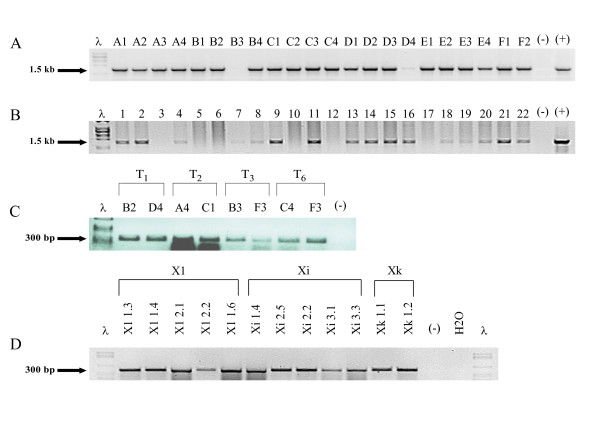
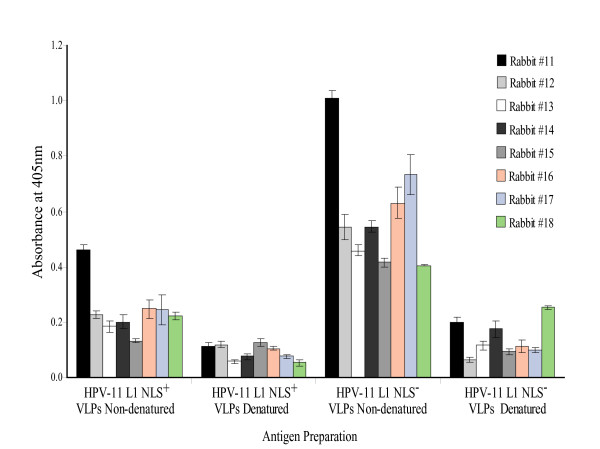
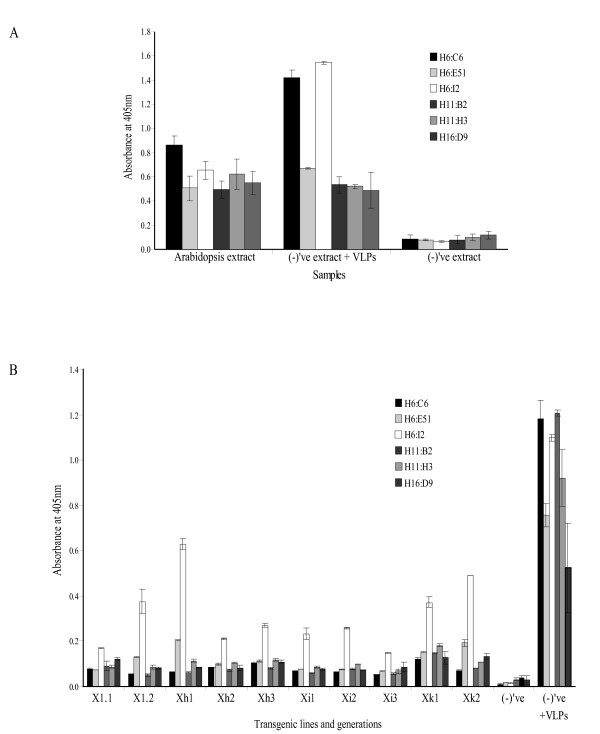
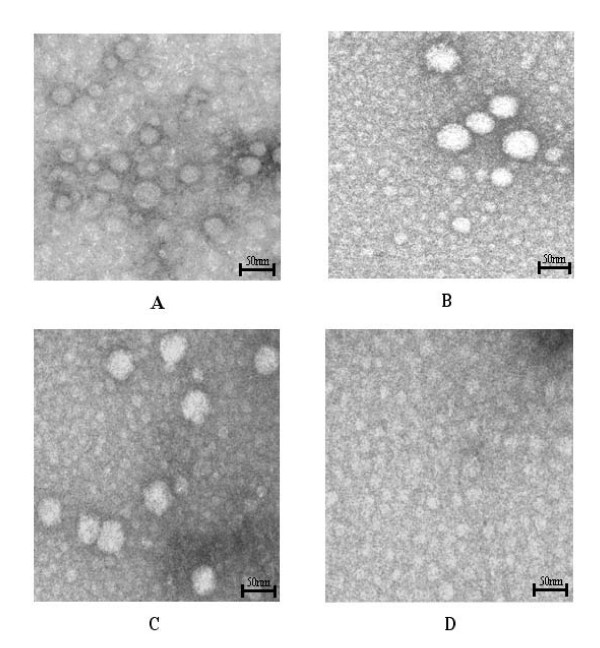
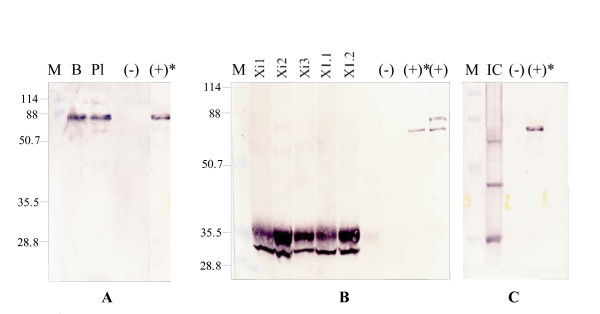
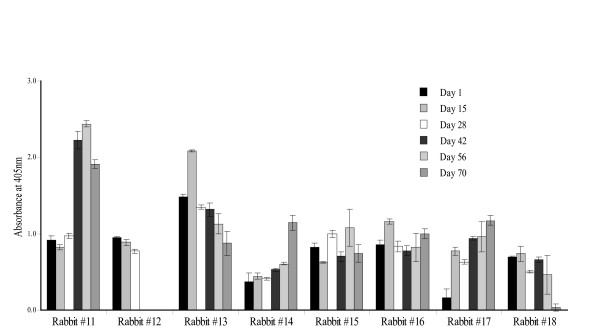
Transformation of plants was only achieved with the HPV-11 L1 gene with the C-terminal nuclear localization signal (NLS-) encoding region removed, and not with the full-length gene. The HPV-11 L1 NLS- gene was stably integrated and inherited through several generations of transgenic plants. Plant-derived HPV-11 L1 protein was capable of assembling into virus-like particles (VLPs), although resulting particles displayed a pleomorphic phenotype. Neutralising monoclonal antibodies binding both surface-linear and conformation-specific epitopes bound the A. thaliana-derived particles and - to a lesser degree - the N. tabacum-derived particles, suggesting that plant-derived and insect cell-derived VLPs displayed similar antigenic properties. Yields of up to 12 microg/g of HPV-11 L1 NLS- protein were harvested from transgenic A. thaliana plants, and 2 microg/g from N. tabacum plants - a significant increase over previous efforts. Immunization of New Zealand white rabbits with approximately 50 microg of plant-derived HPV-11 L1 NLS- protein induced an antibody response that predominantly recognized insect cell-produced HPV-11 L1 NLS- and not NLS+ VLPs. Evaluation of the same sera concluded that none of them were able to neutralise pseudovirion in vitro.
We expressed the wild-type HPV-11 L1 NLS- gene in two different plant species and increased yields of HPV-11 L1 protein by between 500 and 1000-fold compared to previous reports. Inoculation of rabbits with extracts from both plant types resulted in a weak immune response, and antisera neither reacted with native HPV-11 L1 VLPs, nor did they neutralise HPV-11 pseudovirion infectivity. This has important and potentially negative implications for the production of HPV-11 vaccines in plants.
我们研究了在转基因拟南芥生态型哥伦比亚和烟草品种Xanthi中生产人乳头瘤病毒11型(HPV - 11)主要衣壳蛋白L1作为廉价亚单位疫苗潜在来源的可能性和可行性。
仅去除C末端核定位信号(NLS -)编码区的HPV - 11 L1基因成功实现了植物转化,全长基因则未成功。HPV - 11 L1 NLS -基因稳定整合并在几代转基因植物中遗传。植物源HPV - 11 L1蛋白能够组装成病毒样颗粒(VLP),尽管所得颗粒呈现多形性表型。结合表面线性和构象特异性表位的中和单克隆抗体与拟南芥源颗粒结合,与烟草源颗粒的结合程度较低,这表明植物源和昆虫细胞源VLP具有相似的抗原特性。从转基因拟南芥植物中收获的HPV - 11 L1 NLS -蛋白产量高达12微克/克,烟草植物中为2微克/克,比之前的研究有显著提高。用约50微克植物源HPV - 11 L1 NLS -蛋白免疫新西兰白兔诱导了抗体反应,该反应主要识别昆虫细胞产生的HPV - 11 L1 NLS -而非NLS + VLP。对相同血清的评估得出结论,它们均无法在体外中和假病毒颗粒。
我们在两种不同植物物种中表达了野生型HPV - 11 L1 NLS -基因,与之前的报道相比,HPV - 11 L1蛋白产量提高了500至1000倍。用两种植物类型的提取物接种兔子产生了微弱的免疫反应,抗血清既不与天然HPV - 11 L1 VLP反应,也不能中和HPV - 11假病毒颗粒的感染性。这对植物中HPV - 11疫苗的生产具有重要且潜在的负面影响。