Tranel Daniel, Manzel Kenneth, Anderson Steven W
Department of Neurology, University of Iowa Hospitals and Clinics, Iowa City, Iowa 52242, USA.
Clin Neuropsychol. 2008 Mar;22(2):242-61. doi: 10.1080/13854040701218410.
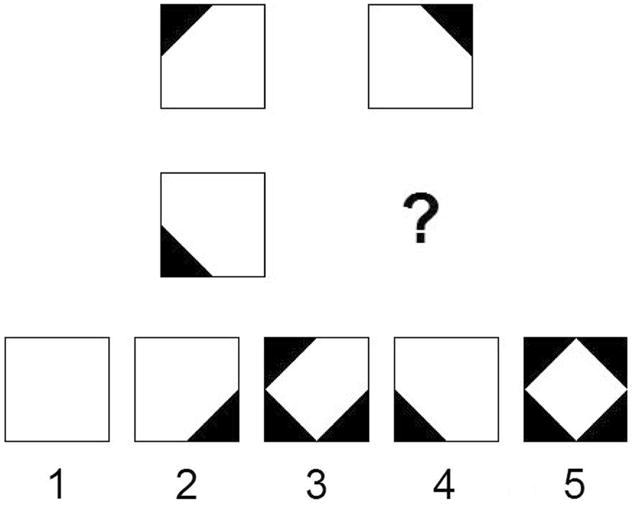
Patients with prefrontal damage and severe defects in decision making and emotional regulation often have a remarkable absence of intellectual impairment, as measured by conventional IQ tests such as the WAIS/WAIS-R. This enigma might be explained by shortcomings in the tests, which tend to emphasize measures of "crystallized" (e.g., vocabulary, fund of information) more than "fluid" (e.g., novel problem solving) intelligence. The WAIS-III added the Matrix Reasoning subtest to enhance measurement of fluid reasoning. In a set of four studies, we investigated Matrix Reasoning performances in 80 patients with damage to various sectors of the prefrontal cortex, and contrasted these with the performances of 80 demographically matched patients with damage outside the frontal lobes. The results failed to support the hypothesis that prefrontal damage would disproportionately impair fluid intelligence, and every prefrontal subgroup we studied (dorsolateral, ventromedial, dorsolateral + ventromedial) had Matrix Reasoning scores (as well as IQ scores more generally) that were indistinguishable from those of the brain-damaged comparison groups. Our findings do not support a connection between fluid intelligence and the frontal lobes, although a viable alternative interpretation is that the Matrix Reasoning subtest lacks construct validity as a measure of fluid intelligence.
前额叶受损且在决策和情绪调节方面存在严重缺陷的患者,在通过诸如韦氏成人智力量表/韦氏成人智力量表修订版等传统智商测试衡量时,往往明显不存在智力障碍。这个谜团或许可以用测试中的缺陷来解释,这些测试往往更强调“晶体”(如词汇、信息储备)而非“流体”(如解决新问题)智力的测量。韦氏成人智力量表第三版增加了矩阵推理分测验以加强对流体推理的测量。在一组四项研究中,我们调查了80名前额叶皮质不同区域受损患者的矩阵推理表现,并将其与80名在人口统计学上匹配的额叶外受损患者的表现进行对比。结果未能支持前额叶损伤会不成比例地损害流体智力这一假设,我们研究的每个前额叶亚组(背外侧、腹内侧、背外侧 + 腹内侧)的矩阵推理分数(以及更普遍的智商分数)与脑损伤对照组的分数并无差异。我们的研究结果不支持流体智力与额叶之间存在关联,尽管一个可行的替代解释是矩阵推理分测验作为流体智力的一种测量方式缺乏结构效度。