Guzik Tomasz J, Hoch Nyssa E, Brown Kathryn A, McCann Louise A, Rahman Ayaz, Dikalov Sergey, Goronzy Jorg, Weyand Cornelia, Harrison David G
Division of Cardiology, Emory University School of Medicine, Atlanta, GA 30033, USA.
J Exp Med. 2007 Oct 1;204(10):2449-60. doi: 10.1084/jem.20070657. Epub 2007 Sep 17.
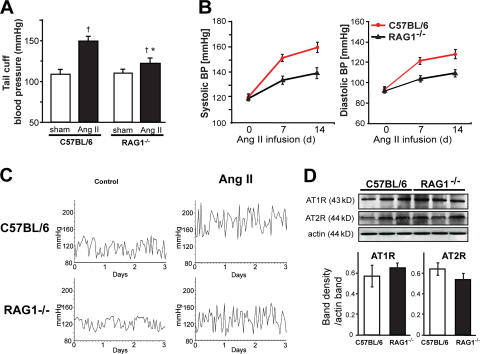
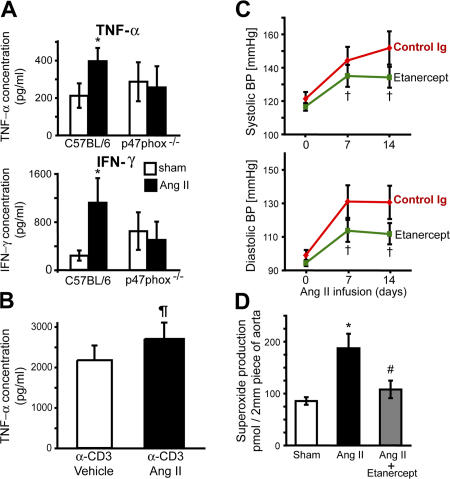
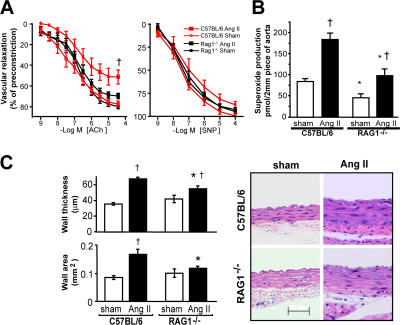
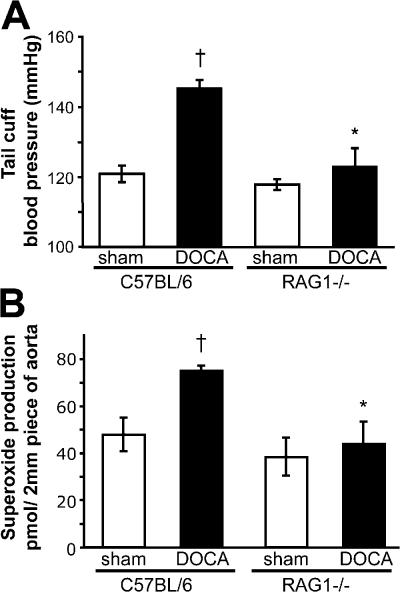
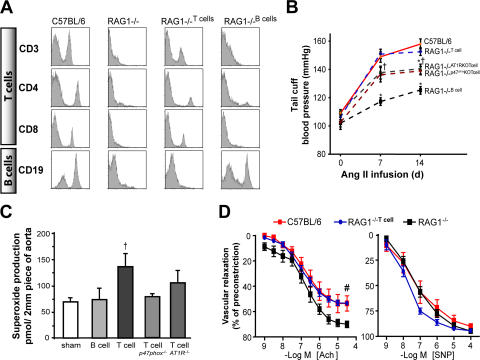
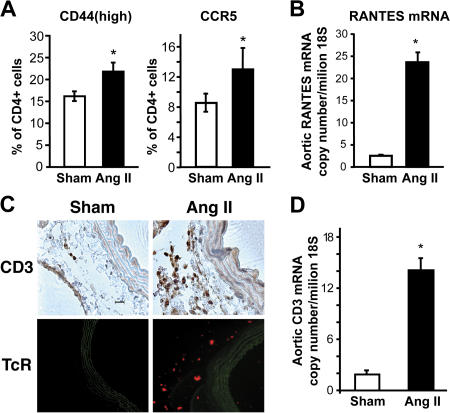
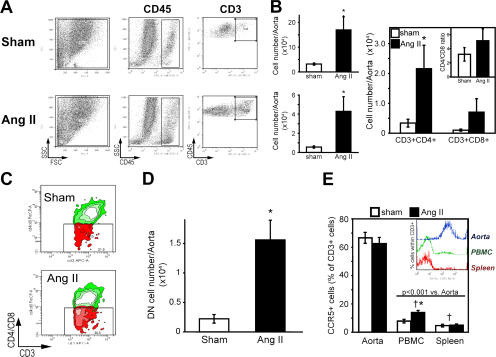
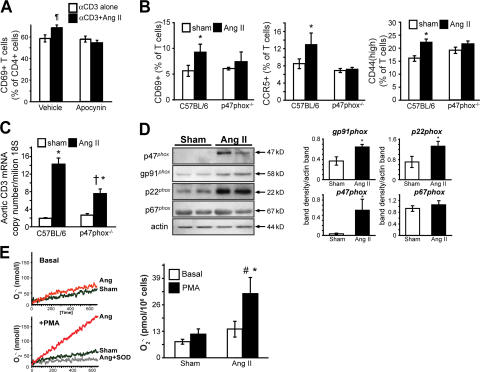
Hypertension promotes atherosclerosis and is a major source of morbidity and mortality. We show that mice lacking T and B cells (RAG-1-/- mice) have blunted hypertension and do not develop abnormalities of vascular function during angiotensin II infusion or desoxycorticosterone acetate (DOCA)-salt. Adoptive transfer of T, but not B, cells restored these abnormalities. Angiotensin II is known to stimulate reactive oxygen species production via the nicotinamide adenosine dinucleotide phosphate (NADPH) oxidase in several cells, including some immune cells. Accordingly, adoptive transfer of T cells lacking the angiotensin type I receptor or a functional NADPH oxidase resulted in blunted angiotensin II-dependent hypertension and decreased aortic superoxide production. Angiotensin II increased T cell markers of activation and tissue homing in wild-type, but not NADPH oxidase-deficient, mice. Angiotensin II markedly increased T cells in the perivascular adipose tissue (periadventitial fat) and, to a lesser extent the adventitia. These cells expressed high levels of CC chemokine receptor 5 and were commonly double negative (CD3+CD4-CD8-). This infiltration was associated with an increase in intercellular adhesion molecule-1 and RANTES in the aorta. Hypertension also increased T lymphocyte production of tumor necrosis factor (TNF) alpha, and treatment with the TNFalpha antagonist etanercept prevented the hypertension and increase in vascular superoxide caused by angiotensin II. These studies identify a previously undefined role for T cells in the genesis of hypertension and support a role of inflammation in the basis of this prevalent disease. T cells might represent a novel therapeutic target for the treatment of high blood pressure.
高血压促进动脉粥样硬化,是发病和死亡的主要原因。我们发现,缺乏T细胞和B细胞的小鼠(RAG-1-/-小鼠)血压升高不明显,在输注血管紧张素II或使用醋酸脱氧皮质酮(DOCA)-盐的过程中,其血管功能未出现异常。过继转移T细胞(而非B细胞)可恢复这些异常。已知血管紧张素II可通过烟酰胺腺嘌呤二核苷酸磷酸(NADPH)氧化酶刺激多种细胞(包括一些免疫细胞)产生活性氧。因此,过继转移缺乏血管紧张素I型受体或功能性NADPH氧化酶的T细胞,可导致血管紧张素II依赖性高血压减弱,主动脉超氧化物生成减少。血管紧张素II可增加野生型小鼠(而非NADPH氧化酶缺陷型小鼠)T细胞的活化标记和组织归巢。血管紧张素II可使血管周围脂肪组织(血管外膜脂肪)中的T细胞显著增加,在外膜中的增加程度较小。这些细胞高表达CC趋化因子受体5,通常为双阴性(CD3+CD4-CD8-)。这种浸润与主动脉中细胞间黏附分子-1和调节激活正常T细胞表达和分泌的趋化因子(RANTES)增加有关。高血压还会增加T淋巴细胞肿瘤坏死因子(TNF)α的产生,使用TNFα拮抗剂依那西普治疗可预防血管紧张素II引起的高血压和血管超氧化物增加。这些研究确定了T细胞在高血压发生过程中一个以前未明确的作用,并支持炎症在这种常见疾病发病机制中的作用。T细胞可能是治疗高血压的一个新的治疗靶点。