Kurakin Alexei, Swistowski Andrzej, Wu Susan C, Bredesen Dale E
The Buck Institute for Age Research, Novato, California, USA.
PLoS One. 2007 Sep 26;2(9):e953. doi: 10.1371/journal.pone.0000953.
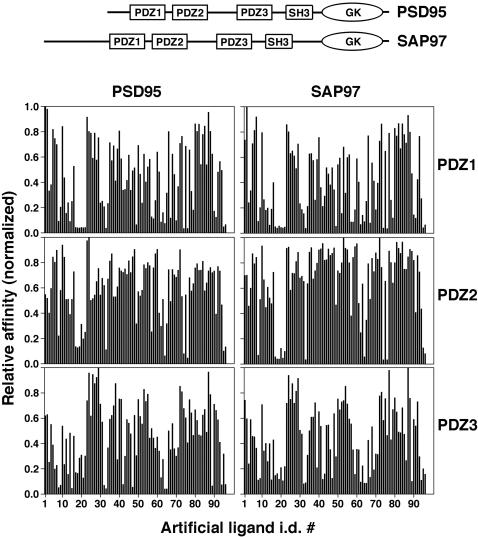
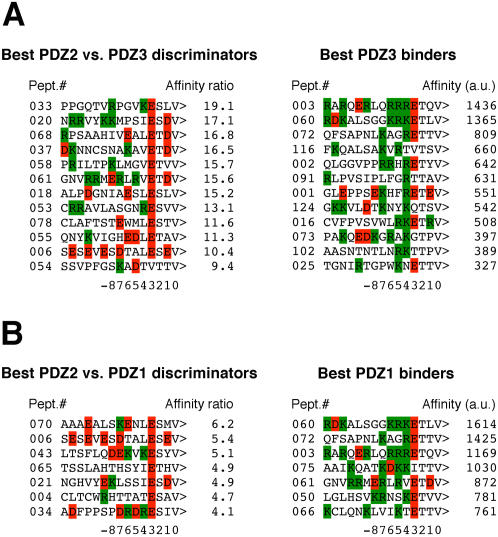
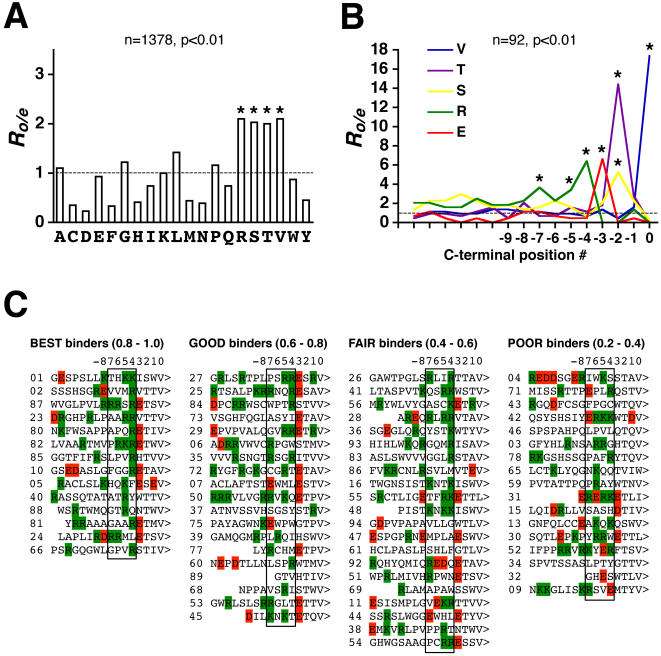
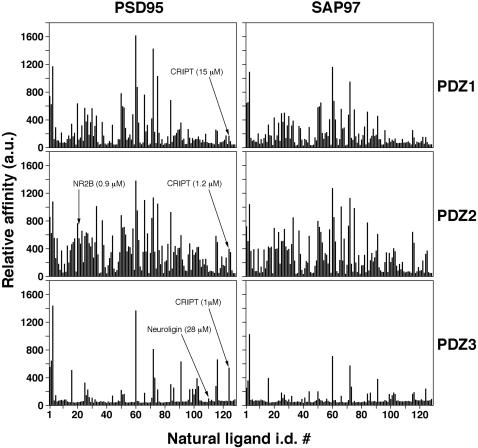
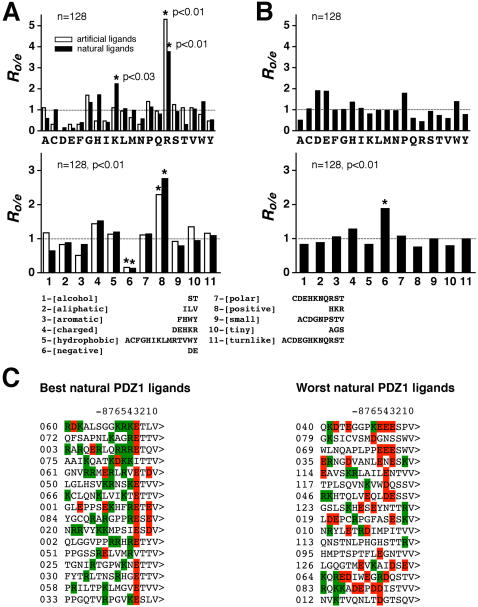
Specific protein associations define the wiring of protein interaction networks and thus control the organization and functioning of the cell as a whole. Peptide recognition by PDZ and other protein interaction domains represents one of the best-studied classes of specific protein associations. However, a mechanistic understanding of the relationship between selectivity and promiscuity commonly observed in the interactions mediated by peptide recognition modules as well as its functional meaning remain elusive. To address these questions in a comprehensive manner, two large populations of artificial and natural peptide ligands of six archetypal PDZ domains from the synaptic proteins PSD95 and SAP97 were generated by target-assisted iterative screening (TAIS) of combinatorial peptide libraries and by synthesis of proteomic fragments, correspondingly. A comparative statistical analysis of affinity-ranked artificial and natural ligands yielded a comprehensive picture of known and novel PDZ ligand specificity determinants, revealing a hitherto unappreciated combination of specificity and adaptive plasticity inherent to PDZ domain recognition. We propose a reconceptualization of the PDZ domain in terms of a complex adaptive system representing a flexible compromise between the rigid order of exquisite specificity and the chaos of unselective promiscuity, which has evolved to mediate two mutually contradictory properties required of such higher order sub-cellular organizations as synapses, cell junctions, and others--organizational structure and organizational plasticity/adaptability. The generalization of this reconceptualization in regard to other protein interaction modules and specific protein associations is consistent with the image of the cell as a complex adaptive macromolecular system as opposed to clockwork.
特定的蛋白质相互作用定义了蛋白质相互作用网络的连接方式,从而控制着整个细胞的组织和功能。PDZ结构域及其他蛋白质相互作用结构域对肽段的识别是研究最为深入的特定蛋白质相互作用类型之一。然而,对于肽段识别模块介导的相互作用中普遍存在的选择性和多特异性之间的关系及其功能意义,目前仍缺乏机制上的理解。为了全面解决这些问题,通过组合肽库的靶标辅助迭代筛选(TAIS)以及蛋白质组片段的合成,分别生成了来自突触蛋白PSD95和SAP97的六个典型PDZ结构域的大量人工和天然肽配体。对亲和力排序的人工和天然配体进行比较统计分析,得到了已知和新型PDZ配体特异性决定因素的全面图景,揭示了PDZ结构域识别中迄今未被认识到的特异性和适应性可塑性的组合。我们提出将PDZ结构域重新概念化为一个复杂的自适应系统,它代表了精确特异性的刚性秩序与无选择性多特异性的混乱之间的灵活折衷,这种折衷已经进化到可以介导突触、细胞连接等此类高阶亚细胞组织所需的两种相互矛盾的特性——组织结构和组织可塑性/适应性。将这种重新概念化推广到其他蛋白质相互作用模块和特定蛋白质相互作用中,与将细胞视为复杂自适应大分子系统而非机械装置的观点一致。