Ho Chai-Ling, Kwan Yen-Yen, Choi Mei-Chooi, Tee Sue-Sean, Ng Wai-Har, Lim Kok-Ang, Lee Yang-Ping, Ooi Siew-Eng, Lee Weng-Wah, Tee Jin-Ming, Tan Siang-Hee, Kulaveerasingam Harikrishna, Alwee Sharifah Shahrul Rabiah Syed, Abdullah Meilina Ong
Department of Cell and Molecular Biology, Faculty of Biotechnology and Biomolecular Sciences, Universiti Putra Malaysia, 43400 UPM-Serdang, Selangor, Malaysia.
BMC Genomics. 2007 Oct 22;8:381. doi: 10.1186/1471-2164-8-381.
Oil palm is the second largest source of edible oil which contributes to approximately 20% of the world's production of oils and fats. In order to understand the molecular biology involved in in vitro propagation, flowering, efficient utilization of nitrogen sources and root diseases, we have initiated an expressed sequence tag (EST) analysis on oil palm.
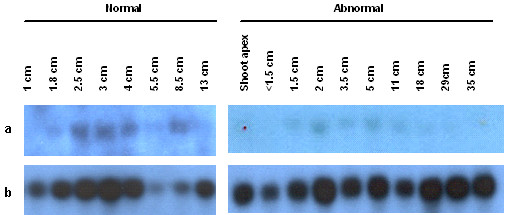
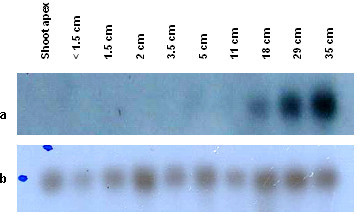
In this study, six cDNA libraries from oil palm zygotic embryos, suspension cells, shoot apical meristems, young flowers, mature flowers and roots, were constructed. We have generated a total of 14537 expressed sequence tags (ESTs) from these libraries, from which 6464 tentative unique contigs (TUCs) and 2129 singletons were obtained. Approximately 6008 of these tentative unique genes (TUGs) have significant matches to the non-redundant protein database, from which 2361 were assigned to one or more Gene Ontology categories. Predominant transcripts and differentially expressed genes were identified in multiple oil palm tissues. Homologues of genes involved in many aspects of flower development were also identified among the EST collection, such as CONSTANS-like, AGAMOUS-like (AGL)2, AGL20, LFY-like, SQUAMOSA, SQUAMOSA binding protein (SBP) etc. Majority of them are the first representatives in oil palm, providing opportunities to explore the cause of epigenetic homeotic flowering abnormality in oil palm, given the importance of flowering in fruit production. The transcript levels of two flowering-related genes, EgSBP and EgSEP were analysed in the flower tissues of various developmental stages. Gene homologues for enzymes involved in oil biosynthesis, utilization of nitrogen sources, and scavenging of oxygen radicals, were also uncovered among the oil palm ESTs.
The EST sequences generated will allow comparative genomic studies between oil palm and other monocotyledonous and dicotyledonous plants, development of gene-targeted markers for the reference genetic map, design and fabrication of DNA array for future studies of oil palm. The outcomes of such studies will contribute to oil palm improvements through the establishment of breeding program using marker-assisted selection, development of diagnostic assays using gene targeted markers, and discovery of candidate genes related to important agronomic traits of oil palm.
油棕是第二大食用油来源,占全球油脂产量的约20%。为了了解参与离体繁殖、开花、氮源高效利用和根部病害的分子生物学,我们启动了对油棕的表达序列标签(EST)分析。
在本研究中,构建了来自油棕合子胚、悬浮细胞、茎尖分生组织、幼花、成熟花和根的六个cDNA文库。我们从这些文库中总共产生了14537个表达序列标签(EST),从中获得了6464个暂定独特重叠群(TUC)和2129个单拷贝序列。这些暂定独特基因(TUG)中约有6008个与非冗余蛋白质数据库有显著匹配,其中2361个被归入一个或多个基因本体类别。在多个油棕组织中鉴定出了主要转录本和差异表达基因。在EST集合中还鉴定出了参与花发育多个方面的基因的同源物,如CONSTANS样、AGAMOUS样(AGL)2、AGL20、LFY样、SQUAMOSA、SQUAMOSA结合蛋白(SBP)等。它们中的大多数是油棕中的首批代表,鉴于开花在果实生产中的重要性,为探索油棕表观遗传同源异型开花异常的原因提供了机会。分析了两个开花相关基因EgSBP和EgSEP在不同发育阶段花组织中的转录水平。在油棕EST中还发现了参与油脂生物合成、氮源利用和氧自由基清除的酶的基因同源物。
所产生的EST序列将允许进行油棕与其他单子叶和双子叶植物之间的比较基因组研究,开发用于参考遗传图谱的基因靶向标记,设计和制造用于油棕未来研究的DNA芯片。此类研究的结果将通过建立使用标记辅助选择的育种计划、开发使用基因靶向标记的诊断检测方法以及发现与油棕重要农艺性状相关的候选基因,为油棕的改良做出贡献。