Low Eng-Ti L, Rosli Rozana, Jayanthi Nagappan, Mohd-Amin Ab Halim, Azizi Norazah, Chan Kuang-Lim, Maqbool Nauman J, Maclean Paul, Brauning Rudi, McCulloch Alan, Moraga Roger, Ong-Abdullah Meilina, Singh Rajinder
Advanced Biotechnology and Breeding Centre, Malaysian Palm Oil Board, Kajang, Selangor, Malaysia.
AgResearch Ruakura Research Centre, Hamilton, New Zealand.
PLoS One. 2014 Jan 30;9(1):e86728. doi: 10.1371/journal.pone.0086728. eCollection 2014.
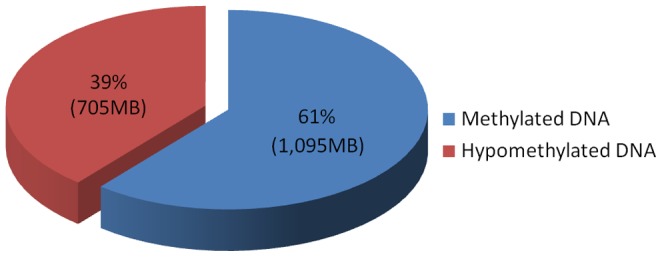
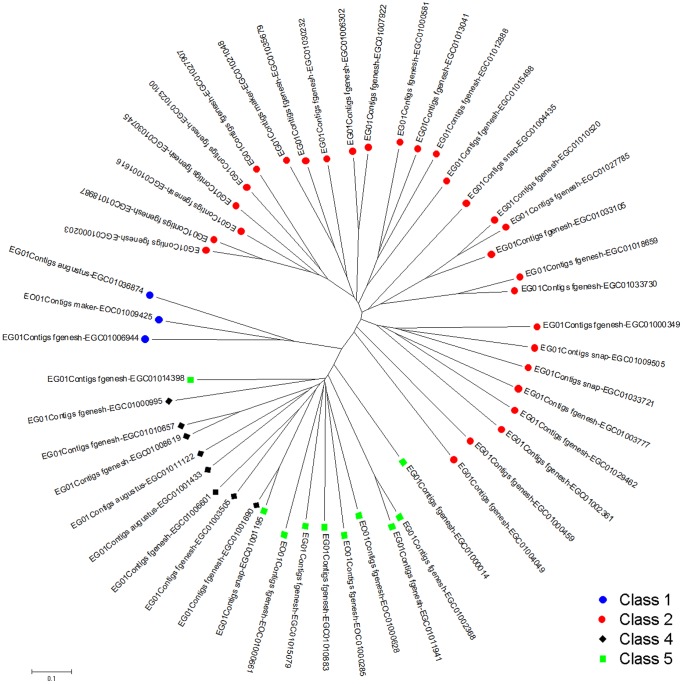
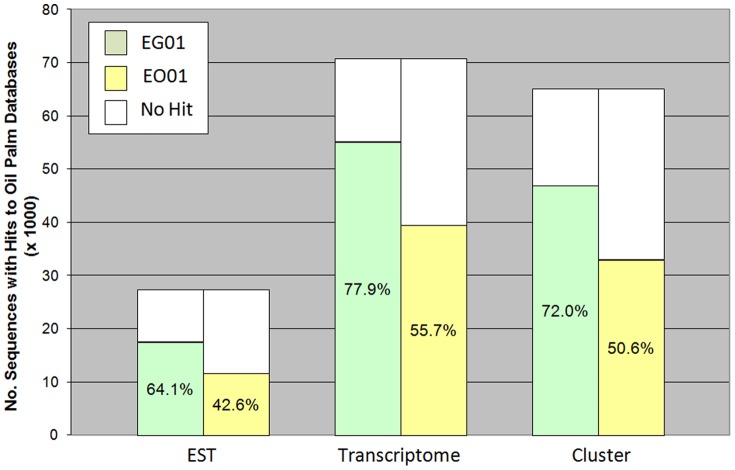
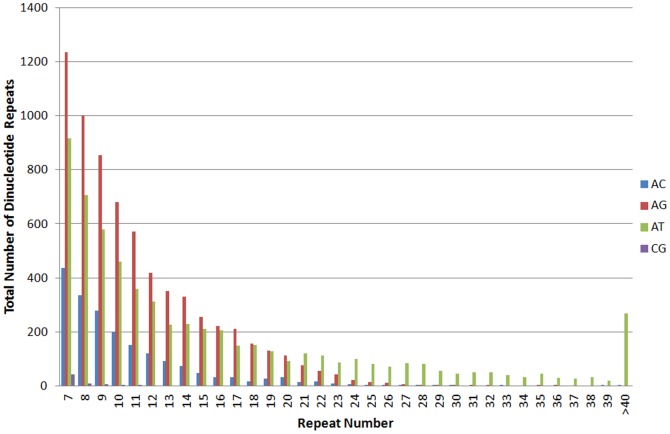
Demand for palm oil has been increasing by an average of ∼8% the past decade and currently accounts for about 59% of the world's vegetable oil market. This drives the need to increase palm oil production. Nevertheless, due to the increasing need for sustainable production, it is imperative to increase productivity rather than the area cultivated. Studies on the oil palm genome are essential to help identify genes or markers that are associated with important processes or traits, such as flowering, yield and disease resistance. To achieve this, 294,115 and 150,744 sequences from the hypomethylated or gene-rich regions of Elaeis guineensis and E. oleifera genome were sequenced and assembled into contigs. An additional 16,427 shot-gun sequences and 176 bacterial artificial chromosomes (BAC) were also generated to check the quality of libraries constructed. Comparison of these sequences revealed that although the methylation-filtered libraries were sequenced at low coverage, they still tagged at least 66% of the RefSeq supported genes in the BAC and had a filtration power of at least 2.0. A total 33,752 microsatellites and 40,820 high-quality single nucleotide polymorphism (SNP) markers were identified. These represent the most comprehensive collection of microsatellites and SNPs to date and would be an important resource for genetic mapping and association studies. The gene models predicted from the assembled contigs were mined for genes of interest, and 242, 65 and 14 oil palm transcription factors, resistance genes and miRNAs were identified respectively. Examples of the transcriptional factors tagged include those associated with floral development and tissue culture, such as homeodomain proteins, MADS, Squamosa and Apetala2. The E. guineensis and E. oleifera hypomethylated sequences provide an important resource to understand the molecular mechanisms associated with important agronomic traits in oil palm.
在过去十年中,对棕榈油的需求平均每年增长约8%,目前约占全球植物油市场的59%。这推动了增加棕榈油产量的需求。然而,由于对可持续生产的需求不断增加,必须提高生产力而非扩大种植面积。油棕基因组研究对于帮助识别与重要过程或性状(如开花、产量和抗病性)相关的基因或标记至关重要。为实现这一目标,对来自油棕(Elaeis guineensis)和油橄榄(E. oleifera)基因组低甲基化或基因丰富区域的294,115个和150,744个序列进行了测序,并组装成重叠群。还生成了另外16,427个鸟枪法序列和176个细菌人工染色体(BAC),以检查所构建文库的质量。这些序列的比较表明,尽管甲基化过滤文库的测序覆盖率较低,但它们仍标记了BAC中至少66%的RefSeq支持基因,并且过滤能力至少为2.0。总共鉴定出33,752个微卫星和40,820个高质量单核苷酸多态性(SNP)标记。这些代表了迄今为止最全面的微卫星和SNP集合,将成为遗传图谱绘制和关联研究的重要资源。从组装的重叠群预测的基因模型中挖掘感兴趣的基因,分别鉴定出242个、65个和14个油棕转录因子、抗性基因和miRNA。标记的转录因子示例包括与花发育和组织培养相关的转录因子,如同源域蛋白、MADS、Squamosa和Apetala2。油棕和油橄榄的低甲基化序列为理解油棕重要农艺性状相关的分子机制提供了重要资源。