College of Plant Science and Technology, Huazhong Agricultural University, Wuhan, Hubei, People's Republic of China.
PLoS One. 2011;6(12):e28676. doi: 10.1371/journal.pone.0028676. Epub 2011 Dec 6.
Upland cotton, Gossypium hirsutum L., is one of the world's most important economic crops. In the absence of the entire genomic sequence, a large number of expressed sequence tag (EST) resources of upland cotton have been generated and used in several studies. However, information about the flower development of this species is rare.
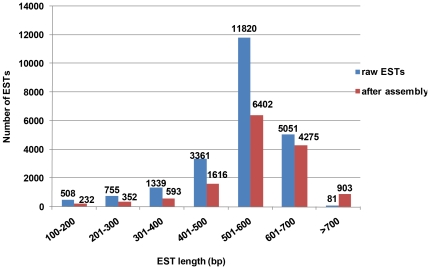
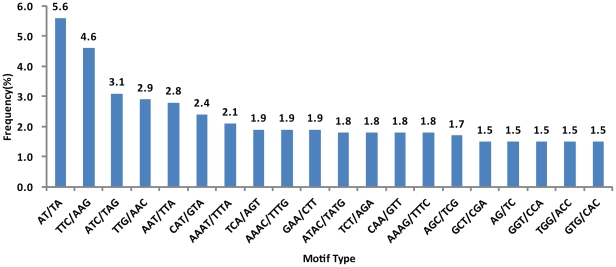
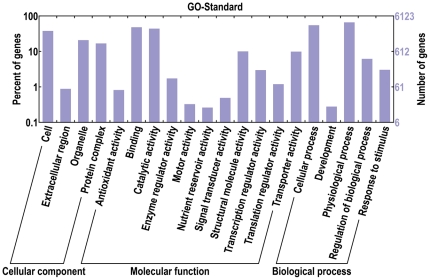
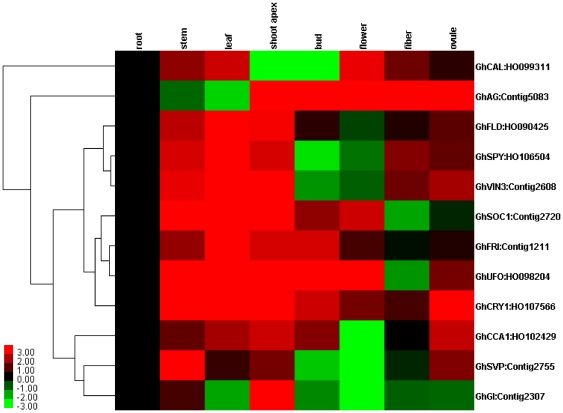
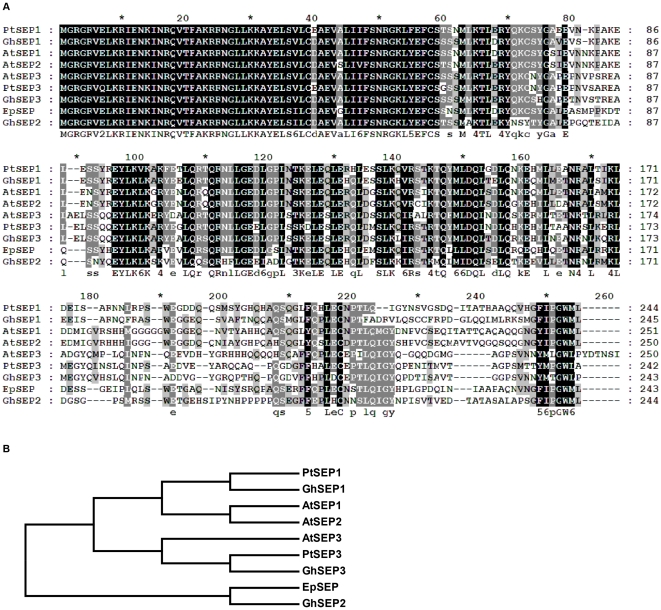
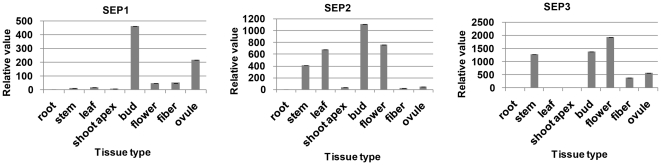
METHODOLOGY/PRINCIPAL FINDINGS: To clarify the molecular mechanism of flower development in upland cotton, 22,915 high-quality ESTs were generated and assembled into 14,373 unique sequences consisting of 4,563 contigs and 9,810 singletons from a normalized and full-length cDNA library constructed from pooled RNA isolated from shoot apexes, squares, and flowers. Comparative analysis indicated that 5,352 unique sequences had no high-degree matches to the cotton public database. Functional annotation showed that several upland cotton homologs with flowering-related genes were identified in our library. The majority of these genes were specifically expressed in flowering-related tissues. Three GhSEP (G. hirsutum L. SEPALLATA) genes determining floral organ development were cloned, and quantitative real-time PCR (qRT-PCR) revealed that these genes were expressed preferentially in squares or flowers. Furthermore, 670 new putative microsatellites with flanking sequences sufficient for primer design were identified from the 645 unigenes. Twenty-five EST-simple sequence repeats were randomly selected for validation and transferability testing in 17 Gossypium species. Of these, 23 were identified as true-to-type simple sequence repeat loci and were highly transferable among Gossypium species.
CONCLUSIONS/SIGNIFICANCE: A high-quality, normalized, full-length cDNA library with a total of 14,373 unique ESTs was generated to provide sequence information for gene discovery and marker development related to upland cotton flower development. These EST resources form a valuable foundation for gene expression profiling analysis, functional analysis of newly discovered genes, genetic linkage, and quantitative trait loci analysis.
陆地棉(Gossypium hirsutum L.)是世界上最重要的经济作物之一。在缺乏整个基因组序列的情况下,已经生成了大量陆地棉的表达序列标签(EST)资源,并在多项研究中得到了应用。然而,关于该物种花发育的信息却很少。
方法/主要发现:为了阐明陆地棉花发育的分子机制,我们从一个由茎尖、花蕾和花的混合 RNA 构建的标准化全长 cDNA 文库中生成并组装了 22915 个高质量 EST,得到了 14373 个独特序列,包括 4563 个 contigs 和 9810 个 singletons。比较分析表明,5352 个独特序列与棉花公共数据库没有高度匹配。功能注释表明,在我们的文库中鉴定出了几个与开花相关基因的陆地棉同源物。这些基因中的大多数在与开花相关的组织中特异性表达。三个决定花器官发育的 GhSEP(G. hirsutum L. SEPALLATA)基因被克隆,定量实时 PCR(qRT-PCR)显示这些基因在花蕾或花中优先表达。此外,从 645 个 unigenes 中鉴定出了 670 个具有侧翼序列的新的假定微卫星,这些序列足以设计引物。从 17 个棉属物种中随机选择 25 个 EST-简单重复序列进行验证和可转移性测试。其中,23 个被鉴定为真型简单重复序列位点,在棉属物种间具有高度可转移性。
结论/意义:生成了一个高质量、标准化、全长 cDNA 文库,共包含 14373 个独特的 EST,为陆地棉花发育相关的基因发现和标记开发提供了序列信息。这些 EST 资源为基因表达谱分析、新发现基因的功能分析、遗传连锁和数量性状位点分析奠定了有价值的基础。