Xue Huiling, Xian Bo, Dong Dong, Xia Kai, Zhu Shanshan, Zhang Zhongnan, Hou Lei, Zhang Qingpeng, Zhang Yi, Han Jing-Dong J
Chinese Academy of Sciences Key Laboratory of Molecular and Developmental Biology, Center for Molecular Systems Biology, Institute of Genetics and Developmental Biology, Chinese Academy of Sciences, Beijing, China.
Mol Syst Biol. 2007;3:147. doi: 10.1038/msb4100189. Epub 2007 Dec 4.
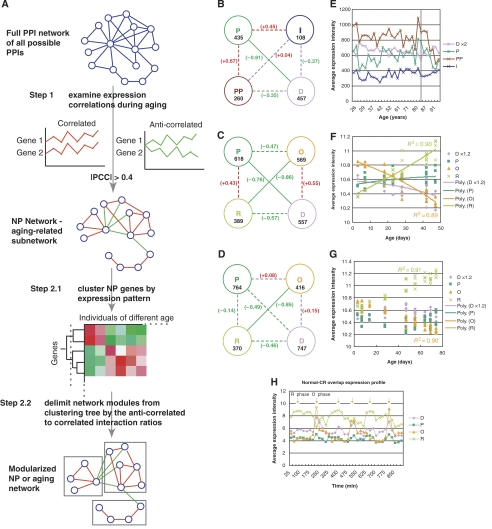
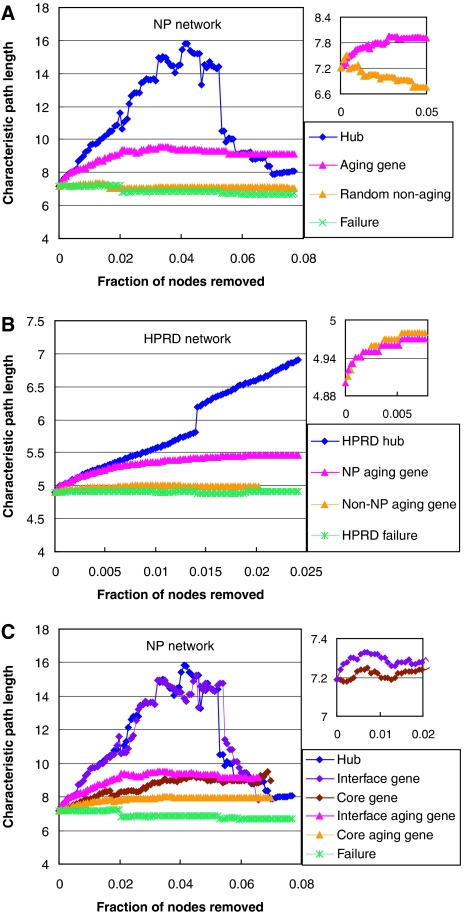
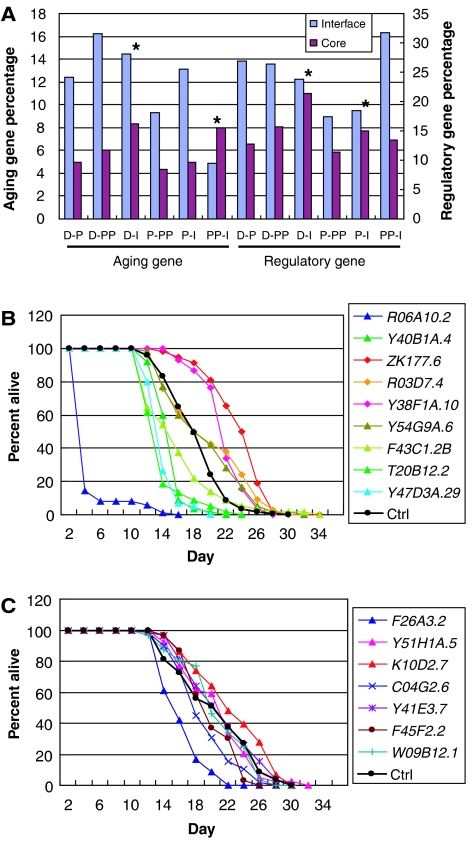
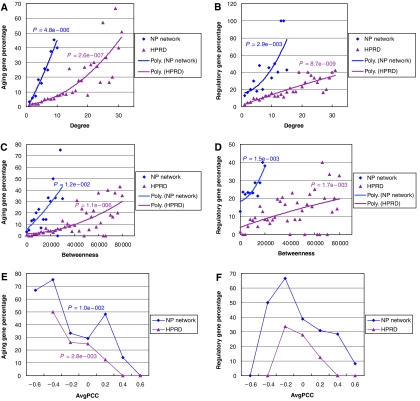
Many fundamental questions on aging are still unanswered or are under intense debate. These questions are frequently not addressable by examining a single gene or a single pathway, but can best be addressed at the systems level. Here we examined the modular structure of the protein-protein interaction (PPI) networks during fruitfly and human brain aging. In both networks, there are two modules associated with the cellular proliferation to differentiation temporal switch that display opposite aging-related changes in expression. During fly aging, another couple of modules are associated with the oxidative-reductive metabolic temporal switch. These network modules and their relationships demonstrate (1) that aging is largely associated with a small number, instead of many network modules, (2) that some modular changes might be reversible and (3) that genes connecting different modules through PPIs are more likely to affect aging/longevity, a conclusion that is experimentally validated by Caenorhabditis elegans lifespan analysis. Network simulations further suggest that aging might preferentially attack key regulatory nodes that are important for the network stability, implicating a potential molecular basis for the stochastic nature of aging.
许多关于衰老的基本问题仍未得到解答或正处于激烈辩论中。这些问题通常无法通过研究单个基因或单一途径来解决,而最好在系统层面进行探讨。在此,我们研究了果蝇和人类大脑衰老过程中蛋白质 - 蛋白质相互作用(PPI)网络的模块化结构。在这两个网络中,有两个与细胞增殖到分化的时间转换相关的模块,它们在表达上呈现出与衰老相关的相反变化。在果蝇衰老过程中,另外几个模块与氧化还原代谢的时间转换相关。这些网络模块及其关系表明:(1)衰老在很大程度上与少数而非众多网络模块相关;(2)一些模块变化可能是可逆的;(3)通过PPI连接不同模块的基因更有可能影响衰老/寿命,这一结论通过秀丽隐杆线虫寿命分析得到了实验验证。网络模拟进一步表明,衰老可能优先攻击对网络稳定性至关重要的关键调控节点,这暗示了衰老随机性本质的潜在分子基础。