Marshall Heather M, Ronen Keshet, Berry Charles, Llano Manuel, Sutherland Heidi, Saenz Dyana, Bickmore Wendy, Poeschla Eric, Bushman Frederic D
Department of Microbiology, University of Pennsylvania School of Medicine, Philadelphia, Pennsylvania, United States of America.
PLoS One. 2007 Dec 19;2(12):e1340. doi: 10.1371/journal.pone.0001340.
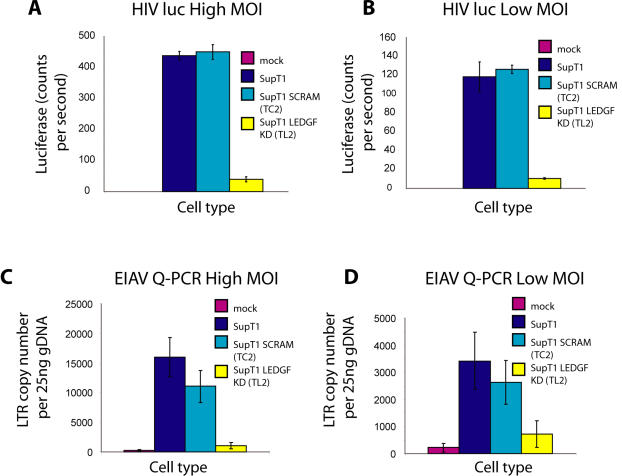
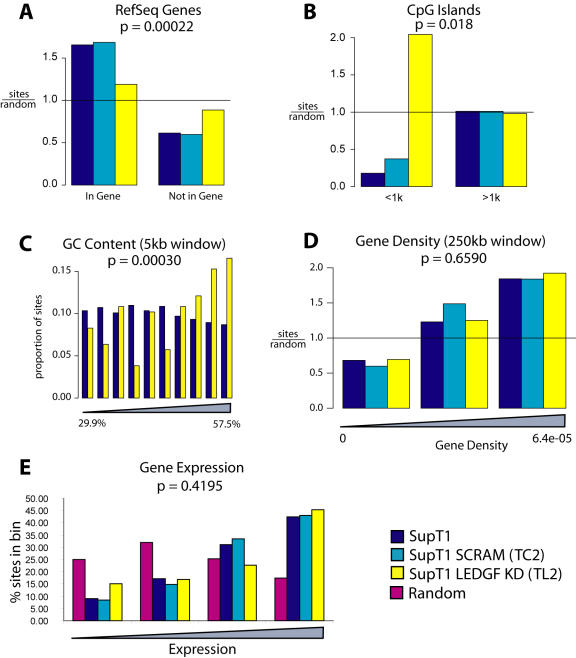
To replicate, lentiviruses such as HIV must integrate DNA copies of their RNA genomes into host cell chromosomes. Lentiviral integration is favored in active transcription units, which allows efficient viral gene expression after integration, but the mechanisms directing integration targeting are incompletely understood. A cellular protein, PSIP1/LEDGF/p75, binds tightly to the lentiviral-encoded integrase protein (IN), and has been reported to be important for HIV infectivity and integration targeting.
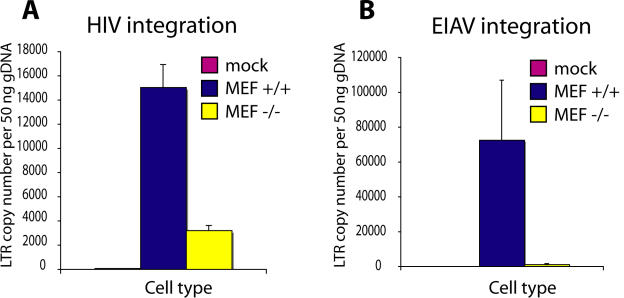
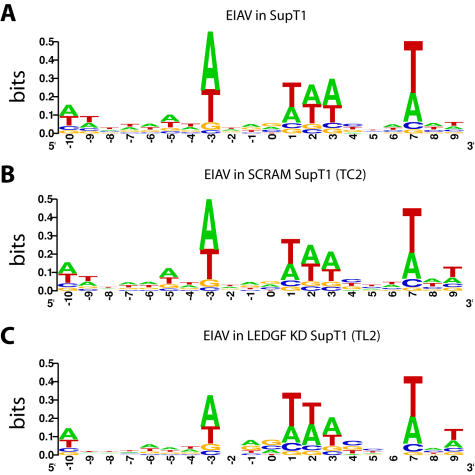
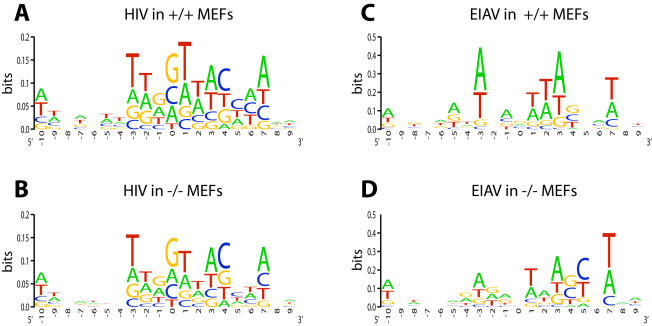
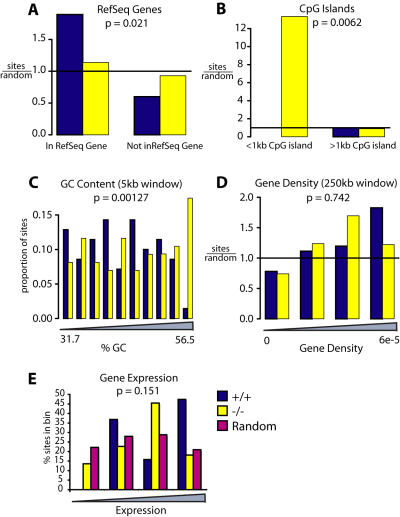
Here we report studies of lentiviral integration targeting in 1) human cells with intensified RNAi knockdowns of PSIP1/LEDGF/p75, and 2) murine cells with homozygous gene trap mutations in the PSIP1/LEDGF/p75 locus. Infections with vectors derived from equine infections anemia virus (EIAV) and HIV were compared. Integration acceptor sites were analyzed by DNA bar coding and pyrosequencing.
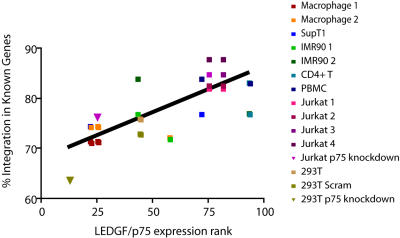
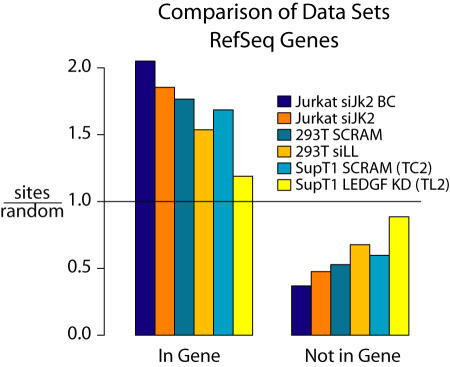
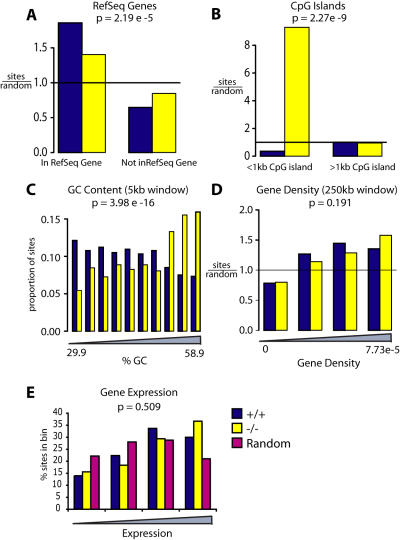
CONCLUSIONS/SIGNIFICANCE: In both PSIP1/LEDGF/p75-depleted cell lines, reductions were seen in lentiviral infectivity compared to controls. For the human cells, integration was reduced in transcription units in the knockdowns, and this reduction was greater than in our previous studies of human cells less completely depleted for PSIP1/LEDGF/p75. For the homozygous mutant mouse cells, similar reductions in integration in transcription units were seen, paralleling a previous study of a different mutant mouse line. Integration did not become random, however-integration in transcription units in both cell types was still favored, though to a reduced degree. New trends also appeared, including favored integration near CpG islands. In addition, we carried out a bioinformatic study of 15 HIV integration site data sets in different cell types, which showed that the frequency of integration in transcription units was correlated with the cell-type specific levels of PSIP1/LEDGF/p75 expression.
为了进行复制,诸如HIV之类的慢病毒必须将其RNA基因组的DNA拷贝整合到宿主细胞染色体中。慢病毒整合在活跃转录单元中更易发生,这使得整合后病毒基因能够高效表达,但指导整合靶向的机制尚未完全明确。一种细胞蛋白PSIP1/LEDGF/p75与慢病毒编码的整合酶蛋白(IN)紧密结合,据报道它对HIV感染性和整合靶向很重要。
在此,我们报告了对慢病毒整合靶向的研究,研究对象为:1)通过RNAi强化敲低PSIP1/LEDGF/p75的人类细胞,以及2)PSIP1/LEDGF/p75基因座发生纯合基因捕获突变的小鼠细胞。比较了源自马传染性贫血病毒(EIAV)和HIV的载体感染情况。通过DNA条形码和焦磷酸测序分析整合受体位点。
结论/意义:在两个PSIP1/LEDGF/p75缺失的细胞系中,与对照相比,慢病毒感染性均降低。对于人类细胞,敲低时转录单元中的整合减少,且这种减少比我们之前对PSIP1/LEDGF/p75缺失程度较低的人类细胞的研究中更大。对于纯合突变小鼠细胞,转录单元中的整合也有类似减少,这与之前对另一种突变小鼠品系的研究结果相似。然而,整合并未变得随机——两种细胞类型中转录单元中的整合仍然更易发生,只是程度降低。还出现了新的趋势,包括在CpG岛附近更易发生整合。此外,我们对不同细胞类型中的15个HIV整合位点数据集进行了生物信息学研究,结果表明转录单元中的整合频率与PSIP1/LEDGF/p75表达的细胞类型特异性水平相关。