Zhu Mu, Zhang Zhanyang, Hirdes John P, Stolee Paul
Department of Health Studies and Gerontology, University of Waterloo, Waterloo, ON, Canada.
BMC Med Inform Decis Mak. 2007 Dec 20;7:41. doi: 10.1186/1472-6947-7-41.
Targeting older clients for rehabilitation is a clinical challenge and a research priority. We investigate the potential of machine learning algorithms - Support Vector Machine (SVM) and K-Nearest Neighbors (KNN) - to guide rehabilitation planning for home care clients.
This study is a secondary analysis of data on 24,724 longer-term clients from eight home care programs in Ontario. Data were collected with the RAI-HC assessment system, in which the Activities of Daily Living Clinical Assessment Protocol (ADLCAP) is used to identify clients with rehabilitation potential. For study purposes, a client is defined as having rehabilitation potential if there was: i) improvement in ADL functioning, or ii) discharge home. SVM and KNN results are compared with those obtained using the ADLCAP. For comparison, the machine learning algorithms use the same functional and health status indicators as the ADLCAP.
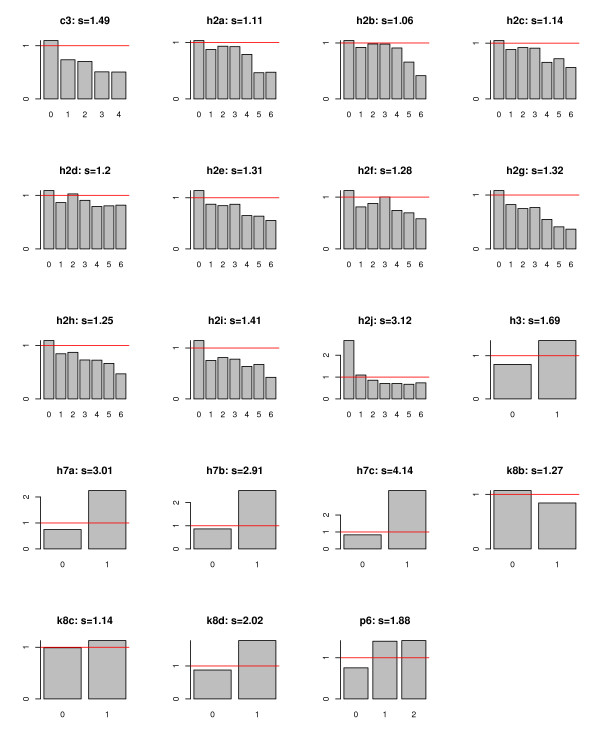
The KNN and SVM algorithms achieved similar substantially improved performance over the ADLCAP, although false positive and false negative rates were still fairly high (FP > .18, FN > .34 versus FP > .29, FN. > .58 for ADLCAP). Results are used to suggest potential revisions to the ADLCAP.
Machine learning algorithms achieved superior predictions than the current protocol. Machine learning results are less readily interpretable, but can also be used to guide development of improved clinical protocols.
将老年客户作为康复目标是一项临床挑战,也是研究的重点。我们研究了机器学习算法——支持向量机(SVM)和K近邻算法(KNN)——用于指导居家护理客户康复计划的潜力。
本研究是对安大略省八个居家护理项目中24724名长期客户的数据进行的二次分析。数据通过RAI-HC评估系统收集,其中日常生活临床评估协议(ADLCAP)用于识别具有康复潜力的客户。为了研究目的,如果存在以下情况,则将客户定义为具有康复潜力:i)日常生活活动功能有所改善,或ii)出院回家。将SVM和KNN的结果与使用ADLCAP获得的结果进行比较。为了进行比较,机器学习算法使用与ADLCAP相同的功能和健康状况指标。
KNN和SVM算法在性能上比ADLCAP有了显著的实质性提高,尽管假阳性和假阴性率仍然相当高(KNN和SVM的FP>.18,FN>.34,而ADLCAP的FP>.29,FN>.58)。研究结果被用于建议对ADLCAP进行潜在的修订。
机器学习算法比当前协议实现了更好的预测。机器学习结果较难解释,但也可用于指导改进临床协议的制定。