McMenamin P G, Steptoe R J
Department of Anatomy and Human Biology, University of Western Australia, Nedlands.
J Anat. 1991 Oct;178:65-77.
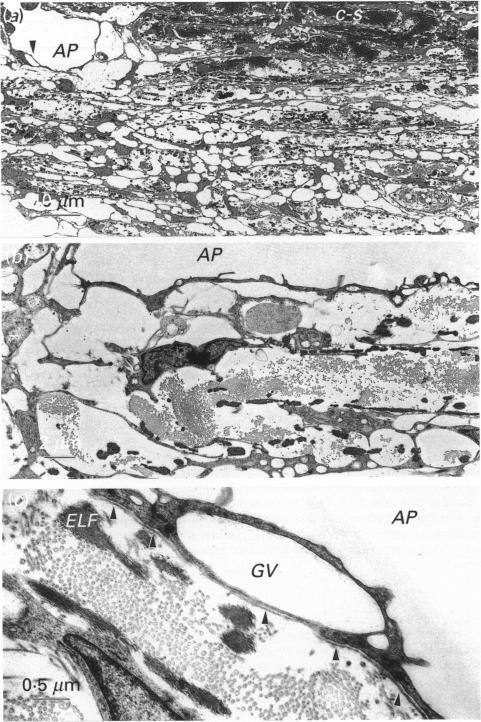
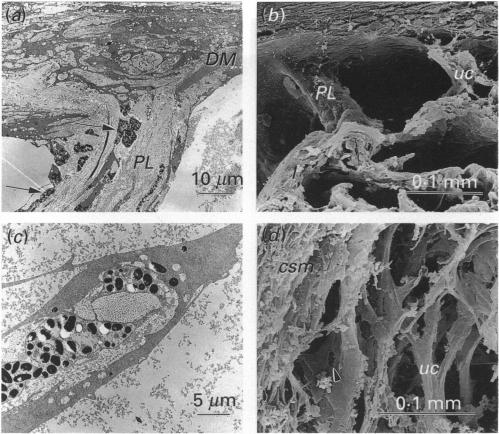
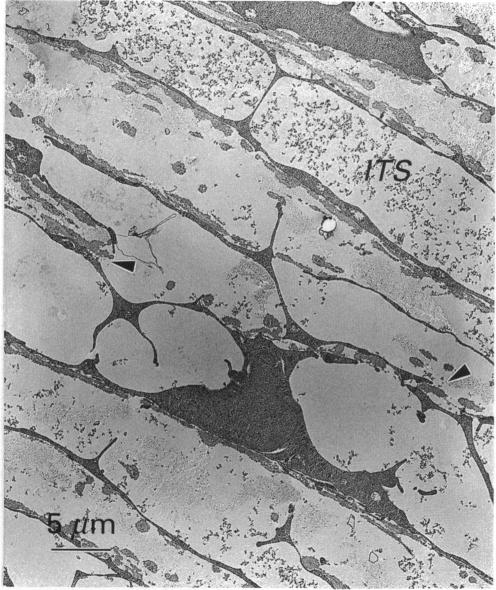
The normal functional anatomy of the aqueous humour outflow pathways in the domestic pig is poorly documented in the literature despite its being readily available and of a similar size to the human eye. Anterior segment tissue from 12 pig eyes was appropriately fixed and investigated by light microscopy, and scanning and transmission electron microscopy. The configuration of the iridocorneal angle tissues is similar to other nonprimate mammals in several respects, i.e. it possesses a deep ciliary cleft crossed by stout pectinate ligaments and delicate uveal cords, poorly developed ciliary musculature, and an angular aqueous plexus. However, there were some noteworthy features which may make it a suitable model for specific types of glaucoma related research. These features include a shallow scleral sulcus which contains a wedge-shaped mass of corneoscleral tissue comparable in size to the human trabecular meshwork. This tissue was more trabecular than 'reticular' in arrangement, the latter being the more common in nonprimate mammalian species. The relevance of the present findings to the use and limitations of the porcine eye as a model of the human aqueous outflow pathways is discussed.
尽管家猪唾手可得且其眼睛大小与人眼相似,但关于家猪房水流出途径的正常功能解剖学在文献中的记载却很少。对12只猪眼的前段组织进行了适当固定,并通过光学显微镜、扫描电子显微镜和透射电子显微镜进行研究。虹膜角膜角组织的结构在几个方面与其他非灵长类哺乳动物相似,即它有一个深的睫状裂,有粗壮的梳状韧带和纤细的葡萄膜索穿过,睫状肌发育不良,以及一个角巩膜房水丛。然而,有一些值得注意的特征可能使其成为特定类型青光眼相关研究的合适模型。这些特征包括一个浅的巩膜沟,其中含有一块楔形的角膜巩膜组织,其大小与人的小梁网相当。该组织在排列上比“网状”更具小梁特征,而后者在非灵长类哺乳动物中更为常见。本文讨论了这些发现与猪眼作为人房水流出途径模型的应用及局限性的相关性。