
真核寄生虫和细菌病原体对RhoGAP毒素的趋同利用。
Convergent use of RhoGAP toxins by eukaryotic parasites and bacterial pathogens.
作者信息
Colinet Dominique, Schmitz Antonin, Depoix Delphine, Crochard Didier, Poirié Marylène
机构信息
UMR 1112 UNSA-INRA Résponses des Organismes aux Stress Environnementaux, Sophia-Antipolis, France.
出版信息
PLoS Pathog. 2007 Dec 28;3(12):e203. doi: 10.1371/journal.ppat.0030203.
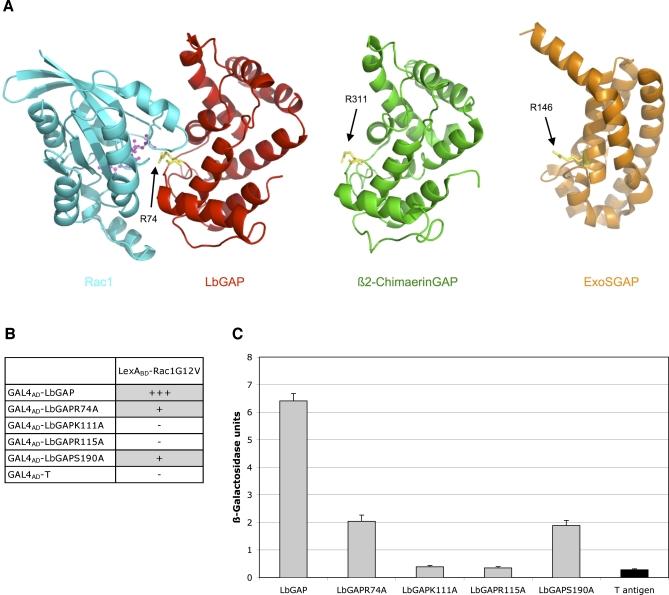
Inactivation of host Rho GTPases is a widespread strategy employed by bacterial pathogens to manipulate mammalian cellular functions and avoid immune defenses. Some bacterial toxins mimic eukaryotic Rho GTPase-activating proteins (GAPs) to inactivate mammalian GTPases, probably as a result of evolutionary convergence. An intriguing question remains whether eukaryotic pathogens or parasites may use endogenous GAPs as immune-suppressive toxins to target the same key genes as bacterial pathogens. Interestingly, a RhoGAP domain-containing protein, LbGAP, was recently characterized from the parasitoid wasp Leptopilina boulardi, and shown to protect parasitoid eggs from the immune response of Drosophila host larvae. We demonstrate here that LbGAP has structural characteristics of eukaryotic RhoGAPs but that it acts similarly to bacterial RhoGAP toxins in mammals. First, we show by immunocytochemistry that LbGAP enters Drosophila immune cells, plasmatocytes and lamellocytes, and that morphological changes in lamellocytes are correlated with the quantity of LbGAP they contain. Demonstration that LbGAP displays a GAP activity and specifically interacts with the active, GTP-bound form of the two Drosophila Rho GTPases Rac1 and Rac2, both required for successful encapsulation of Leptopilina eggs, was then achieved using biochemical tests, yeast two-hybrid analysis, and GST pull-down assays. In addition, we show that the overall structure of LbGAP is similar to that of eukaryotic RhoGAP domains, and we identify distinct residues involved in its interaction with Rac GTPases. Altogether, these results show that eukaryotic parasites can use endogenous RhoGAPs as virulence factors and that despite their differences in sequence and structure, eukaryotic and bacterial RhoGAP toxins are similarly used to target the same immune pathways in insects and mammals.
宿主Rho GTP酶的失活是细菌病原体用来操纵哺乳动物细胞功能并逃避免疫防御的一种广泛策略。一些细菌毒素模仿真核Rho GTP酶激活蛋白(GAP)来使哺乳动物GTP酶失活,这可能是进化趋同的结果。一个有趣的问题仍然存在,即真核病原体或寄生虫是否可能利用内源性GAP作为免疫抑制毒素来靶向与细菌病原体相同的关键基因。有趣的是,最近从寄生蜂巴氏柔茧蜂中鉴定出一种含有RhoGAP结构域的蛋白LbGAP,并表明它能保护寄生蜂卵免受果蝇宿主幼虫的免疫反应。我们在此证明,LbGAP具有真核RhoGAP的结构特征,但它在哺乳动物中的作用类似于细菌RhoGAP毒素。首先,我们通过免疫细胞化学表明,LbGAP进入果蝇免疫细胞、浆细胞和片层细胞,并且片层细胞的形态变化与它们所含LbGAP的数量相关。然后,通过生化试验、酵母双杂交分析和GST下拉试验,证明LbGAP具有GAP活性,并与两种果蝇Rho GTP酶Rac1和Rac2的活性GTP结合形式特异性相互作用,这两种酶都是成功包裹柔茧蜂卵所必需的。此外,我们表明LbGAP的整体结构与真核RhoGAP结构域相似,并且我们鉴定出了参与其与Rac GTP酶相互作用的不同残基。总之,这些结果表明,真核寄生虫可以利用内源性RhoGAP作为毒力因子,并且尽管它们在序列和结构上存在差异,但真核和细菌RhoGAP毒素在昆虫和哺乳动物中同样用于靶向相同的免疫途径。


 Zotero 插件