Watkin Harriet, Richert Monica M, Lewis Andrew, Terrell Kristina, McManaman James P, Anderson Steven M
Department of Pathology, University of Colorado Health Sciences Center, Research Complex I, South Tower, Mail Stop 8104, 12801 East 17th Avenue, Aurora, CO 80045, USA.
BMC Dev Biol. 2008 Jan 23;8:6. doi: 10.1186/1471-213X-8-6.
Mammary gland development culminates in lactation and is orchestrated by numerous stimuli and signaling pathways. The Src family of nonreceptor tyrosine kinases plays a pivotal role in cell signaling. In order to determine if Src plays a role in mammary gland development we have examined mammary gland development and function during pregnancy and lactation in mice in which expression of Src has been eliminated.
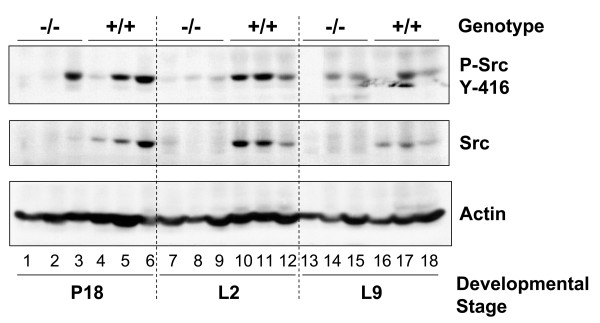
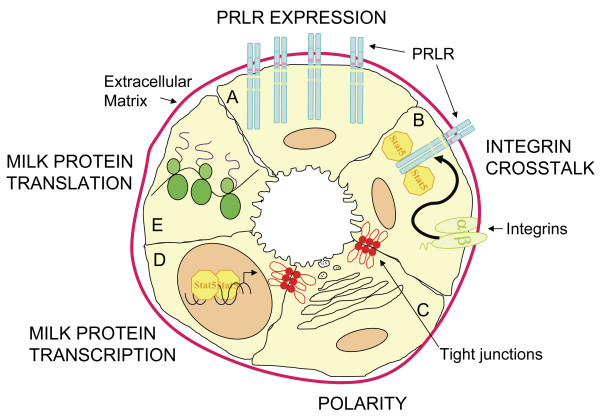
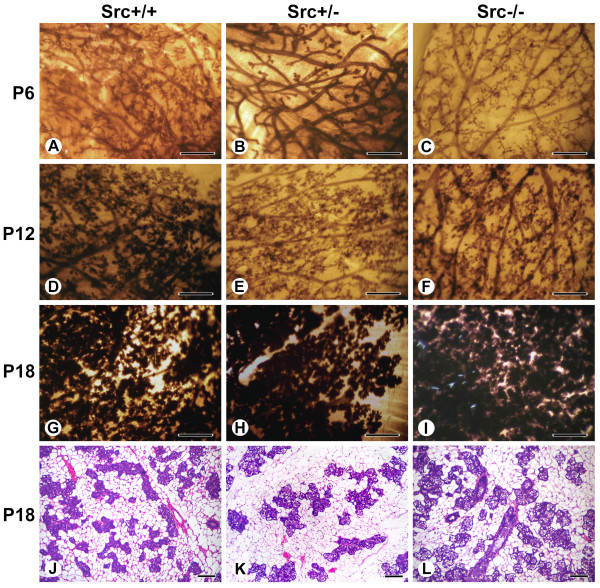
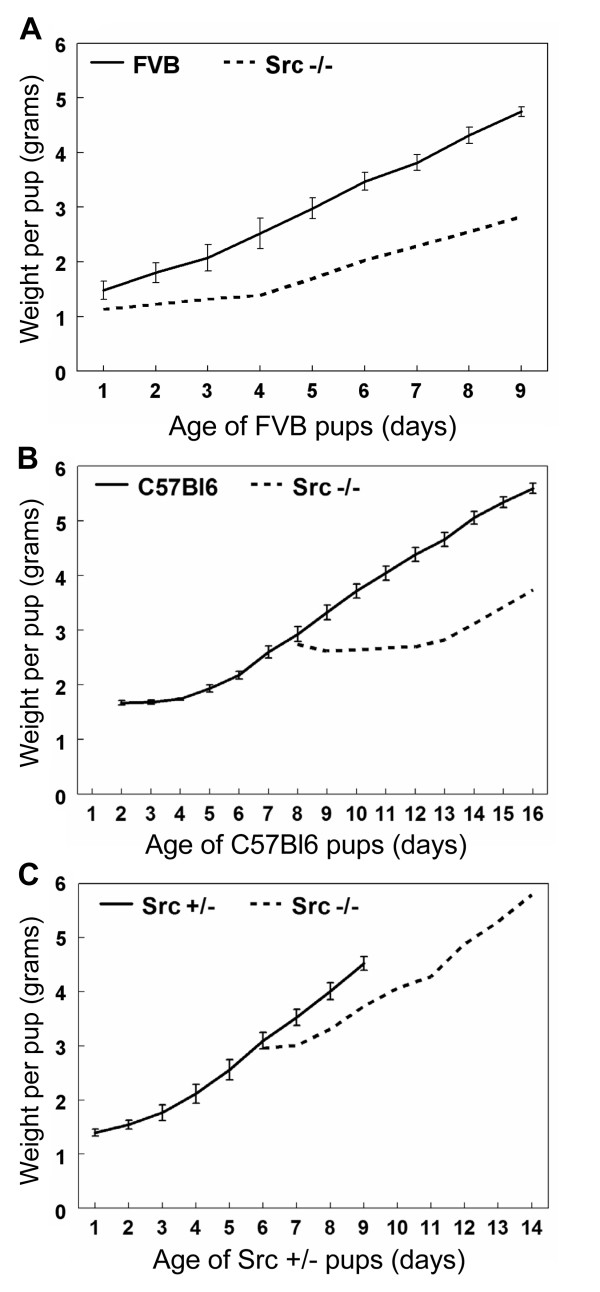
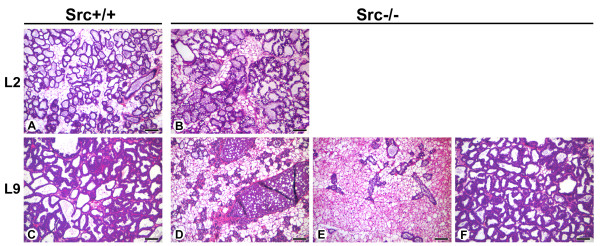
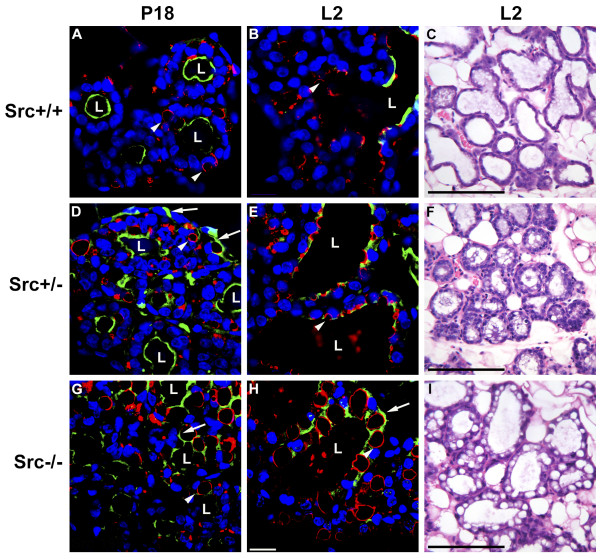
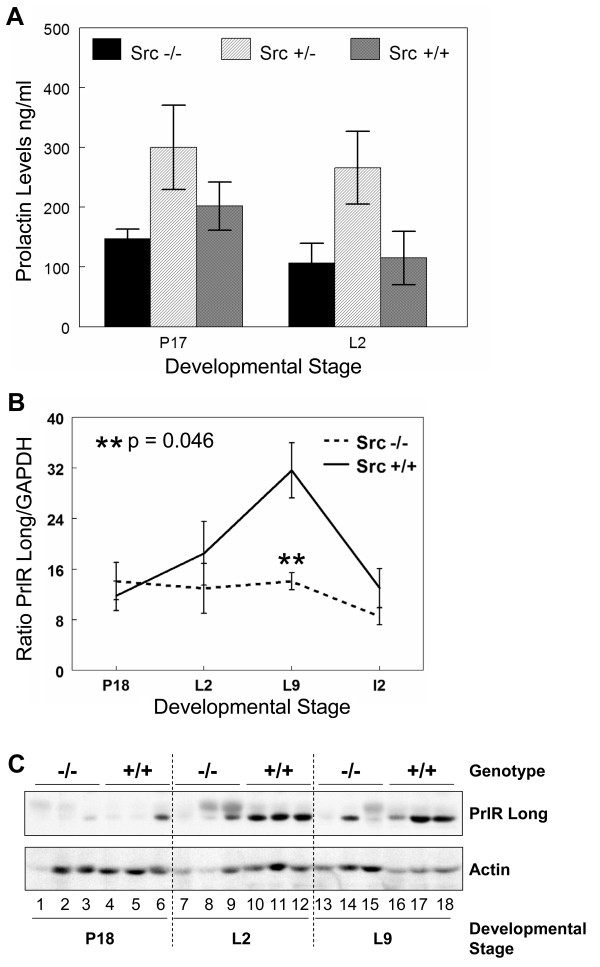
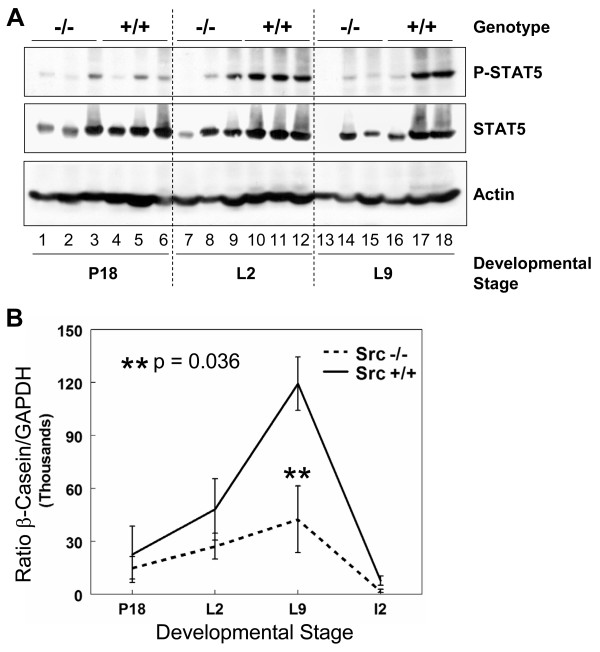
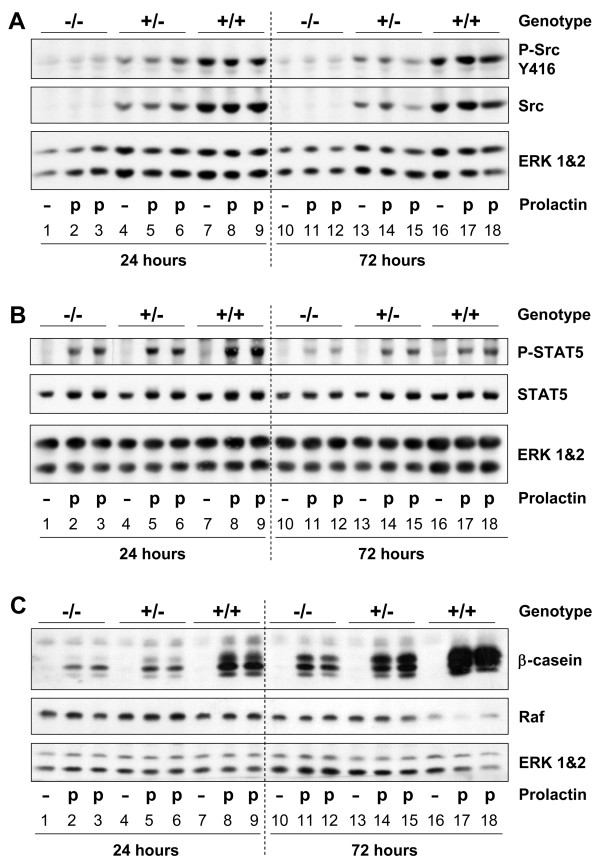
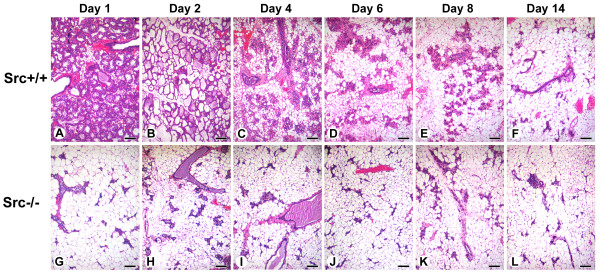
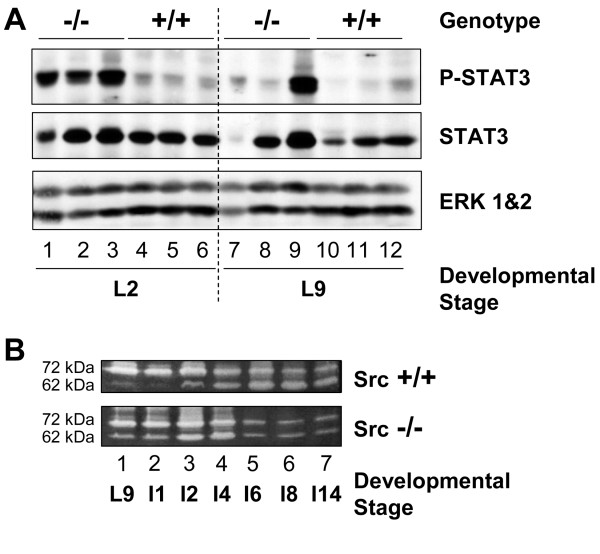
We have characterized a lactation defect in the Src-/- mice which results in the death of over 80% of the litters nursed by Src-/- dams. Mammary gland development during pregnancy appears normal in these mice; however secretory activation does not seem to occur. Serum prolactin levels are normal in Src-/- mice compared to wildtype controls. Expression of the prolactin receptor at both the RNA and protein level was decreased in Src-/- mice following the transition from pregnancy to lactation, as was phosphorylation of STAT5 and expression of milk protein genes. These results suggest that secretory activation, which occurs following parturition, does not occur completely in Src-/- mice. Failed secretory activation results in precocious involution in the mammary glands of Src-/- even when pups were suckling. Involution was accelerated following pup withdrawal perhaps as a result of incomplete secretory activation. In vitro differentiation of mammary epithelial cells from Src-/- mice resulted in diminished production of milk proteins compared to the amount of milk proteins produced by Src+/+ cells, indicating a direct role for Src in regulating the transcription/translation of milk protein genes in mammary epithelial cells.
Src is an essential signaling modulator in mammary gland development as Src-/- mice exhibit a block in secretory activation that results in lactation failure and precocious involution. Src appears to be required for increased expression of the prolactin receptor and successful downstream signaling, and alveolar cell organization.
乳腺发育在泌乳过程中达到顶峰,由众多刺激因素和信号通路协调调控。非受体酪氨酸激酶的Src家族在细胞信号传导中起关键作用。为了确定Src是否在乳腺发育中发挥作用,我们研究了Src基因表达被消除的小鼠在怀孕和哺乳期间的乳腺发育及功能。
我们发现Src基因敲除小鼠存在泌乳缺陷,由Src基因敲除母鼠哺育的幼崽中有超过80%死亡。这些小鼠在怀孕期间乳腺发育看似正常;然而,分泌激活似乎并未发生。与野生型对照相比,Src基因敲除小鼠的血清催乳素水平正常。从怀孕到哺乳过渡后,Src基因敲除小鼠中催乳素受体在RNA和蛋白质水平的表达均降低,STAT5的磷酸化以及乳蛋白基因的表达也降低。这些结果表明,分娩后发生的分泌激活在Src基因敲除小鼠中并未完全发生。分泌激活失败导致Src基因敲除小鼠的乳腺过早退化,即使幼崽正在哺乳。幼崽断奶后,退化加速,这可能是由于分泌激活不完全所致。与Src+/+细胞产生的乳蛋白量相比,Src基因敲除小鼠乳腺上皮细胞的体外分化导致乳蛋白产量减少,表明Src在调节乳腺上皮细胞中乳蛋白基因的转录/翻译方面具有直接作用。
Src是乳腺发育中必不可少的信号调节剂,因为Src基因敲除小鼠表现出分泌激活受阻,导致泌乳失败和过早退化。Src似乎是催乳素受体表达增加、成功的下游信号传导以及腺泡细胞组织所必需的。