Blundell Jacqueline, Kouser Mehreen, Powell Craig M
Department of Neurology, The University of Texas Southwestern Medical Center, Dallas, TX 75390-8813, USA.
Neurobiol Learn Mem. 2008 Jul;90(1):28-35. doi: 10.1016/j.nlm.2007.12.004. Epub 2008 Mar 7.
Established traumatic memories have a selective vulnerability to pharmacologic interventions following their reactivation that can decrease subsequent memory recall. This vulnerable period following memory reactivation is termed reconsolidation. The pharmacology of traumatic memory reconsolidation has not been fully characterized despite its potential as a therapeutic target for established, acquired anxiety disorders including posttraumatic stress disorder (PTSD). The mammalian target of rapamycin (mTOR) kinase is a critical regulator of mRNA translation and is known to be involved in various forms of synaptic plasticity and memory consolidation. We have examined the role of mTOR in traumatic memory reconsolidation.
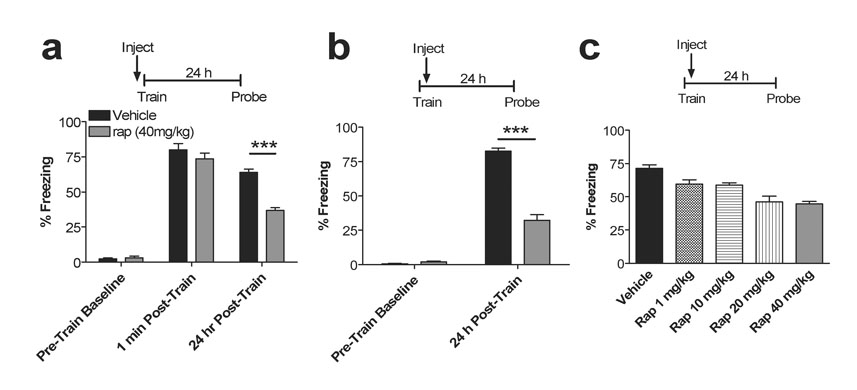
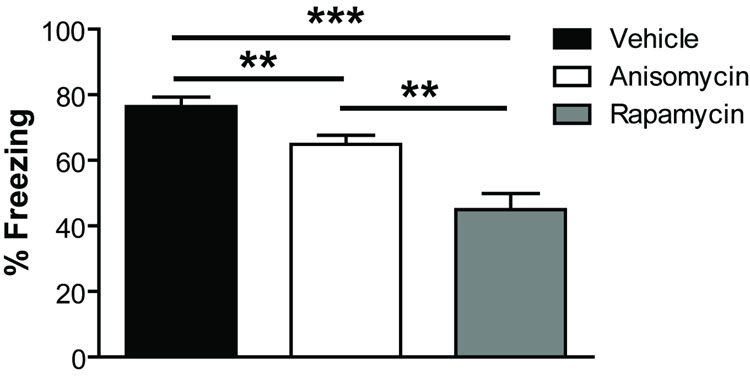
Male C57BL/6 mice were injected systemically with the mTOR inhibitor rapamycin (1-40mg/kg), at various time points relative to contextual fear conditioning training or fear memory retrieval, and compared to vehicle or anisomycin-treated groups (N=10-12 in each group).
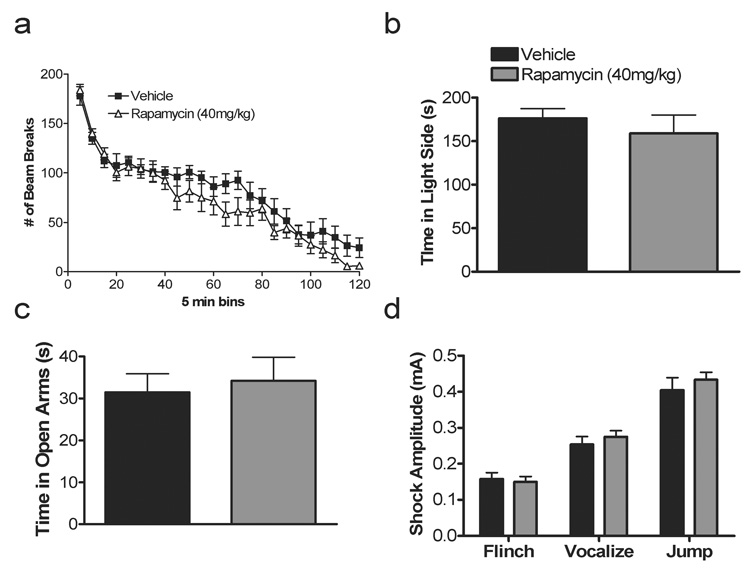
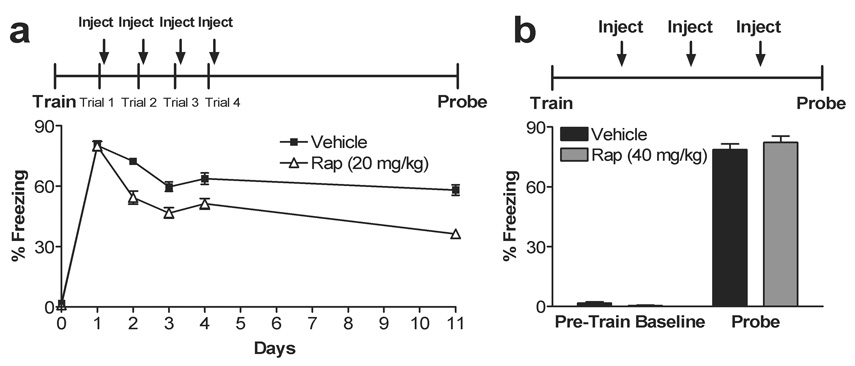
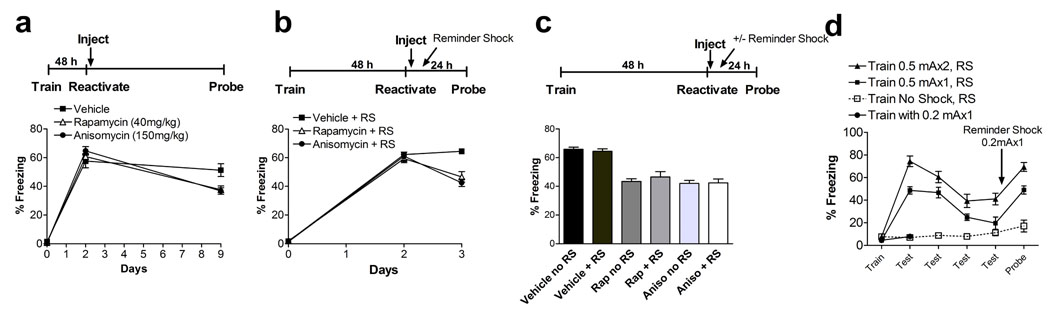
Inhibition of mTOR via systemic administration of rapamycin blocks reconsolidation of an established fear memory in a lasting manner. This effect is specific to reconsolidation as a series of additional experiments make an effect on memory extinction unlikely.
Systemic rapamycin, in conjunction with therapeutic traumatic memory reactivation, can decrease the emotional strength of an established traumatic memory. This finding not only establishes mTOR regulation of protein translation in the reconsolidation phase of traumatic memory, but also implicates a novel, FDA-approved drug treatment for patients suffering from acquired anxiety disorders such as PTSD and specific phobia.
已形成的创伤性记忆在重新激活后对药物干预具有选择性易损性,这可能会降低随后的记忆回忆。记忆重新激活后的这个易损期被称为重新巩固。尽管创伤性记忆重新巩固的药理学作为包括创伤后应激障碍(PTSD)在内的已形成的获得性焦虑症的治疗靶点具有潜力,但其尚未得到充分表征。雷帕霉素的哺乳动物靶点(mTOR)激酶是mRNA翻译的关键调节因子,已知其参与各种形式的突触可塑性和记忆巩固。我们研究了mTOR在创伤性记忆重新巩固中的作用。
雄性C57BL/6小鼠在相对于情境恐惧条件训练或恐惧记忆检索的不同时间点全身注射mTOR抑制剂雷帕霉素(1 - 40mg/kg),并与溶剂对照组或茴香霉素处理组进行比较(每组N = 10 - 12)。
通过全身给予雷帕霉素抑制mTOR以持久的方式阻断已形成的恐惧记忆的重新巩固。由于一系列额外实验不太可能对记忆消退产生影响,所以这种效应是重新巩固所特有的。
全身应用雷帕霉素,结合治疗性创伤性记忆重新激活,可以降低已形成的创伤性记忆的情感强度。这一发现不仅确立了mTOR在创伤性记忆重新巩固阶段对蛋白质翻译的调节作用,还暗示了一种新的、经美国食品药品监督管理局批准的药物治疗方法,可用于治疗患有PTSD和特定恐惧症等获得性焦虑症的患者。