Laboratory of Brain-Computer Interfaces, Institute for Knowledge Discovery, Graz University of Technology, Krenngasse 37, 8010 Graz, Austria.
Comput Intell Neurosci. 2007;2007:79826. doi: 10.1155/2007/79826.
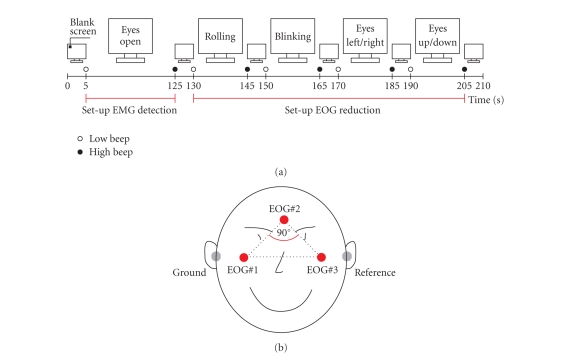
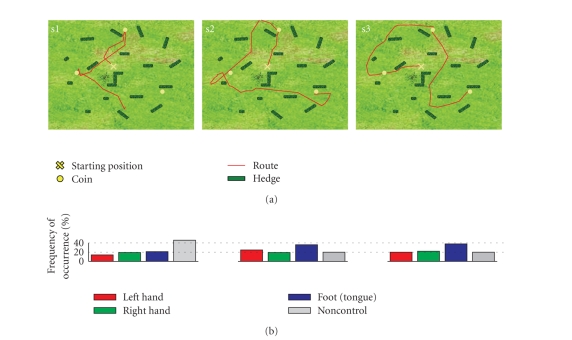
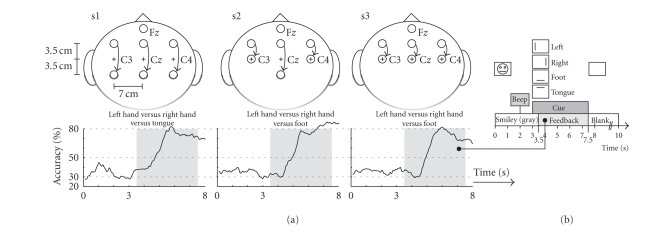
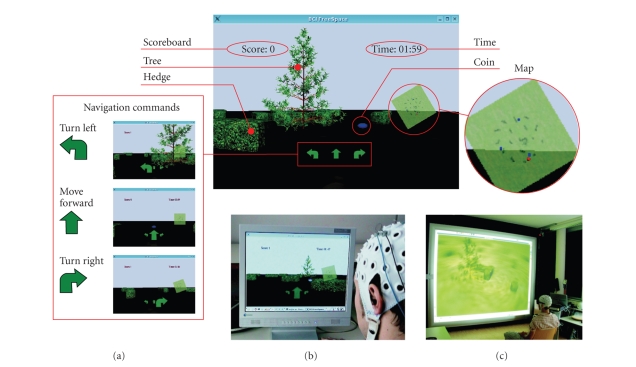
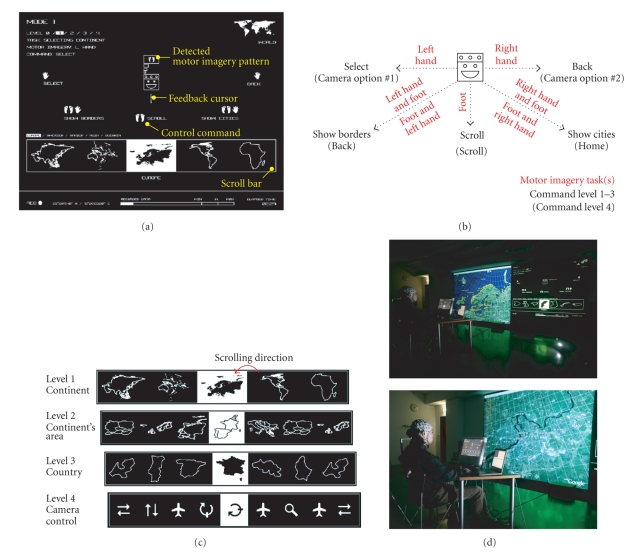
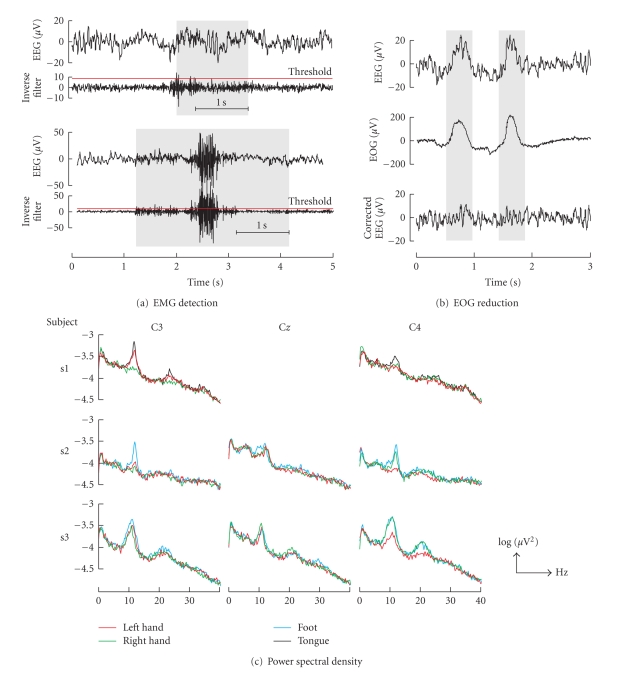
We present the self-paced 3-class Graz brain-computer interface (BCI) which is based on the detection of sensorimotor electroencephalogram (EEG) rhythms induced by motor imagery. Self-paced operation means that the BCI is able to determine whether the ongoing brain activity is intended as control signal (intentional control) or not (non-control state). The presented system is able to automatically reduce electrooculogram (EOG) artifacts, to detect electromyographic (EMG) activity, and uses only three bipolar EEG channels. Two applications are presented: the freeSpace virtual environment (VE) and the Brainloop interface. The freeSpace is a computer-game-like application where subjects have to navigate through the environment and collect coins by autonomously selecting navigation commands. Three subjects participated in these feedback experiments and each learned to navigate through the VE and collect coins. Two out of the three succeeded in collecting all three coins. The Brainloop interface provides an interface between the Graz-BCI and Google Earth.
我们提出了一种自我调节的 3 类 Graz 脑机接口(BCI),它基于对运动想象引起的感觉运动脑电图(EEG)节律的检测。自我调节操作意味着 BCI 能够确定正在进行的大脑活动是否意图作为控制信号(有意控制)或不是(非控制状态)。所提出的系统能够自动减少眼电图(EOG)伪影,检测肌电图(EMG)活动,并且只使用三个双极 EEG 通道。介绍了两种应用:freeSpace 虚拟环境(VE)和 Brainloop 接口。freeSpace 是一个类似电脑游戏的应用程序,用户必须通过自主选择导航命令来在环境中导航并收集硬币。三个用户参与了这些反馈实验,每个人都学会了通过 VE 导航并收集硬币。三个用户中有两个成功地收集了所有三个硬币。Brainloop 接口提供了 Graz-BCI 和 Google Earth 之间的接口。