Rosenberg Steven A, Restifo Nicholas P, Yang James C, Morgan Richard A, Dudley Mark E
Surgery Branch, Center for Cancer Research, National Cancer Institute, National Institutes of Health, 10 Center Drive, Bethesda, Maryland 20892, USA.
Nat Rev Cancer. 2008 Apr;8(4):299-308. doi: 10.1038/nrc2355.
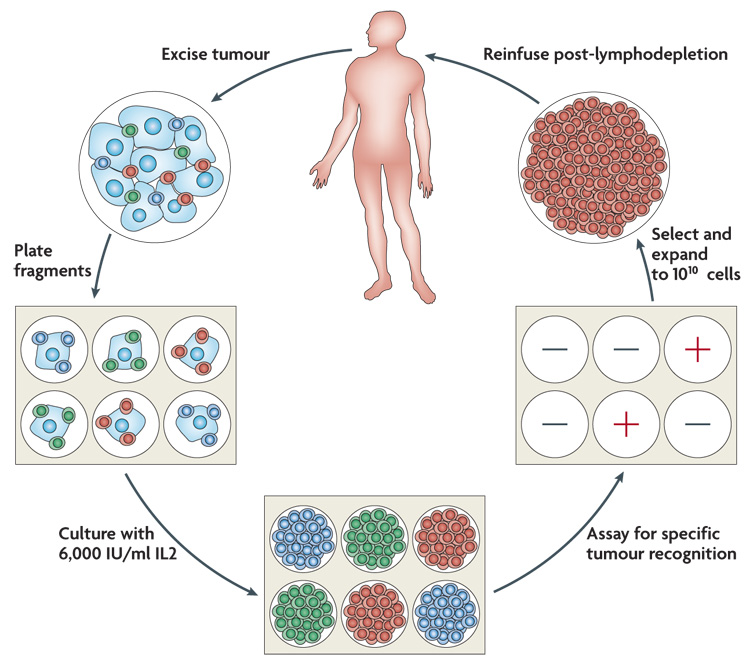
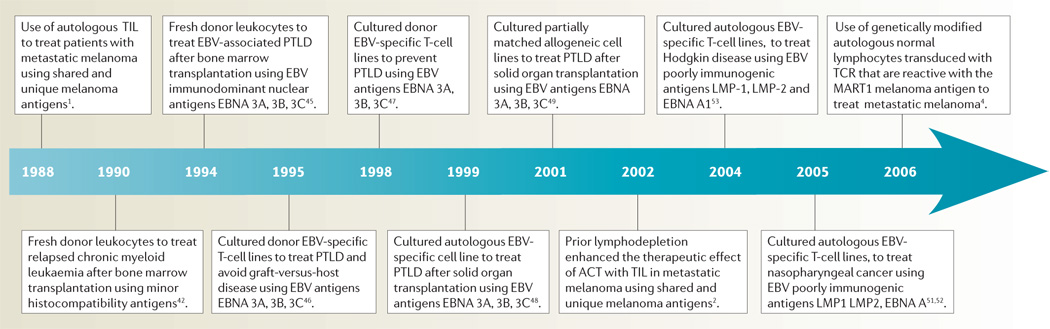
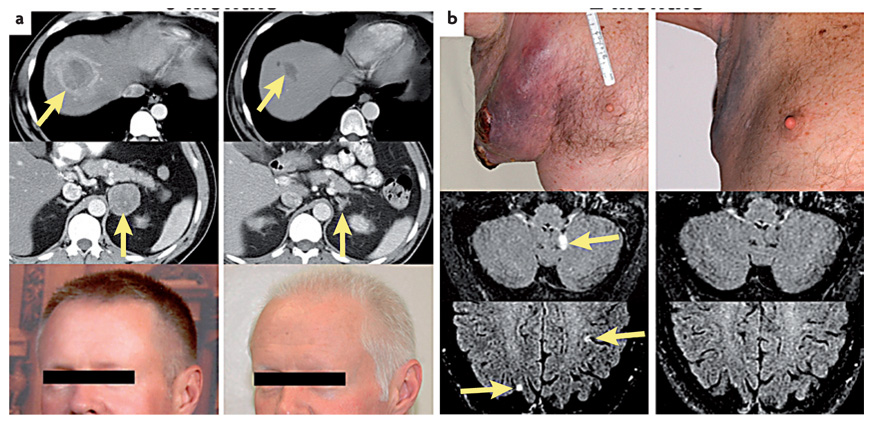
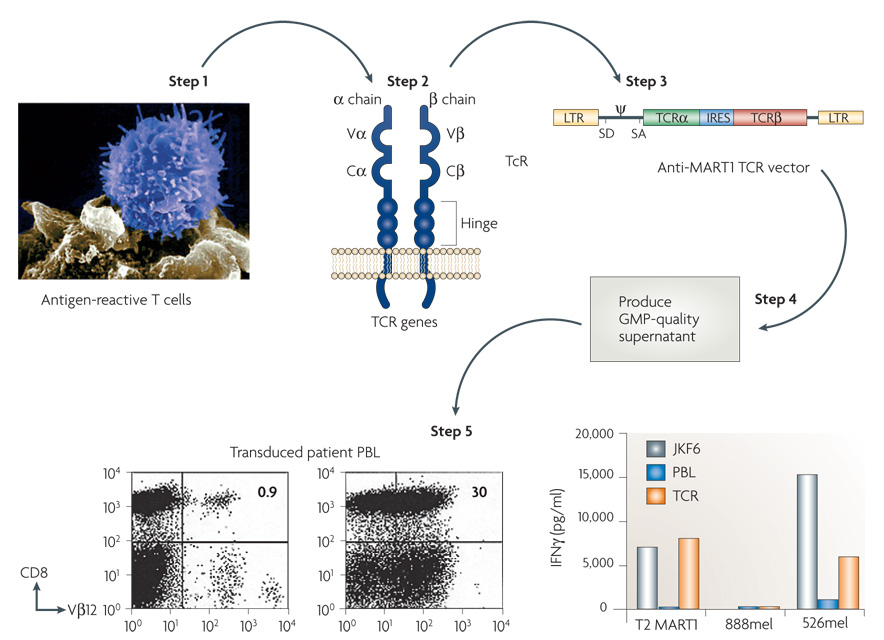
Adoptive cell therapy (ACT) using autologous tumour-infiltrating lymphocytes has emerged as the most effective treatment for patients with metastatic melanoma and can mediate objective cancer regression in approximately 50% of patients. The use of donor lymphocytes for ACT is an effective treatment for immunosuppressed patients who develop post-transplant lymphomas. The ability to genetically engineer human lymphocytes and use them to mediate cancer regression in patients, which has recently been demonstrated, has opened possibilities for the extension of ACT immunotherapy to patients with a wide variety of cancer types and is a promising new approach to cancer treatment.
采用自体肿瘤浸润淋巴细胞的过继性细胞疗法(ACT)已成为转移性黑色素瘤患者最有效的治疗方法,约50%的患者可实现客观的癌症消退。将供体淋巴细胞用于ACT是治疗移植后发生淋巴瘤的免疫抑制患者的有效方法。最近已证实,对人类淋巴细胞进行基因工程改造并将其用于介导患者癌症消退的能力,为将ACT免疫疗法扩展至多种癌症类型的患者开辟了可能性,是一种很有前景的癌症治疗新方法。