Forbes Elizabeth E, Groschwitz Katherine, Abonia J Pablo, Brandt Eric B, Cohen Elizabeth, Blanchard Carine, Ahrens Richard, Seidu Luqman, McKenzie Andrew, Strait Richard, Finkelman Fred D, Foster Paul S, Matthaei Klaus I, Rothenberg Marc E, Hogan Simon P
Division of Allergy and Immunology, Cincinnati Children's Hospital Medical Center, USA.
J Exp Med. 2008 Apr 14;205(4):897-913. doi: 10.1084/jem.20071046. Epub 2008 Mar 31.
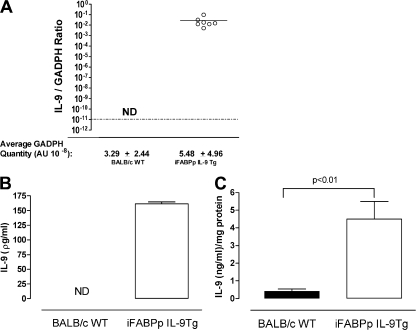
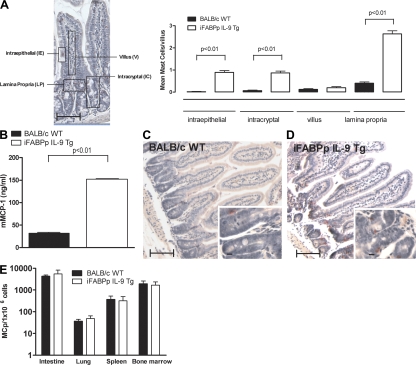
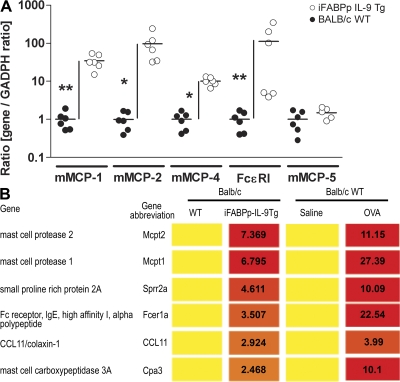
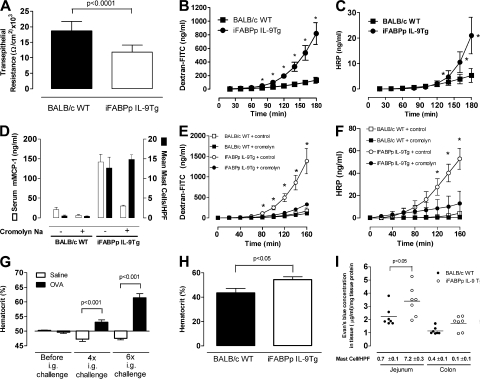
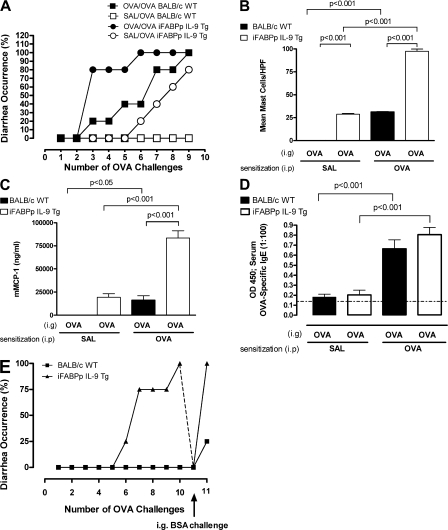
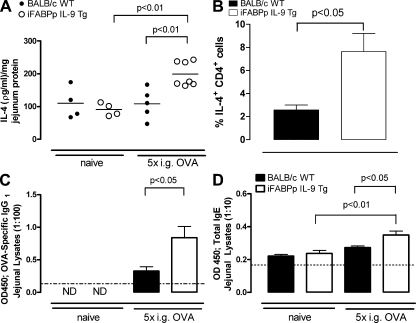
Previous mouse and clinical studies demonstrate a link between Th2 intestinal inflammation and induction of the effector phase of food allergy. However, the mechanism by which sensitization and mast cell responses occurs is largely unknown. We demonstrate that interleukin (IL)-9 has an important role in this process. IL-9-deficient mice fail to develop experimental oral antigen-induced intestinal anaphylaxis, and intestinal IL-9 overexpression induces an intestinal anaphylaxis phenotype (intestinal mastocytosis, intestinal permeability, and intravascular leakage). In addition, intestinal IL-9 overexpression predisposes to oral antigen sensitization, which requires mast cells and increased intestinal permeability. These observations demonstrate a central role for IL-9 and mast cells in experimental intestinal permeability in oral antigen sensitization and suggest that IL-9-mediated mast cell responses have an important role in food allergy.
先前的小鼠和临床研究表明,Th2肠道炎症与食物过敏效应期的诱导之间存在联系。然而,致敏和肥大细胞反应发生的机制在很大程度上尚不清楚。我们证明白细胞介素(IL)-9在此过程中起重要作用。IL-9缺陷小鼠无法发生实验性口服抗原诱导的肠道过敏反应,而肠道IL-9过表达则诱导肠道过敏表型(肠道肥大细胞增多、肠道通透性增加和血管内渗漏)。此外,肠道IL-9过表达易导致口服抗原致敏,这需要肥大细胞和增加的肠道通透性。这些观察结果证明了IL-9和肥大细胞在口服抗原致敏实验性肠道通透性中的核心作用,并表明IL-9介导的肥大细胞反应在食物过敏中起重要作用。