Gómez-Valadés Alicia G, Méndez-Lucas Andrés, Vidal-Alabró Anna, Blasco Francese X, Chillon Miguel, Bartrons Ramon, Bermúdez Jordi, Perales José C
Biophysics Unit, Department de Ciències Fisiològuiques II, IDIBELL-University of Barcelona, Barcelona, Spain.
Diabetes. 2008 Aug;57(8):2199-210. doi: 10.2337/db07-1087. Epub 2008 Apr 28.
Cytosolic phosphoenolpyruvate carboxykinase (PEPCK-C; encoded by Pck1) catalyzes the first committed step in gluconeogenesis. Extensive evidence demonstrates a direct correlation between PEPCK-C activity and glycemia control. Therefore, we aimed to evaluate the metabolic impact and their underlying mechanisms of knocking down hepatic PEPCK-C in a type 2 diabetic model.
PEPCK-C gene targeting was achieved using adenovirus-transduced RNAi. The study assessed several clinical symptoms of diabetes and insulin signaling in peripheral tissues, in addition to changes in gene expression, protein, and metabolites in the liver. Liver bioenergetics was also evaluated.
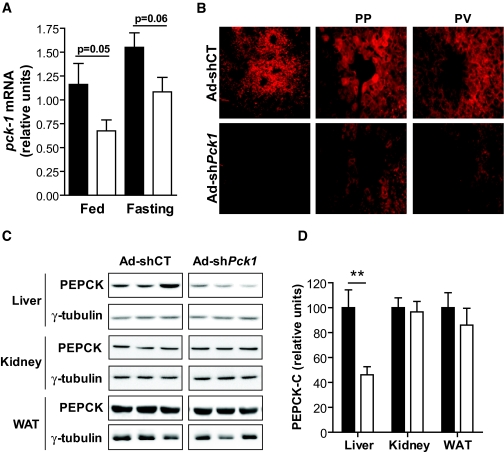
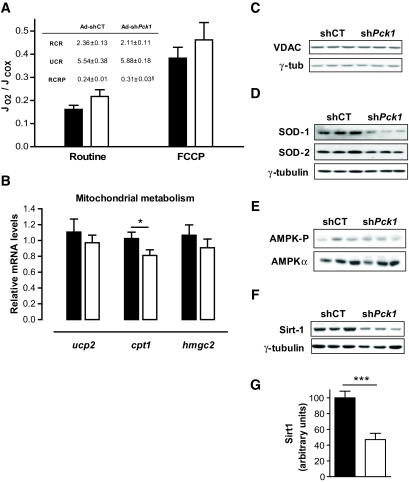
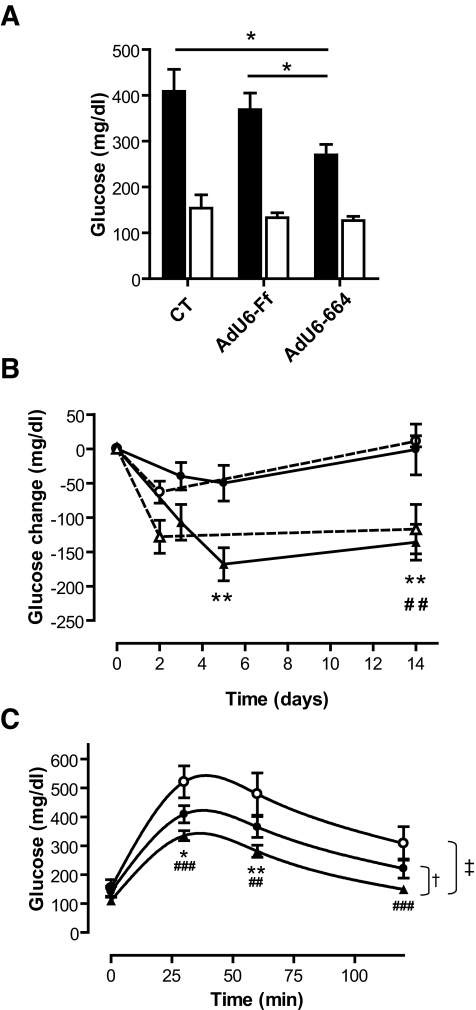
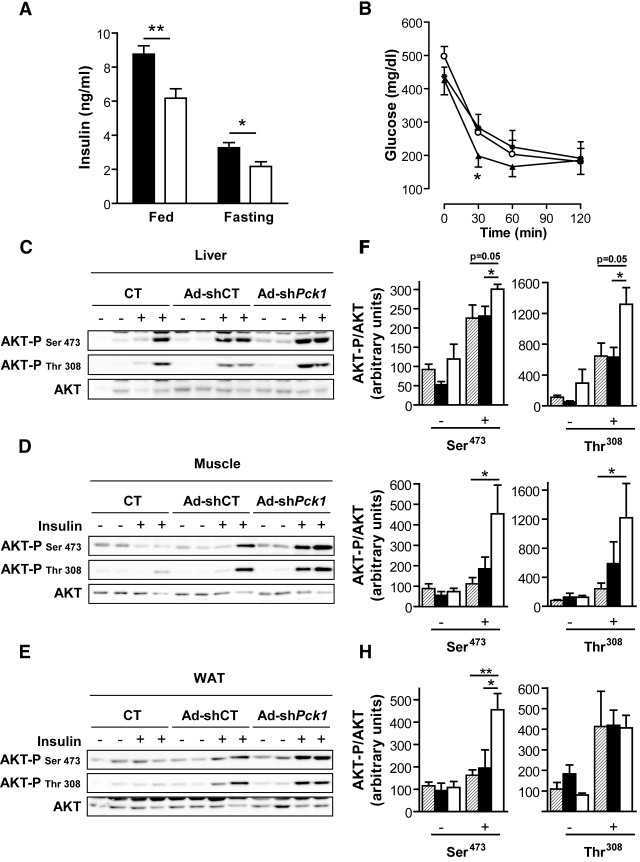
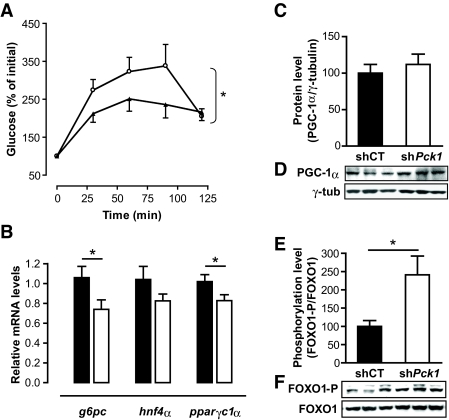
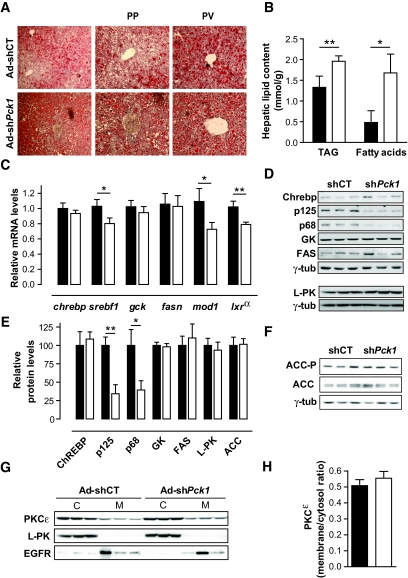
Treatment resulted in reduced PEPCK-C mRNA and protein. After treatment, improved glycemia and insulinemia, lower triglyceride, and higher total and HDL cholesterol were measured. Unsterified fatty acid accumulation was observed in the liver, in the absence of de novo lipogenesis. Despite hepatic lipidosis, treatment resulted in improved insulin signaling in the liver, muscle, and adipose tissue. O(2) consumption measurements in isolated hepatocytes demonstrated unaltered mitochondrial function and a consequent increased cellular energy charge. Key regulatory factors (FOXO1, hepatocyte nuclear factor-4alpha, and peroxisome proliferator-activated receptor-gamma coactivator [PGC]-1alpha) and enzymes (G6Pase) implicated in gluconeogenesis were downregulated after treatment. Finally, the levels of Sirt1, a redox-state sensor that modulates gluconeogenesis through PGC-1alpha, were diminished.
Our observations indicate that silencing PEPCK-C has direct impact on glycemia control and energy metabolism and provides new insights into the potential significance of the enzyme as a therapeutic target for the treatment of diabetes.
胞质磷酸烯醇式丙酮酸羧激酶(PEPCK-C;由Pck1编码)催化糖异生的首个关键步骤。大量证据表明PEPCK-C活性与血糖控制之间存在直接关联。因此,我们旨在评估在2型糖尿病模型中敲低肝脏PEPCK-C的代谢影响及其潜在机制。
使用腺病毒转导的RNA干扰实现对PEPCK-C基因的靶向作用。该研究除了评估肝脏中基因表达、蛋白质和代谢物的变化外,还评估了糖尿病的几种临床症状以及外周组织中的胰岛素信号传导。同时也对肝脏生物能量学进行了评估。
治疗导致PEPCK-C mRNA和蛋白质水平降低。治疗后,测量到血糖和胰岛素血症改善、甘油三酯降低、总胆固醇和高密度脂蛋白胆固醇升高。在肝脏中观察到非酯化脂肪酸积累,且不存在从头脂肪生成。尽管存在肝脏脂肪变性,但治疗使肝脏、肌肉和脂肪组织中的胰岛素信号传导得到改善。分离的肝细胞中的氧气消耗测量表明线粒体功能未改变,进而细胞能量电荷增加。治疗后,参与糖异生的关键调节因子(FOXO1、肝细胞核因子-4α和过氧化物酶体增殖物激活受体-γ共激活因子[PGC]-1α)和酶(葡萄糖-6-磷酸酶)下调。最后,作为通过PGC-1α调节糖异生的氧化还原状态传感器的Sirt1水平降低。
我们的观察结果表明,沉默PEPCK-C对血糖控制和能量代谢有直接影响,并为该酶作为糖尿病治疗靶点的潜在意义提供了新的见解。