Kripke Daniel F, Rex Katharine M, Ancoli-Israel Sonia, Nievergelt Caroline M, Klimecki Walt, Kelsoe John R
Department of Psychiatry, University of California, San Diego, La Jolla, California 92093-0667, USA.
J Circadian Rhythms. 2008 Apr 29;6:6. doi: 10.1186/1740-3391-6-6.
Delayed sleep phase disorder (DSPD) is a condition in which patients have difficulty falling asleep before the early morning hours and commonly have trouble awakening before late morning or even early afternoon. Several studies have suggested that variations in habitual bedtime are 40-50% heritable.
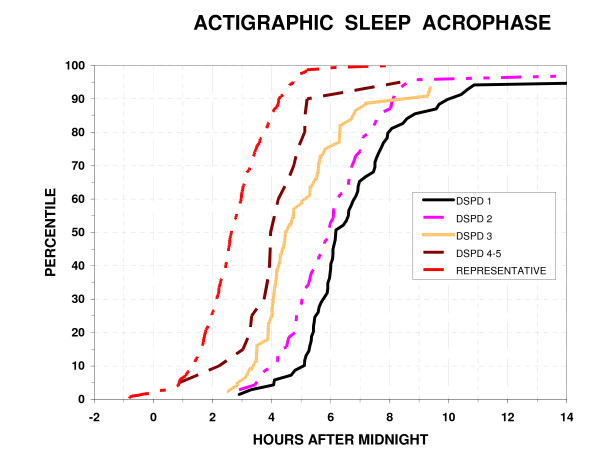
We recruited a case series of 205 participants, along with 221 controls (DSPD-C) with normal sleep, roughly matched for age, gender, and ancestry. A representative sample of San Diego adults recruited some years before was already available to confirm the control group. Both DSPD and DSPD-C provided blood or saliva samples for DNA and completed extensive questionnaires about sleep habits, sleep history, family history, sleep quality, morningness-eveningness traits, depression, mania, and seasonality of symptoms. The DSPD group wore wrist actigraphs for a median of 13.2 days. The representative sample collected previously had undergone actigraphic recordings, from which 48 hours of data were generally available.
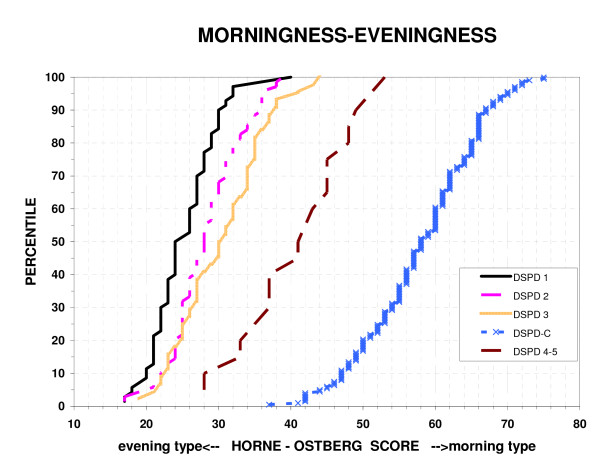
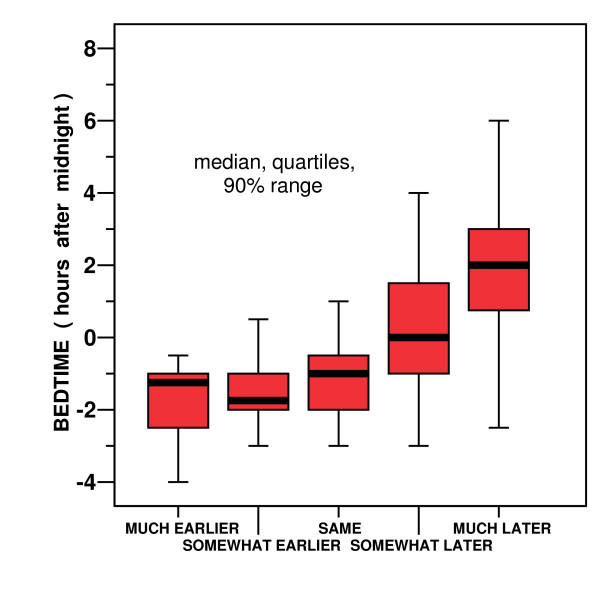
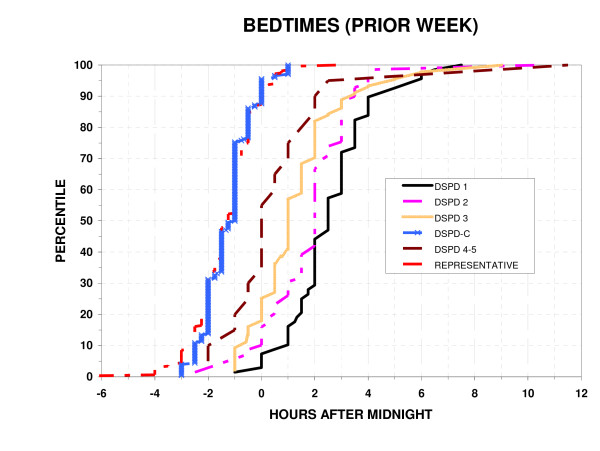
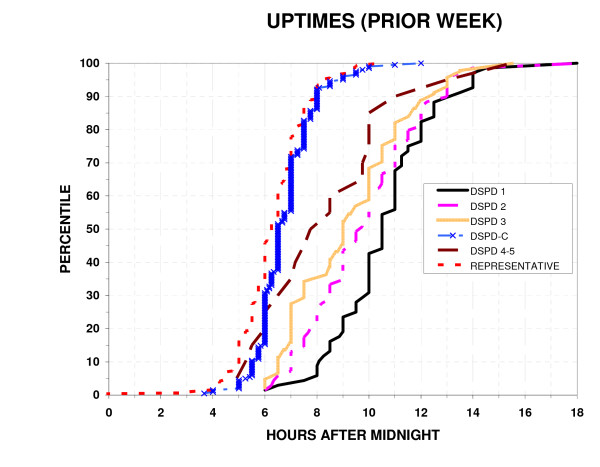
The DSPD and DSPD-C samples showed almost no overlap on morningness-eveningness scores. DSPD cases went to bed and arose about 3 hours later than the DSPD-C and the representative sample. DSPD cases reported more difficulties with sleep, poorer sleep quality, and more depression, but there was no significant difference in a history of mania. DSPD cases reported more family history of late bedtimes, but female DSPD reported that their fathers' bedtimes were later than the fathers of male DSPD.
These results indicate a DSPD phenotype is familial and associated with unipolar depression.
延迟睡眠相位障碍(DSPD)是一种患者在凌晨之前难以入睡且通常在上午晚些时候甚至下午早些时候难以醒来的病症。多项研究表明,习惯性就寝时间的变化有40 - 50%是可遗传的。
我们招募了一个包含205名参与者的病例系列,以及221名睡眠正常的对照者(DSPD - C),在年龄、性别和血统方面大致匹配。几年前招募的圣地亚哥成年人的代表性样本可用于确认对照组。DSPD组和DSPD - C组均提供血液或唾液样本用于DNA检测,并完成了关于睡眠习惯、睡眠史、家族史、睡眠质量、晨型 - 夜型特质、抑郁、躁狂和症状季节性的广泛问卷调查。DSPD组佩戴手腕活动记录仪的时间中位数为13.2天。之前收集的代表性样本已经进行了活动记录仪记录,通常可获得48小时的数据。
DSPD组和DSPD - C组在晨型 - 夜型得分上几乎没有重叠。DSPD患者的就寝和起床时间比DSPD - C组和代表性样本晚约3小时。DSPD患者报告有更多的睡眠困难、更差的睡眠质量和更多的抑郁情绪,但在躁狂病史方面没有显著差异。DSPD患者报告有更多晚睡的家族史,但女性DSPD患者报告她们父亲的就寝时间比男性DSPD患者的父亲更晚。
这些结果表明DSPD表型具有家族性且与单相抑郁有关。