Duda Monika K, O'Shea Karen M, Lei Biao, Barrows Brian R, Azimzadeh Agnes M, McElfresh Tracy E, Hoit Brian D, Kop Willem J, Stanley William C
Division of Cardiology, Department of Medicine, University of Maryland, Baltimore, Maryland 21201, USA.
J Card Fail. 2008 May;14(4):327-35. doi: 10.1016/j.cardfail.2007.11.003.
It is not known how carbohydrate and fat intake affect the development of left ventricular (LV) hypertrophy and contractile dysfunction in response to pressure overload. We hypothesized that a low-carbohydrate/high-fat diet prevents LV hypertrophy and dysfunction compared with high-carbohydrate diets.
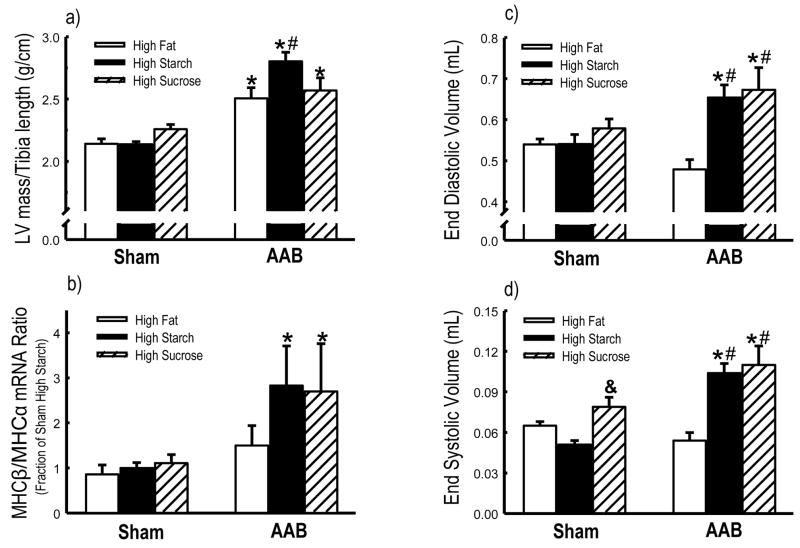
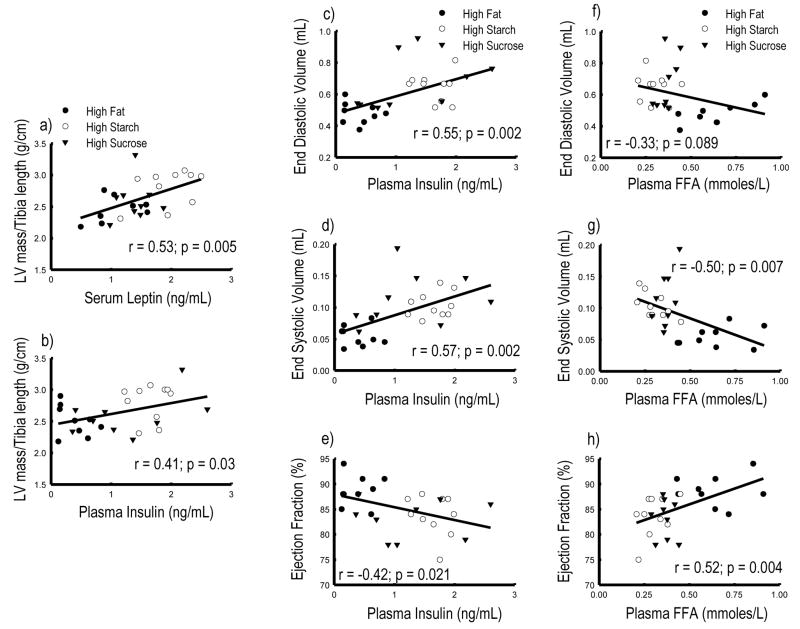
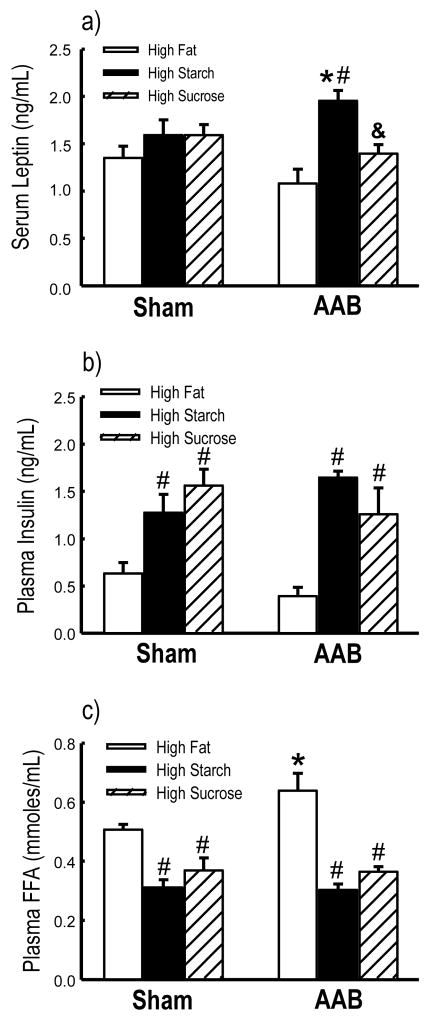
Rats were fed high-carbohydrate diets composed of either starch or sucrose, or a low-carbohydrate/high-fat diet, and underwent abdominal aortic banding (AAB) for 2 months. AAB increased LV mass with all diets. LV end-diastolic and systolic volumes and the ratio of the mRNA for myosin heavy chain beta/alpha were increased with both high-carbohydrate diets but not with the low-carbohydrate/high-fat diet. Circulating levels of insulin and leptin, both stimulants for cardiac growth, were lower, and free fatty acids were higher with the low-carbohydrate/high-fat diet compared with high-carbohydrate diets. Among animals that underwent AAB, LV volumes were positively correlated with insulin and LV mass correlated with leptin.
A low-carbohydrate/high-fat diet attenuated pressure overload-induced LV remodeling compared with high-carbohydrate diets. This effect corresponded to lower insulin and leptin concentrations, suggesting they may contribute to the development of LV hypertrophy and dysfunction under conditions of pressure overload.
尚不清楚碳水化合物和脂肪摄入如何影响左心室(LV)肥厚的发展以及对压力超负荷的收缩功能障碍。我们假设,与高碳水化合物饮食相比,低碳水化合物/高脂肪饮食可预防左心室肥厚和功能障碍。
给大鼠喂食由淀粉或蔗糖组成的高碳水化合物饮食,或低碳水化合物/高脂肪饮食,并进行腹主动脉缩窄(AAB)2个月。所有饮食组中,AAB均增加了左心室质量。两种高碳水化合物饮食均增加了左心室舒张末期和收缩末期容积以及肌球蛋白重链β/α的mRNA比值,但低碳水化合物/高脂肪饮食组未出现此情况。与高碳水化合物饮食相比,低碳水化合物/高脂肪饮食组中,心脏生长刺激物胰岛素和瘦素的循环水平较低,而游离脂肪酸水平较高。在接受AAB的动物中,左心室容积与胰岛素呈正相关,左心室质量与瘦素呈正相关。
与高碳水化合物饮食相比,低碳水化合物/高脂肪饮食减轻了压力超负荷诱导的左心室重构。这种作用与较低的胰岛素和瘦素浓度相对应,表明它们可能在压力超负荷情况下促进左心室肥厚和功能障碍的发展。