Harms Hendrik, Prass Konstantin, Meisel Christian, Klehmet Juliane, Rogge Witold, Drenckhahn Christoph, Göhler Jos, Bereswill Stefan, Göbel Ulf, Wernecke Klaus Dieter, Wolf Tilo, Arnold Guy, Halle Elke, Volk Hans-Dieter, Dirnagl Ulrich, Meisel Andreas
Department of Neurology, Charité Universitaetsmedizin Berlin, Berlin, Germany.
PLoS One. 2008 May 14;3(5):e2158. doi: 10.1371/journal.pone.0002158.
Pneumonia is a major risk factor of death after acute stroke. In a mouse model, preventive antibacterial therapy with moxifloxacin not only prevents the development of post-stroke infections, it also reduces mortality, and improves neurological outcome significantly. In this study we investigate whether this approach is effective in stroke patients.
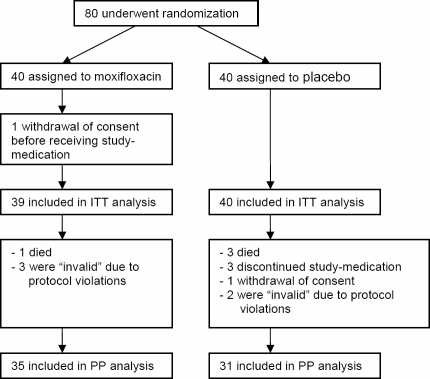
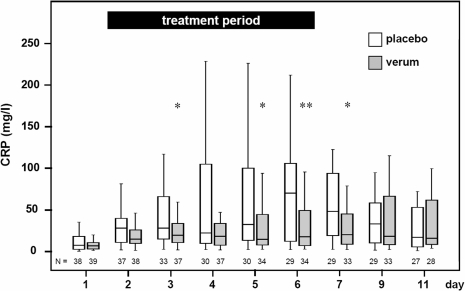
Preventive ANtibacterial THERapy in acute Ischemic Stroke (PANTHERIS) is a randomized, double-blind, placebo-controlled trial in 80 patients with severe, non-lacunar, ischemic stroke (NIHSS>11) in the middle cerebral artery (MCA) territory. Patients received either intravenous moxifloxacin (400 mg daily) or placebo for 5 days starting within 36 hours after stroke onset. Primary endpoint was infection within 11 days. Secondary endpoints included neurological outcome, survival, development of stroke-induced immunodepression, and induction of bacterial resistance.
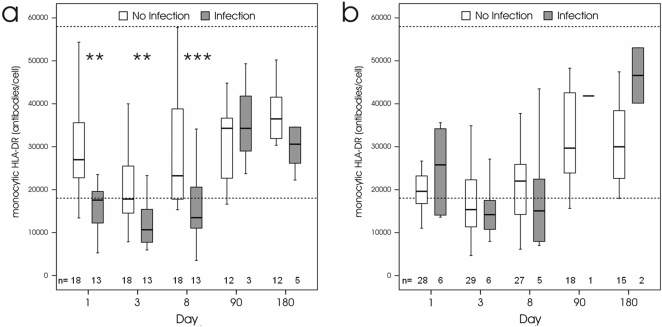
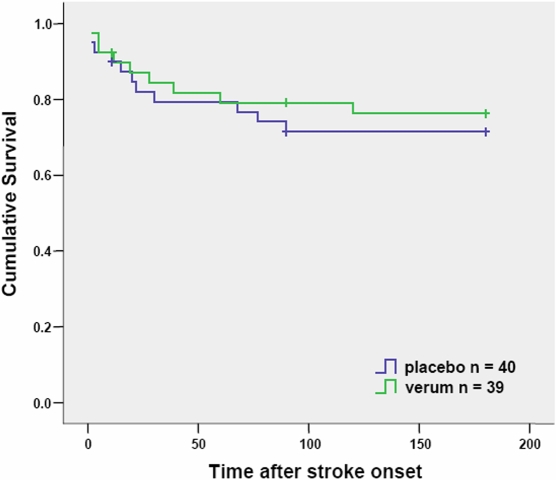
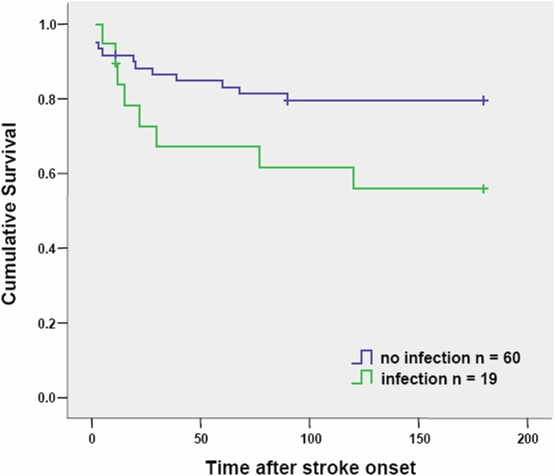
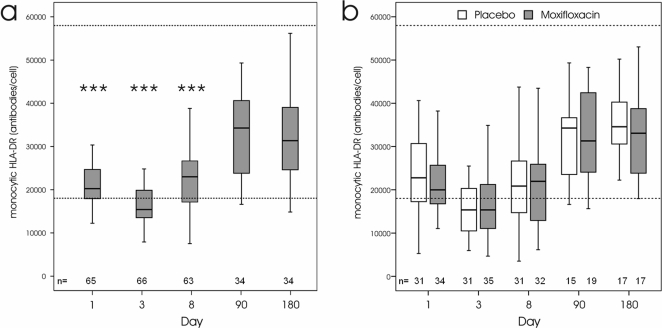
On intention-to treat analysis (79 patients), the infection rate at day 11 in the moxifloxacin treated group was 15.4% compared to 32.5% in the placebo treated group (p = 0.114). On per protocol analysis (n = 66), moxifloxacin significantly reduced infection rate from 41.9% to 17.1% (p = 0.032). Stroke associated infections were associated with a lower survival rate. In this study, neurological outcome and survival were not significantly influenced by treatment with moxifloxacin. Frequency of fluoroquinolone resistance in both treatment groups did not differ. On logistic regression analysis, treatment arm as well as the interaction between treatment arm and monocytic HLA-DR expression (a marker for immunodepression) at day 1 after stroke onset was independently and highly predictive for post-stroke infections.
PANTHERIS suggests that preventive administration of moxifloxacin is superior in reducing infections after severe non-lacunar ischemic stroke compared to placebo. In addition, the results emphasize the pivotal role of immunodepression in developing post-stroke infections.
Controlled-Trials.com ISRCTN74386719.
肺炎是急性卒中后死亡的主要危险因素。在小鼠模型中,莫西沙星预防性抗菌治疗不仅可预防卒中后感染的发生,还可降低死亡率,并显著改善神经功能结局。在本研究中,我们调查了这种方法对卒中患者是否有效。
急性缺血性卒中预防性抗菌治疗(PANTHERIS)是一项随机、双盲、安慰剂对照试验,纳入80例大脑中动脉(MCA)区域发生严重、非腔隙性缺血性卒中(美国国立卫生研究院卒中量表[NIHSS]>11)的患者。患者在卒中发作后36小时内开始接受静脉注射莫西沙星(每日400mg)或安慰剂治疗5天。主要终点为11天内的感染情况。次要终点包括神经功能结局、生存率、卒中诱导免疫抑制的发生情况以及细菌耐药性的诱导。
在意向性分析(79例患者)中,莫西沙星治疗组第11天的感染率为15.4%,而安慰剂治疗组为32.5%(p = 0.114)。在符合方案分析(n = 66)中,莫西沙星显著降低了感染率,从41.9%降至17.1%(p = 0.032)。卒中相关感染与较低的生存率相关。在本研究中,莫西沙星治疗对神经功能结局和生存率没有显著影响。两个治疗组中氟喹诺酮耐药的频率没有差异。在逻辑回归分析中,治疗组以及卒中发作后第1天治疗组与单核细胞人白细胞抗原-DR表达(免疫抑制标志物)之间的相互作用对卒中后感染具有独立且高度的预测性。
PANTHERIS研究表明,与安慰剂相比,预防性给予莫西沙星在降低严重非腔隙性缺血性卒中后感染方面更具优势。此外,结果强调了免疫抑制在卒中后感染发生中的关键作用。
Controlled-Trials.com ISRCTN74386719。