Mathew Seena S, Hablitz John J
Department of Neurobiology and Evelyn F. McKnight Brain Institute, University of Alabama at Birmingham, Birmingham, AL 35294, USA.
Neuropharmacology. 2008 Jul;55(1):106-16. doi: 10.1016/j.neuropharm.2008.05.005. Epub 2008 May 14.
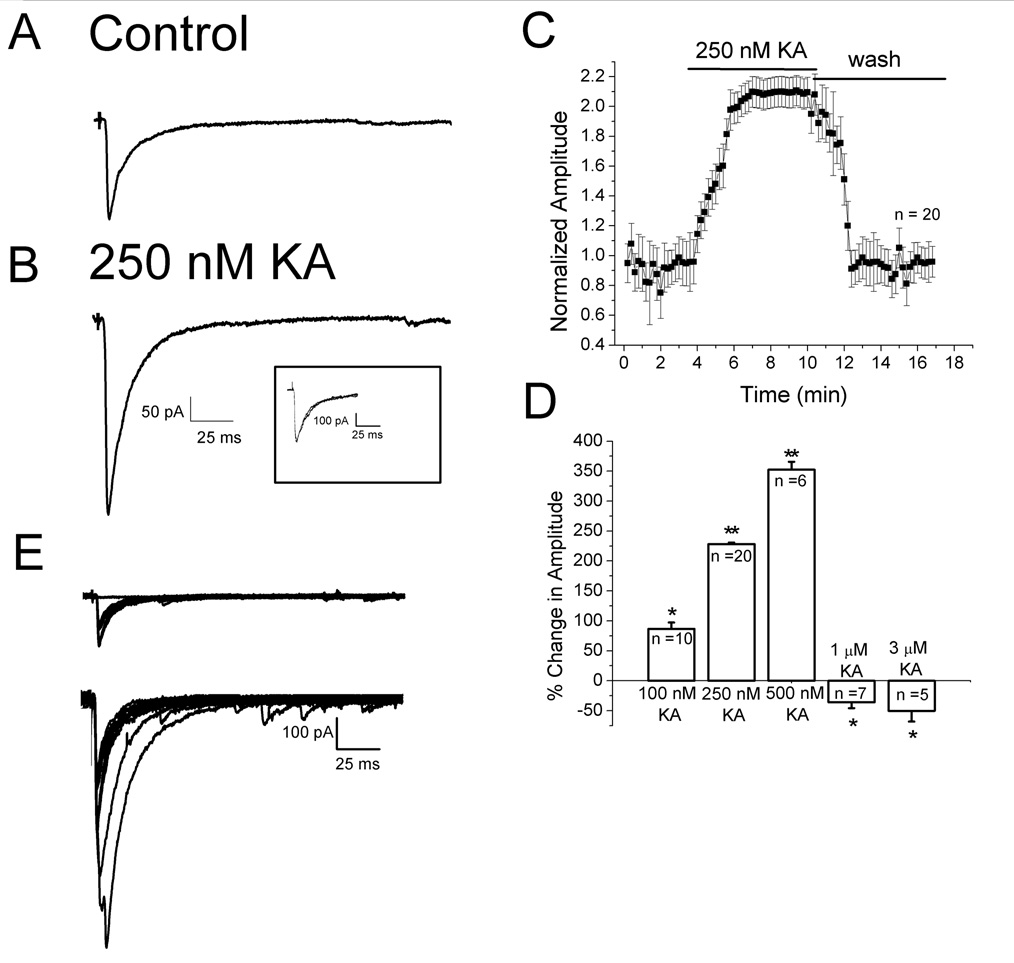
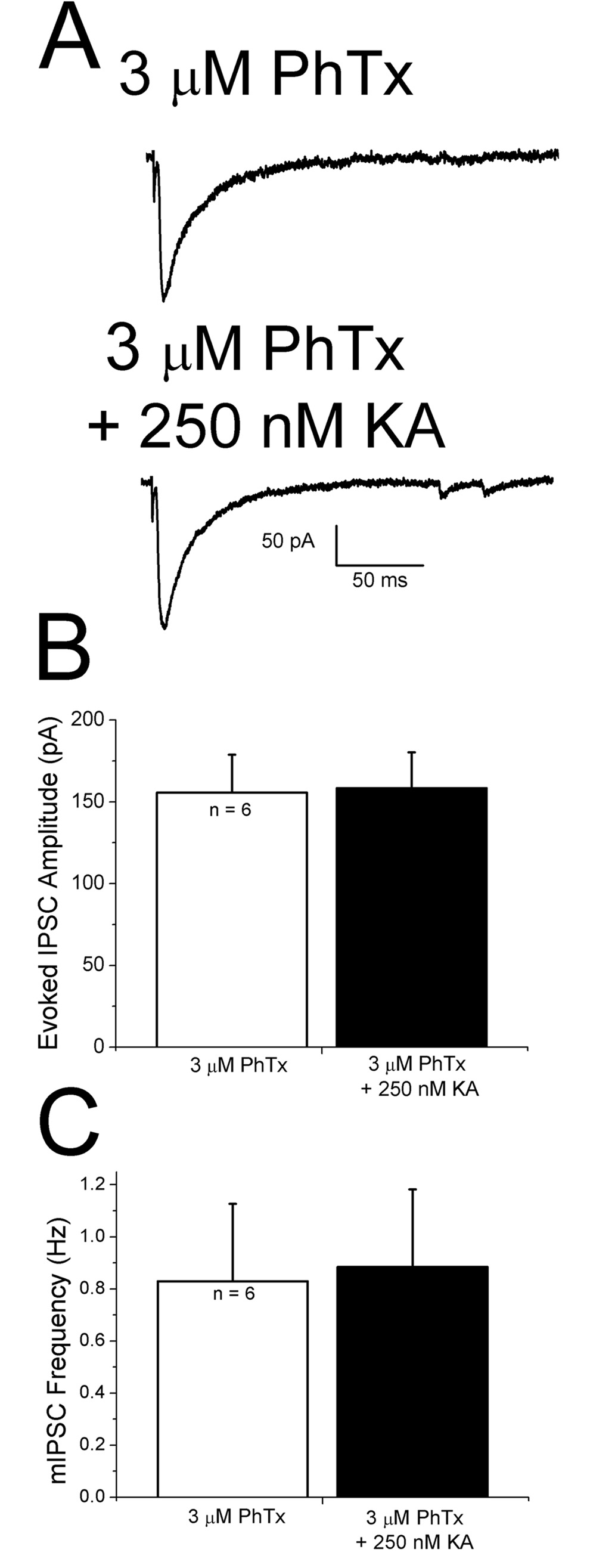
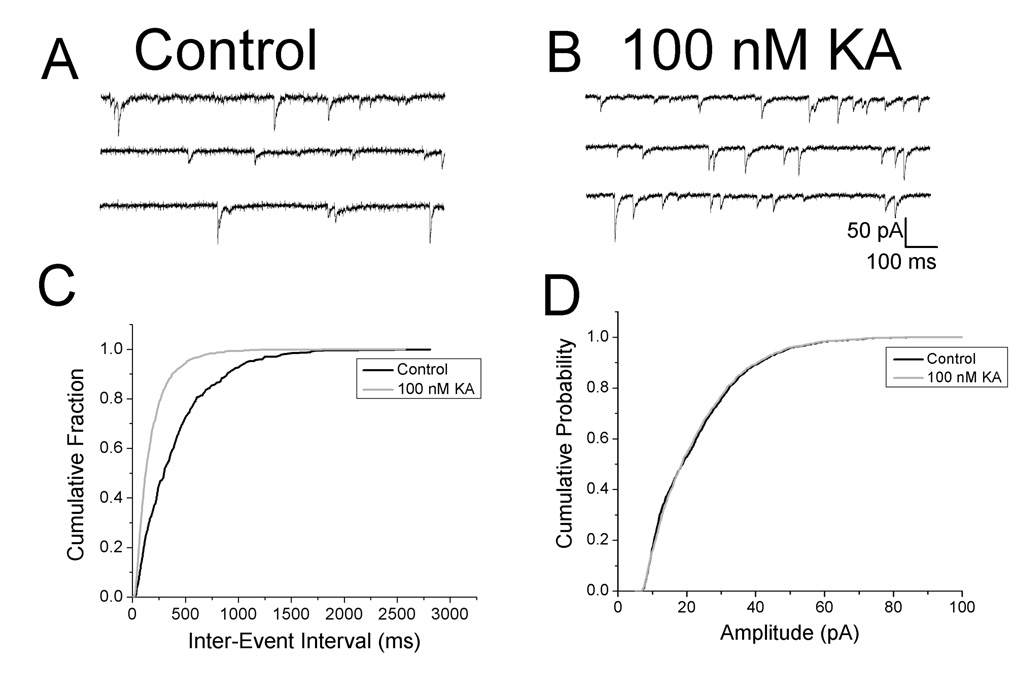
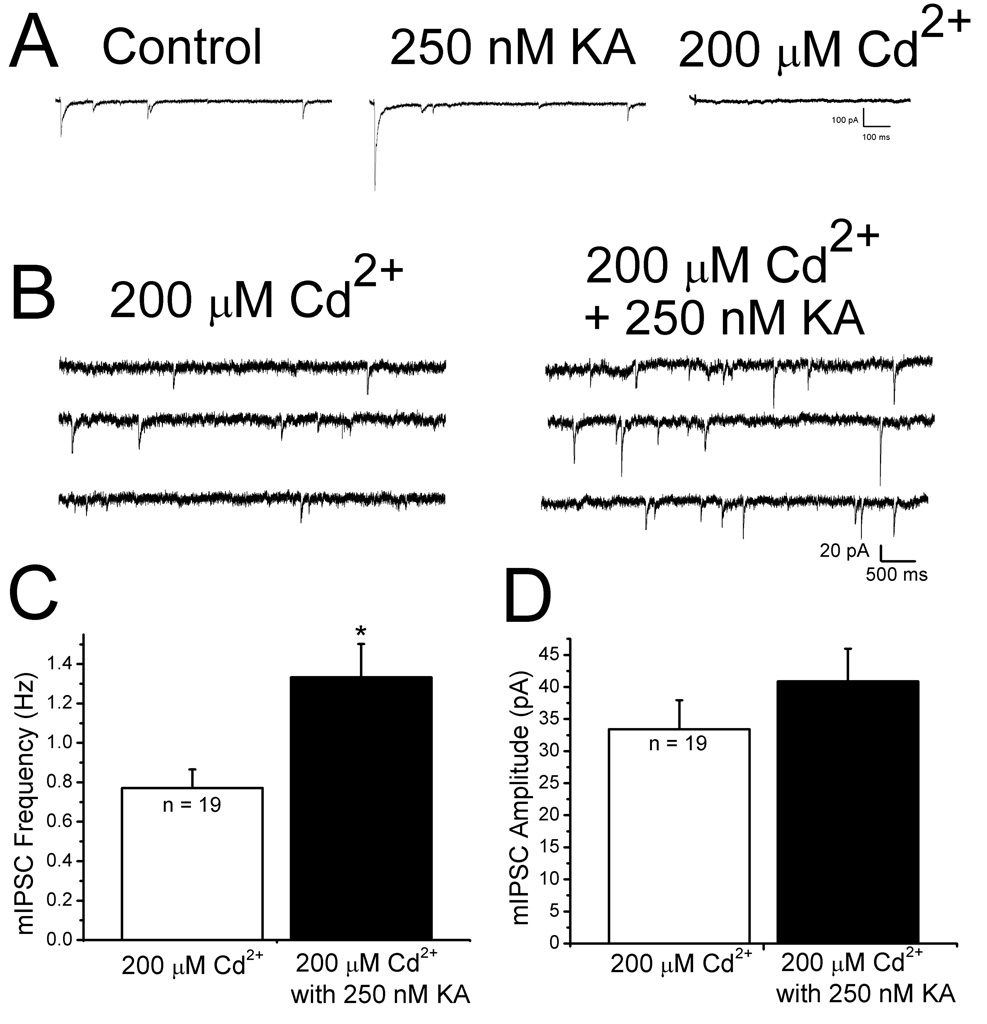
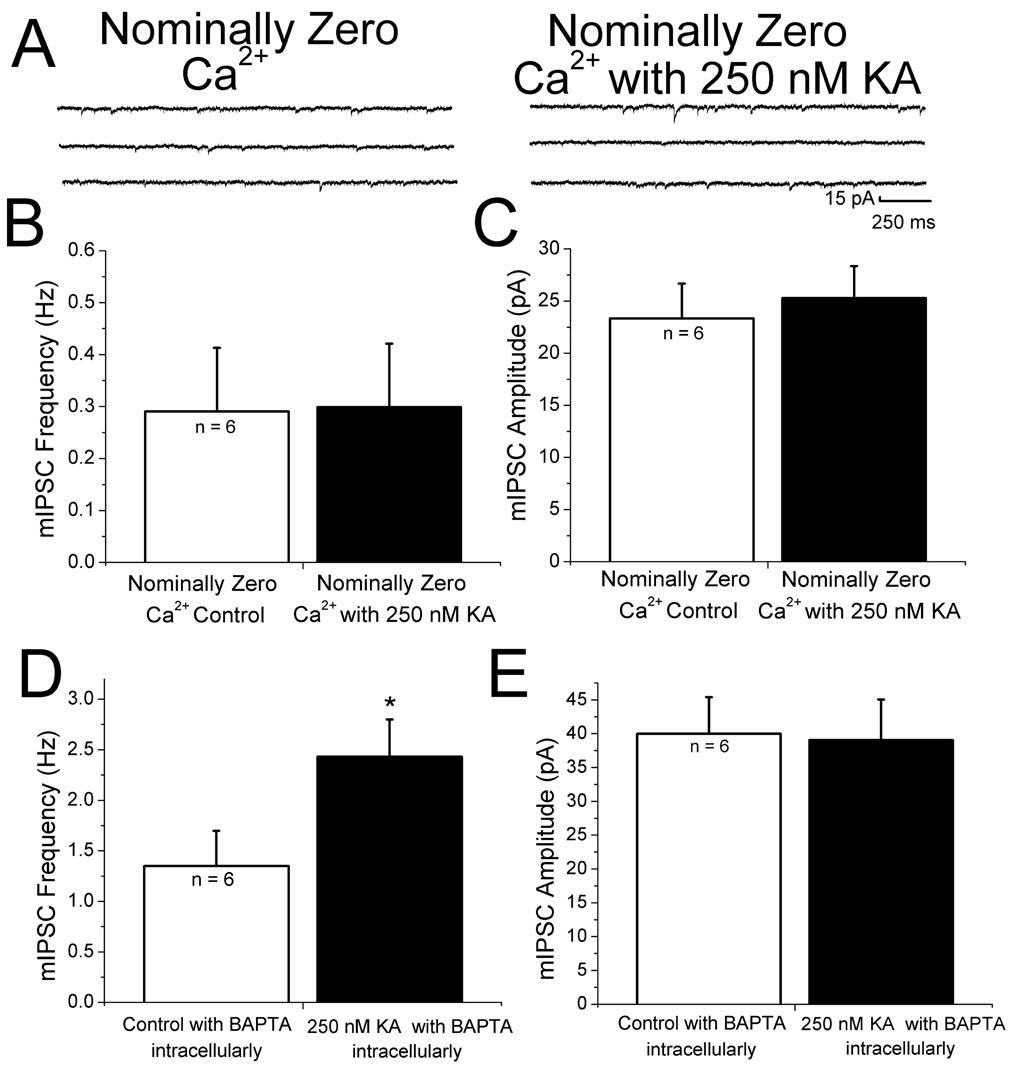
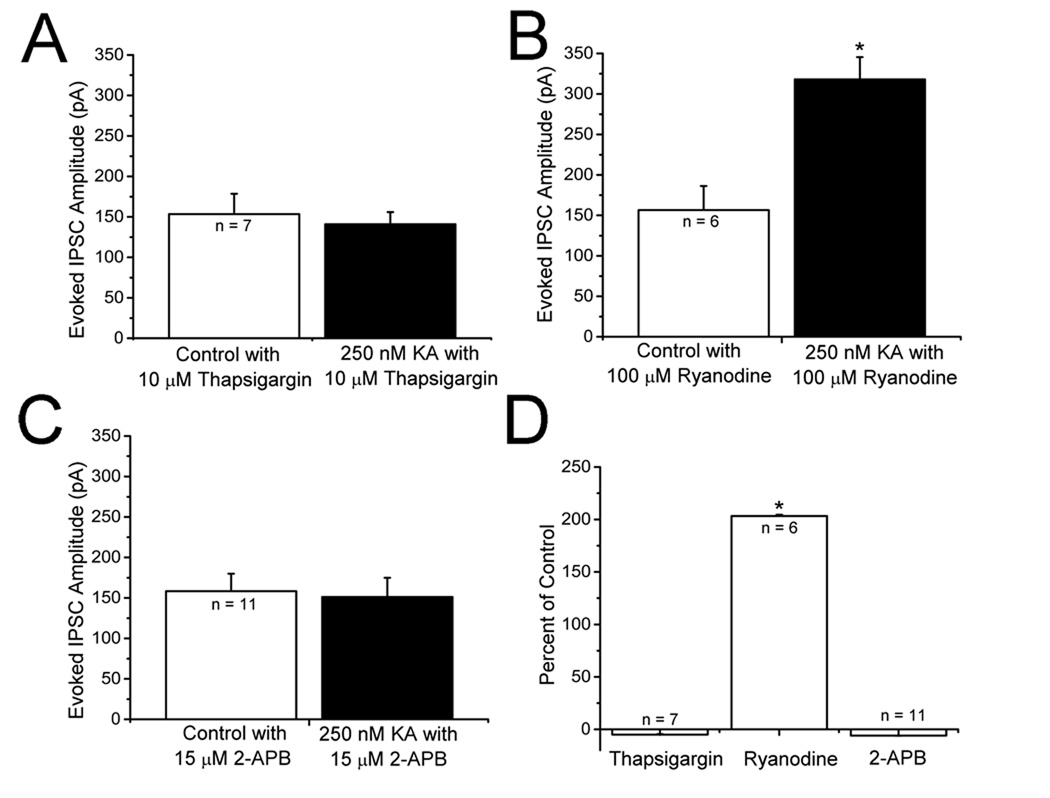
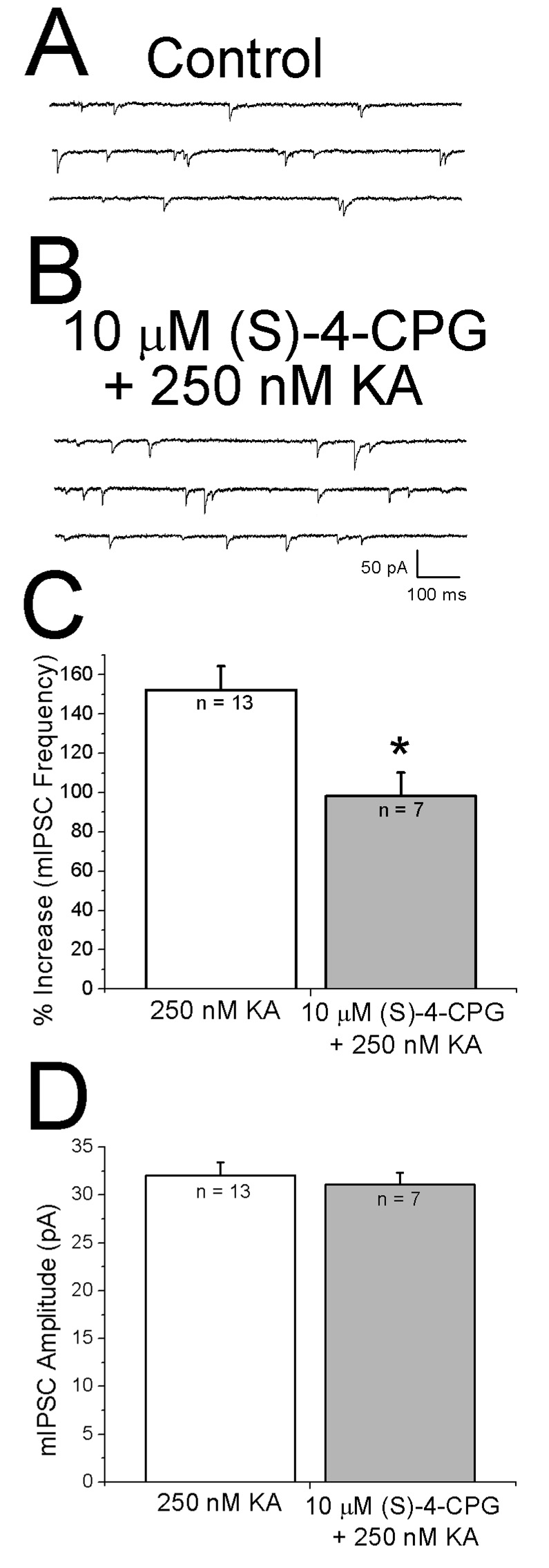
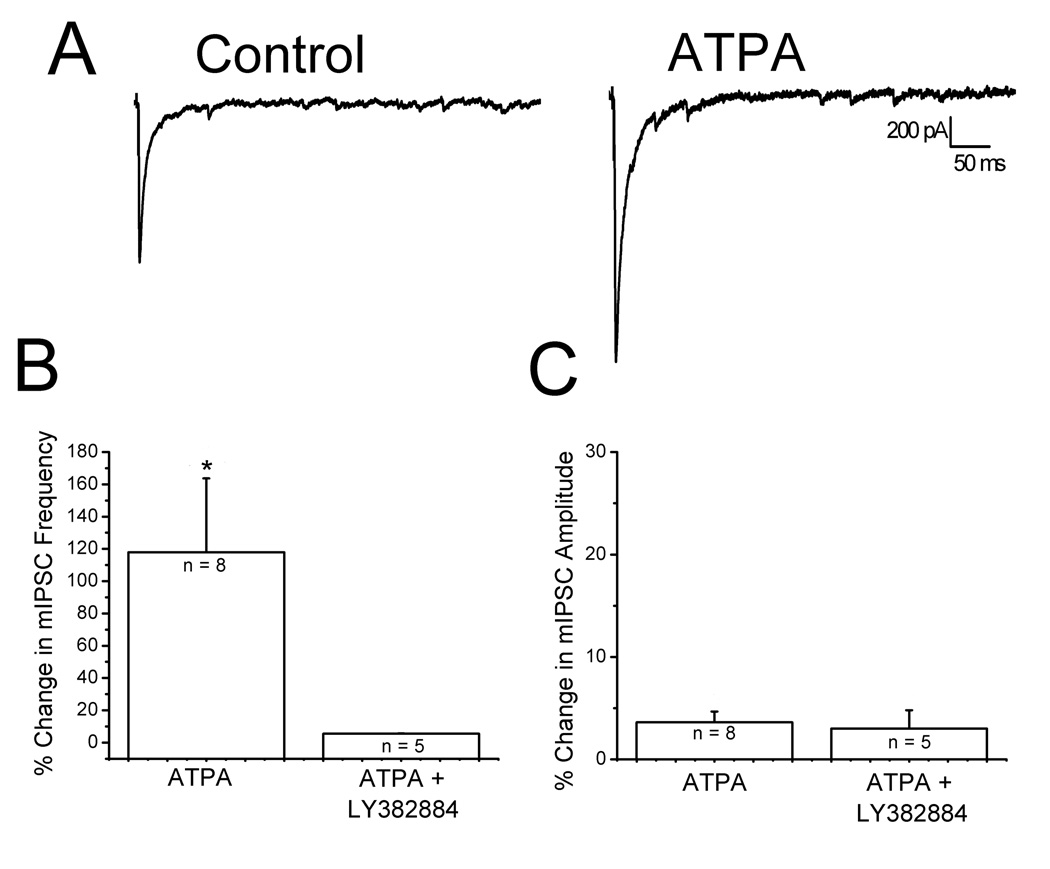
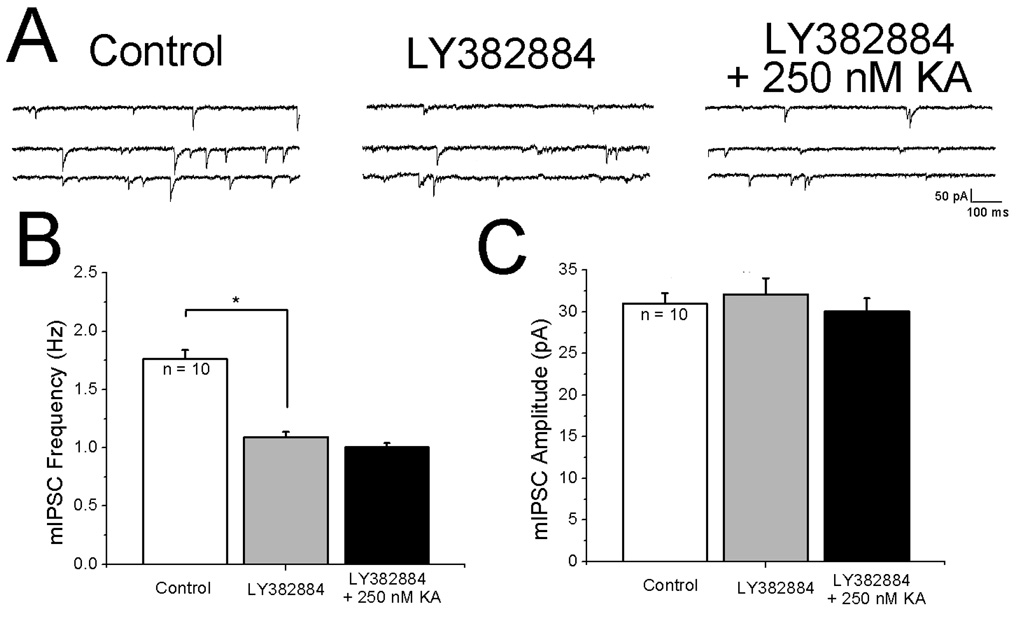
We examined the mechanisms of kainate (KA) induced modulation of GABA release in rat prefrontal cortex. Pharmacologically isolated IPSCs were recorded from visually identified layer II/III pyramidal cells using whole-cell patch clamp techniques. KA produced an increase in evoked IPSC amplitude at low nanomolar concentrations (100-500 nM). The frequency but not the amplitude of miniature (m) IPSCs was also increased. The GluR5 subunit selective agonist (RS)-2-amino-3-(3-hydroxy-5-tert-butylisoxazol-4-yl) propanoic acid (ATPA) caused an increase in mIPSC frequency whereas (3S,4aR,6S,8aR)-6-(4-carboxyphenyl)methyl-1,2,3,4,4a,5,6,7,8,8a-decahydroisoquinoline-3-carboxylic acid (LY382884), a selective GluR5 subunit antagonist, inhibited this facilitation. Philanthotoxin-433 (PhTx) blocked the effect of KA, indicating involvement of Ca(2+)-permeable GluR5 receptors. No IPSC facilitation was seen when Ca(2+) was omitted from the bathing solution. Facilitation was observed when slices were preincubated in ruthenium red or high concentrations of ryanodine, but was inhibited with application of thapsigargin. The IP3 receptor (IP3R) antagonists diphenylboric acid 2-amino-ethyl ester (2-APB) (15 microM) and Xestospongin C (XeC) blocked IPSC facilitation. These results show that activation of KA receptors (KARs) on GABAergic nerve terminals results is linked to intracellular Ca(2+) release via activation of IP3, but not ryanodine, receptors. This represents a new mechanism of presynaptic modulation whereby Ca(2+) entry through Ca(2+)-permeable GluR5 subunit containing KARs activates IP3Rs receptors leading to an increase in GABA release.
我们研究了大鼠前额叶皮层中红藻氨酸(KA)诱导的γ-氨基丁酸(GABA)释放调节机制。使用全细胞膜片钳技术,从视觉识别的II/III层锥体细胞记录药理学分离的抑制性突触后电流(IPSCs)。KA在低纳摩尔浓度(100 - 500 nM)时可使诱发的IPSC幅度增加。微小(m)IPSCs的频率增加,但幅度未变。GluR5亚基选择性激动剂(RS)-2-氨基-3-(3-羟基-5-叔丁基异恶唑-4-基)丙酸(ATPA)可使mIPSC频率增加,而选择性GluR5亚基拮抗剂(3S,4aR,6S,8aR)-6-(4-羧基苯基)甲基-1,2,3,4,4a,5,6,7,8,8a-十氢异喹啉-3-羧酸(LY382884)可抑制这种易化作用。 philanthotoxin - 433(PhTx)可阻断KA的作用,表明Ca(2 +)通透的GluR5受体参与其中。当从浴液中去除Ca(2 +)时,未观察到IPSC易化作用。当切片在钌红或高浓度的ryanodine中预孵育时观察到易化作用,但在应用毒胡萝卜素时受到抑制。IP3受体(IP3R)拮抗剂二苯基硼酸2 - 氨基乙酯(2 - APB)(15 microM)和Xestospongin C(XeC)可阻断IPSC易化作用。这些结果表明,GABA能神经末梢上KA受体(KARs)的激活与通过IP3受体而非ryanodine受体的细胞内Ca(2 +)释放有关。这代表了一种突触前调节的新机制,即通过含有KARs的Ca(2 +)通透GluR5亚基的Ca(2 +)内流激活IP3Rs受体,导致GABA释放增加。