Minczuk Michal, Papworth Monika A, Miller Jeffrey C, Murphy Michael P, Klug Aaron
MRC Laboratory of Molecular Biology, Hills Road, Cambridge CB2 2QH, UK.
Nucleic Acids Res. 2008 Jul;36(12):3926-38. doi: 10.1093/nar/gkn313. Epub 2008 May 29.
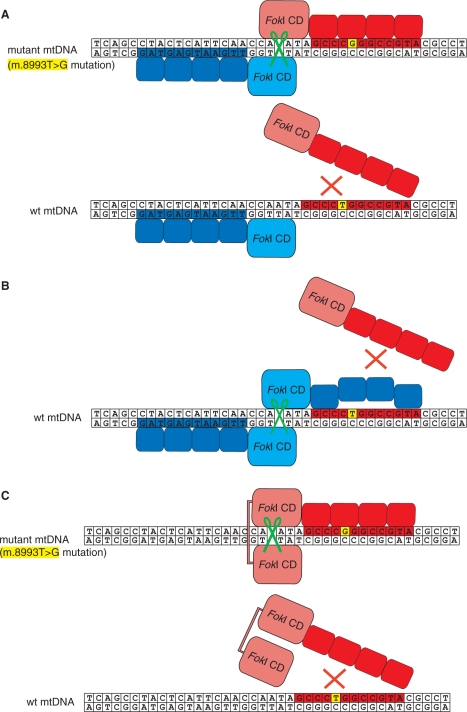
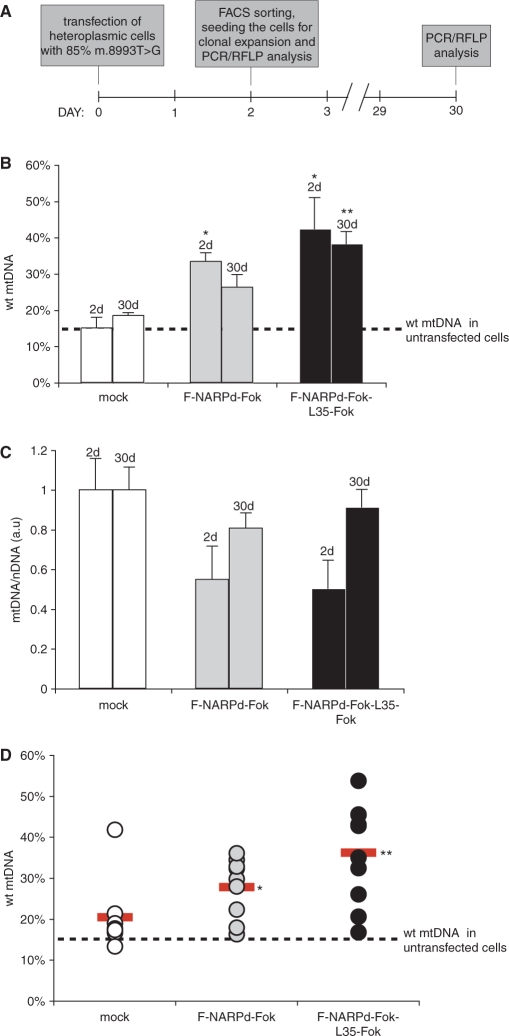
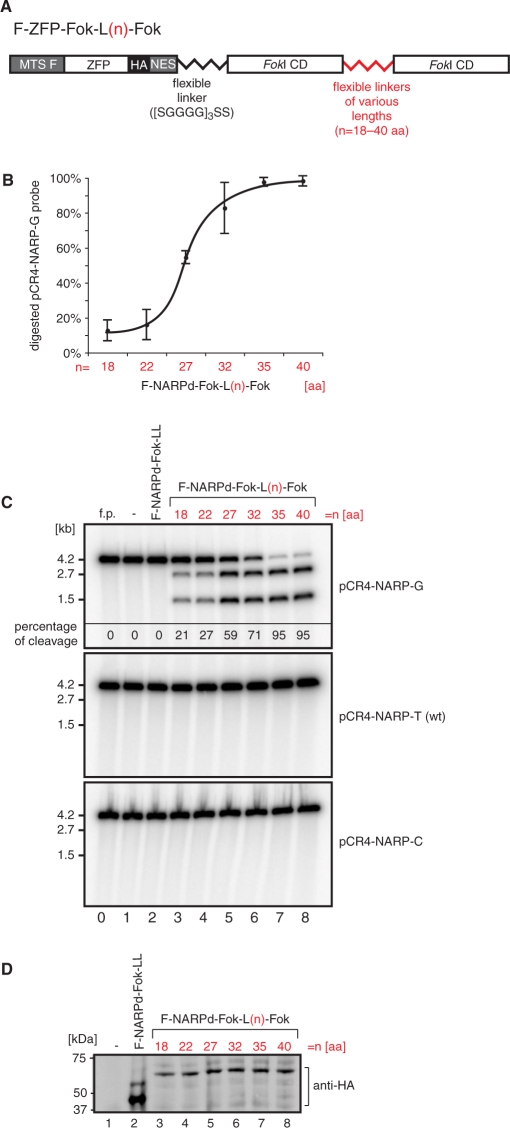
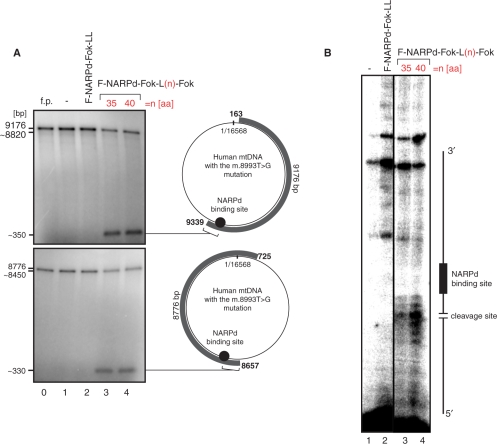
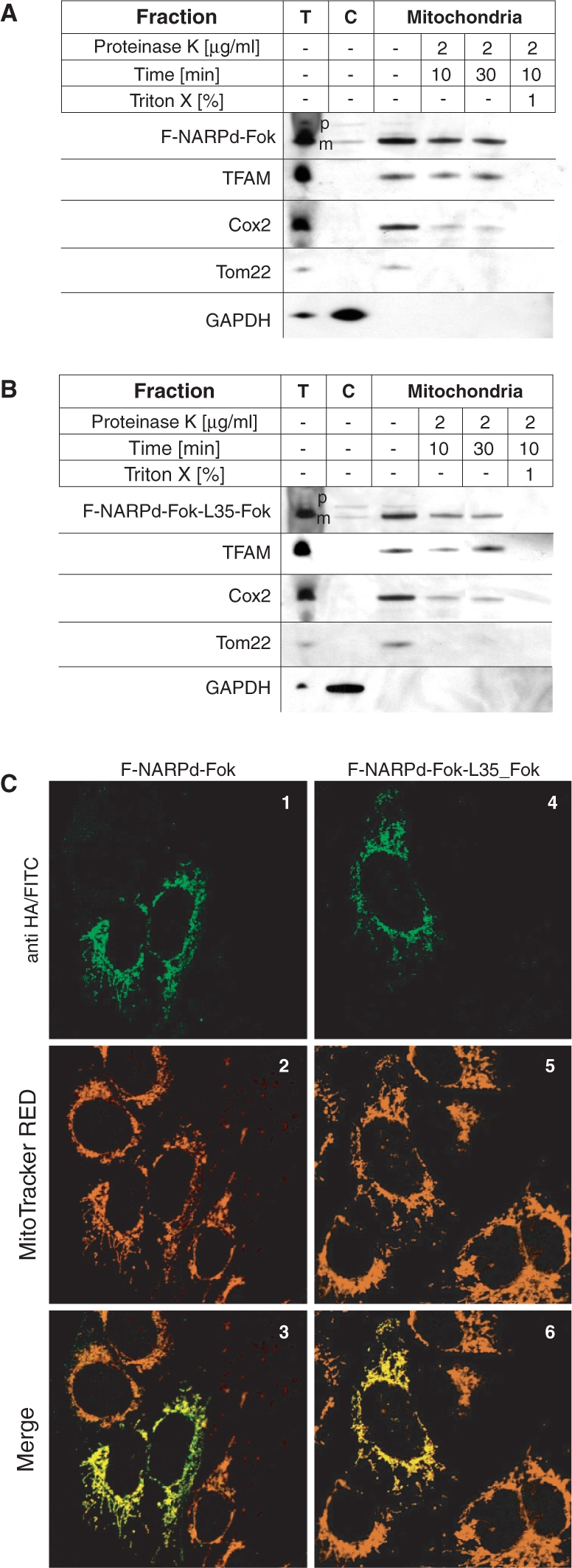
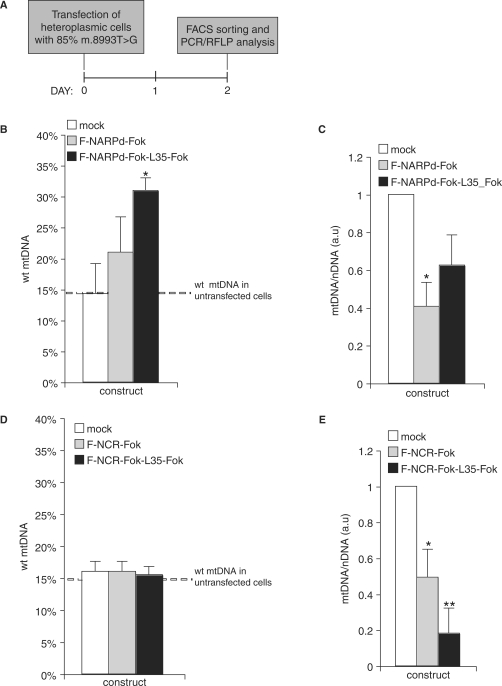
The selective degradation of mutated mitochondrial DNA (mtDNA) molecules is a potential strategy to re-populate cells with wild-type (wt) mtDNA molecules and thereby alleviate the defective mitochondrial function that underlies mtDNA diseases. Zinc finger nucleases (ZFNs), which are nucleases conjugated to a zinc-finger peptide (ZFP) engineered to bind a specific DNA sequence, could be useful for the selective degradation of particular mtDNA sequences. Typically, pairs of complementary ZFNs are used that heterodimerize on the target DNA sequence; however, conventional ZFNs were ineffective in our system. To overcome this, we created single-chain ZFNs by conjugating two FokI nuclease domains, connected by a flexible linker, to a ZFP with an N-terminal mitochondrial targeting sequence. Here we show that these ZFNs are efficiently transported into mitochondria in cells and bind mtDNA in a sequence-specific manner discriminating between two 12-bp long sequences that differ by a single base pair. Due to their selective binding they cleave dsDNA at predicted sites adjacent to the mutation. When expressed in heteroplasmic cells containing a mixture of mutated and wt mtDNA these ZFNs selectively degrade mutated mtDNA, thereby increasing the proportion of wt mtDNA molecules in the cell. Therefore, mitochondria-targeted single-chain ZFNs are a promising candidate approach for the treatment of mtDNA diseases.
突变线粒体DNA(mtDNA)分子的选择性降解是一种潜在策略,可使细胞重新充满野生型(wt)mtDNA分子,从而缓解作为mtDNA疾病基础的线粒体功能缺陷。锌指核酸酶(ZFN)是与经工程改造以结合特定DNA序列的锌指肽(ZFP)偶联的核酸酶,可用于特定mtDNA序列的选择性降解。通常,使用在靶DNA序列上异源二聚化的互补ZFN对;然而,传统的ZFN在我们的系统中无效。为克服这一问题,我们通过将两个由柔性接头连接的FokI核酸酶结构域与具有N端线粒体靶向序列的ZFP偶联,创建了单链ZFN。在此我们表明,这些ZFN可有效转运到细胞的线粒体中,并以序列特异性方式结合mtDNA,区分两个相差单个碱基对的12个碱基对长的序列。由于它们的选择性结合,它们在与突变相邻的预测位点切割双链DNA(dsDNA)。当在含有突变型和wt mtDNA混合物的异质细胞中表达时,这些ZFN选择性降解突变型mtDNA,从而增加细胞中wt mtDNA分子的比例。因此,靶向线粒体的单链ZFN是治疗mtDNA疾病的一种有前景的候选方法。