Chang Samuel, Kim Seong Hyun, Lim Hyo K, Kim Seung Hoon, Lee Won Jae, Choi Dongil, Kim Young Sun, Rhim Hyunchul
Department of Radiology and Center for Imaging Science, Samsung Medical Center, Sungkyunkwan University School of Medicine, Seoul, Korea.
Korean J Radiol. 2008 May-Jun;9(3):268-74. doi: 10.3348/kjr.2008.9.3.268.
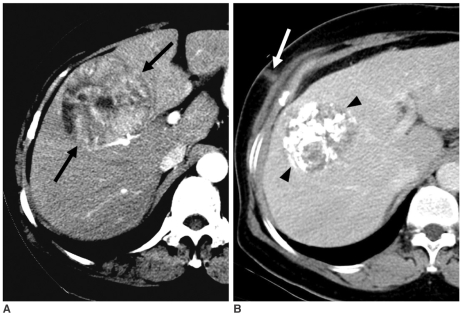
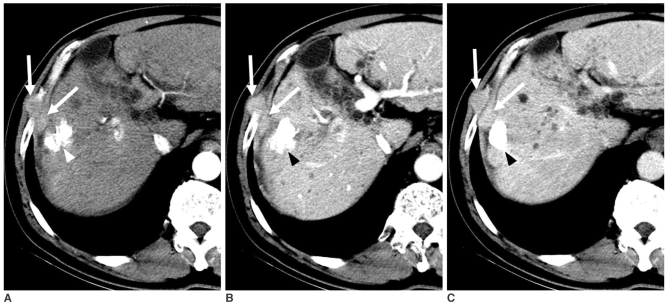
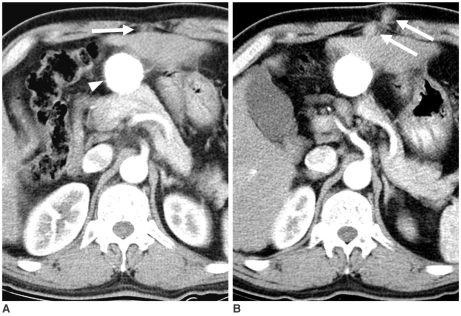
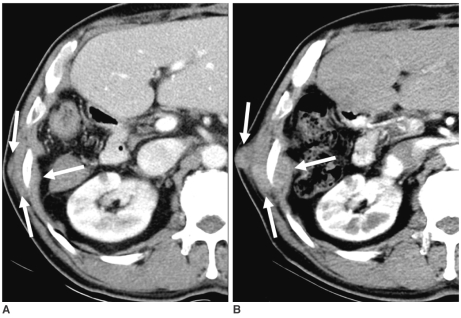
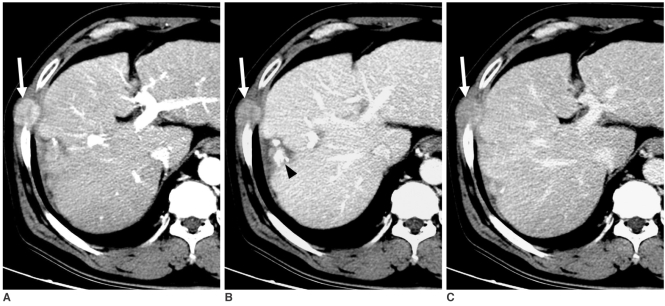
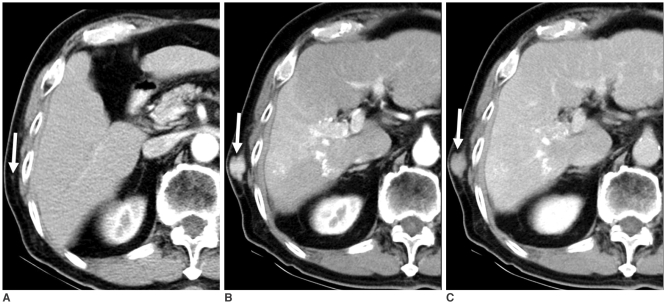
Percutaneous interventional procedures under image guidance, such as biopsy, ethanol injection therapy, and radiofrequency ablation play important roles in the management of hepatocellular carcinomas. Although uncommon, the procedures may result in tumor implantation along the needle tract, which is a major delayed complication. Implanted tumors usually appear as one or a few, round or oval-shaped, enhancing nodules along the needle tract on CT, from the intraperitoneum through the intercostal or abdominal muscles to the subcutaneous or cutaneous tissues. Radiologists should understand the mechanisms and risk factors of needle tract implantation, minimize this complication, and also pay attention to the presence of implanted tumors along the needle tract during follow-up.
在影像引导下的经皮介入操作,如活检、乙醇注射治疗和射频消融,在肝细胞癌的治疗中发挥着重要作用。尽管这种情况不常见,但这些操作可能导致肿瘤沿针道种植,这是一种主要的延迟并发症。种植性肿瘤通常表现为一个或几个圆形或椭圆形的强化结节,沿针道分布于CT上,从腹膜内穿过肋间肌或腹肌至皮下或皮肤组织。放射科医生应了解针道种植的机制和危险因素,尽量减少这种并发症,并在随访期间注意沿针道是否存在种植性肿瘤。