Frangeul Lionel, Quillardet Philippe, Castets Anne-Marie, Humbert Jean-François, Matthijs Hans C P, Cortez Diego, Tolonen Andrew, Zhang Cheng-Cai, Gribaldo Simonetta, Kehr Jan-Christoph, Zilliges Yvonne, Ziemert Nadine, Becker Sven, Talla Emmanuel, Latifi Amel, Billault Alain, Lepelletier Anthony, Dittmann Elke, Bouchier Christiane, de Marsac Nicole Tandeau
Institut Pasteur, Pasteur Genopole, F-75015, Paris, France.
BMC Genomics. 2008 Jun 5;9:274. doi: 10.1186/1471-2164-9-274.
The colonial cyanobacterium Microcystis proliferates in a wide range of freshwater ecosystems and is exposed to changing environmental factors during its life cycle. Microcystis blooms are often toxic, potentially fatal to animals and humans, and may cause environmental problems. There has been little investigation of the genomics of these cyanobacteria.
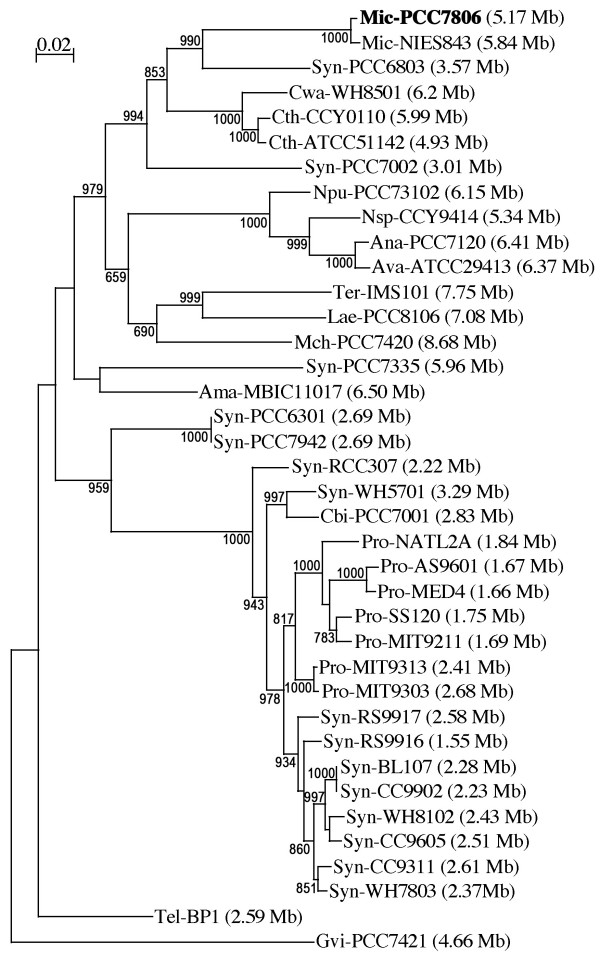
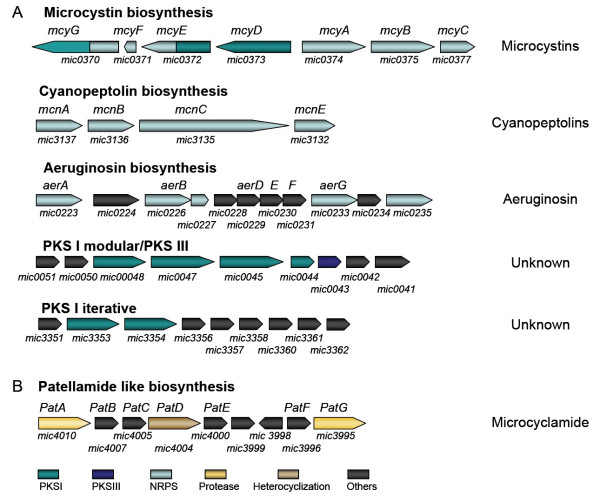
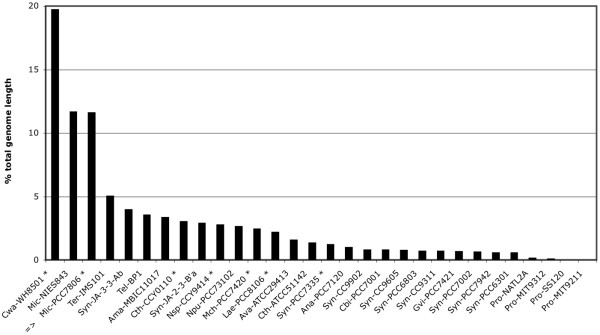
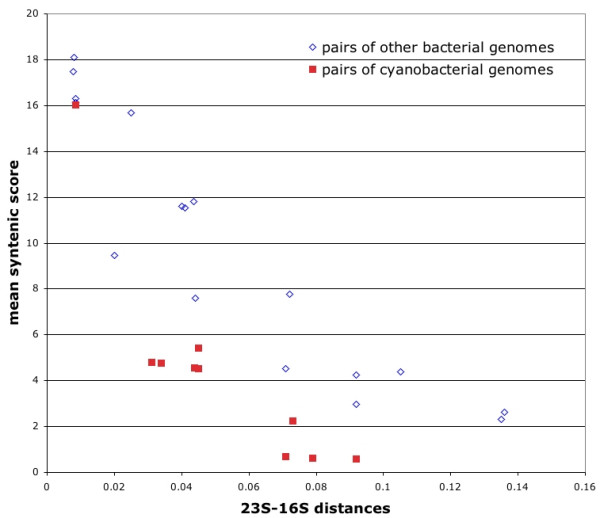
Deciphering the 5,172,804 bp sequence of Microcystis aeruginosa PCC 7806 has revealed the high plasticity of its genome: 11.7% DNA repeats containing more than 1,000 bases, 6.8% putative transposases and 21 putative restriction enzymes. Compared to the genomes of other cyanobacterial lineages, strain PCC 7806 contains a large number of atypical genes that may have been acquired by lateral transfers. Metabolic pathways, such as fermentation and a methionine salvage pathway, have been identified, as have genes for programmed cell death that may be related to the rapid disappearance of Microcystis blooms in nature. Analysis of the PCC 7806 genome also reveals striking novel biosynthetic features that might help to elucidate the ecological impact of secondary metabolites and lead to the discovery of novel metabolites for new biotechnological applications. M. aeruginosa and other large cyanobacterial genomes exhibit a rapid loss of synteny in contrast to other microbial genomes.
Microcystis aeruginosa PCC 7806 appears to have adopted an evolutionary strategy relying on unusual genome plasticity to adapt to eutrophic freshwater ecosystems, a property shared by another strain of M. aeruginosa (NIES-843). Comparisons of the genomes of PCC 7806 and other cyanobacterial strains indicate that a similar strategy may have also been used by the marine strain Crocosphaera watsonii WH8501 to adapt to other ecological niches, such as oligotrophic open oceans.
殖民性蓝藻微囊藻在广泛的淡水生态系统中增殖,并且在其生命周期中会受到不断变化的环境因素影响。微囊藻水华通常有毒,对动物和人类有潜在致命性,还可能引发环境问题。对这些蓝藻的基因组研究甚少。
解析铜绿微囊藻PCC 7806的5,172,804 bp序列揭示了其基因组的高度可塑性:11.7%的DNA重复序列包含超过1000个碱基,6.8%的推定转座酶和21种推定限制酶。与其他蓝藻谱系的基因组相比,PCC 7806菌株包含大量可能通过横向转移获得的非典型基因。已鉴定出代谢途径,如发酵和甲硫氨酸补救途径,以及可能与微囊藻水华在自然界中迅速消失有关的程序性细胞死亡基因。对PCC 7806基因组的分析还揭示了显著的新型生物合成特征,这可能有助于阐明次生代谢物的生态影响,并导致发现用于新生物技术应用的新型代谢物。与其他微生物基因组相比,铜绿微囊藻和其他大型蓝藻基因组显示出快速的共线性丧失。
铜绿微囊藻PCC 7806似乎采用了一种依赖于异常基因组可塑性的进化策略来适应富营养化的淡水生态系统,另一株铜绿微囊藻(NIES - 843)也具有这一特性。PCC 7806与其他蓝藻菌株基因组的比较表明,海洋菌株沃森氏嗜球藻WH8501可能也采用了类似策略来适应其他生态位,如贫营养的开阔海洋。