Ciota Alexander T, Lovelace Amy O, Jia Yongqing, Davis Lauren J, Young David S, Kramer Laura D
The Arbovirus Laboratories, Wadsworth Center, New York State Department of Health, 5668 State Farm Road, Slingerlands, NY 12159, USA.
School of Public Health, State University of New York at Albany, Albany, NY, USA.
J Gen Virol. 2008 Jul;89(Pt 7):1633-1642. doi: 10.1099/vir.0.2008/000893-0.
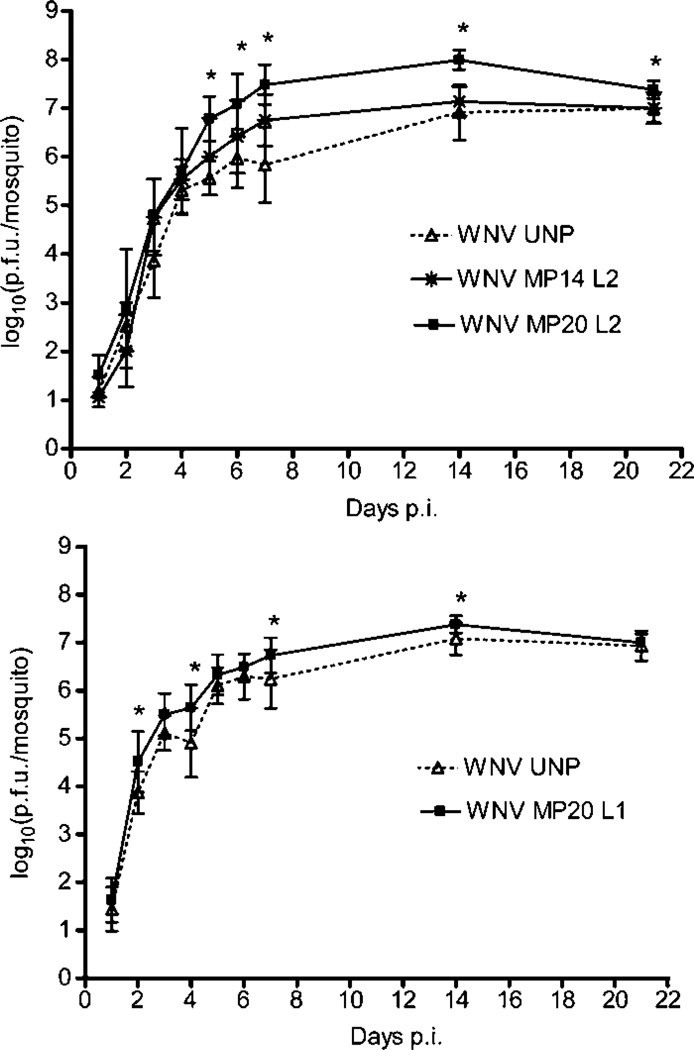
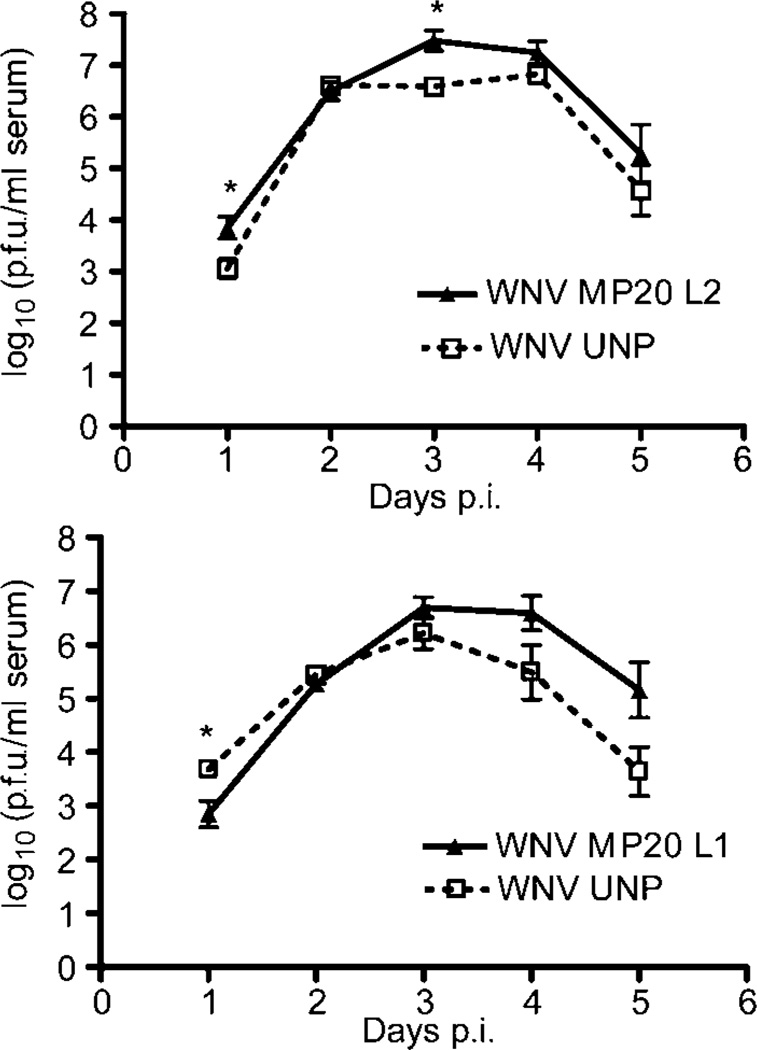
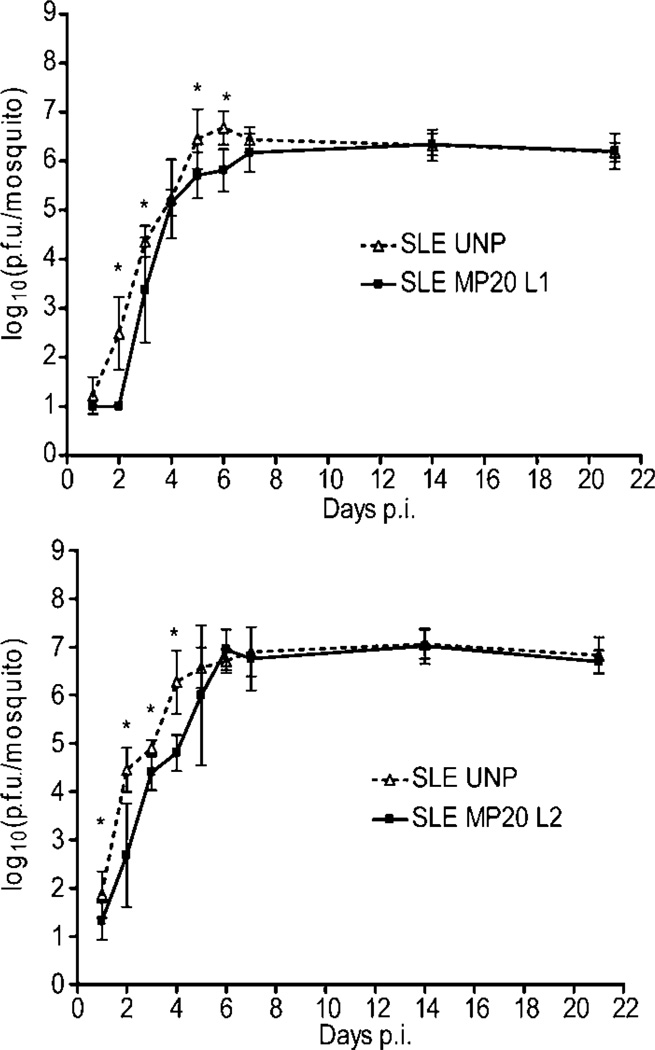
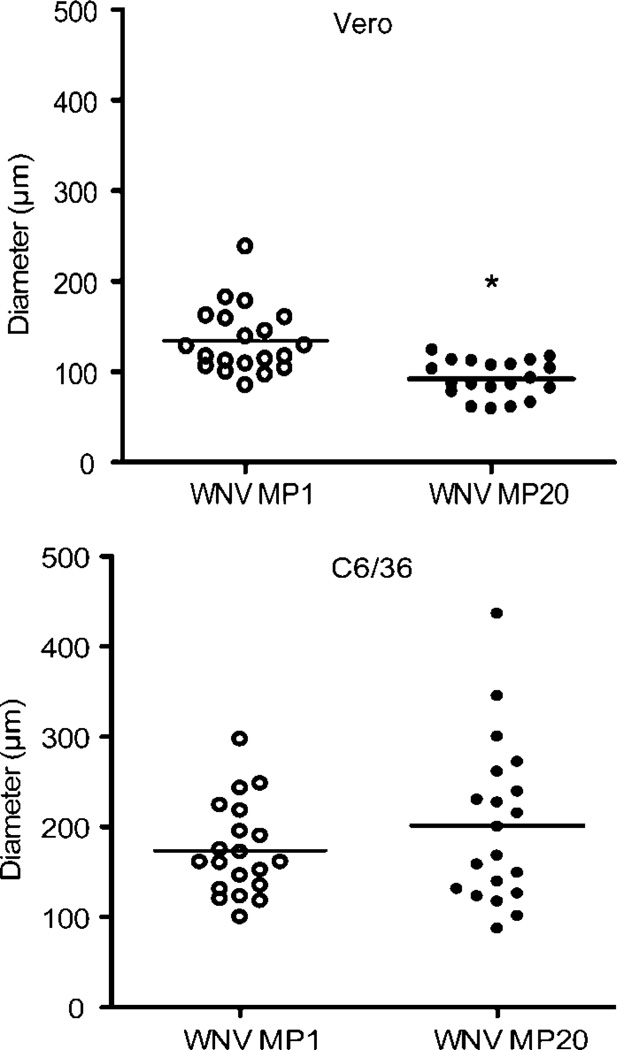
West Nile virus (WNV), a mosquito-borne flavivirus, has significantly expanded its geographical and host range since its 1999 introduction into North America. The underlying mechanisms of evolution of WNV and other arboviruses are still poorly understood. Studies evaluating virus adaptation and fitness in relevant in vivo systems are largely lacking. In order to evaluate the capacity for host-specific adaptation and the genetic correlates of adaptation in vivo, this study measured phenotypic and genotypic changes in WNV resulting from passage in Culex pipiens mosquitoes. An increase in replicative ability of WNV in C. pipiens was attained for the two lineages of WNV tested. This adaptation for replication in mosquitoes did not result in a replicative cost in chickens, but did decrease cell-to-cell spread of virus in vertebrate cell culture. Genetic analyses of one mosquito-adapted lineage revealed a total of nine consensus nucleotide substitutions with no accumulation of a significant mutant spectrum. These results differed significantly from previous in vitro studies. When St Louis encephalitis virus (SLEV), a closely related flavivirus, was passaged in C. pipiens, moderately attenuated growth in C. pipiens was observed for two lineages tested. These results suggest that significant differences in the capacity for mosquito adaptation may exist between WNV and SLEV, and demonstrate that further comparative studies in relevant in vivo systems will help elucidate the still largely unknown mechanisms of arboviral adaptation in ecologically relevant hosts.
西尼罗河病毒(WNV)是一种由蚊子传播的黄病毒,自1999年传入北美以来,其地理分布范围和宿主范围显著扩大。WNV和其他虫媒病毒进化的潜在机制仍知之甚少。目前在很大程度上缺乏评估病毒在相关体内系统中的适应性和适应性的遗传相关性的研究。为了评估宿主特异性适应性的能力以及体内适应性的遗传相关性,本研究测量了WNV在致倦库蚊中传代后导致的表型和基因型变化。在所测试的WNV两个谱系中,WNV在致倦库蚊中的复制能力均有所提高。这种在蚊子中复制的适应性并没有导致在鸡体内产生复制代价,但确实降低了病毒在脊椎动物细胞培养物中的细胞间传播。对一个适应蚊子的谱系进行的遗传分析显示,共有9个共有核苷酸替换,且没有显著的突变谱积累。这些结果与之前的体外研究有显著差异。当密切相关的黄病毒圣路易斯脑炎病毒(SLEV)在致倦库蚊中传代时,在所测试的两个谱系中观察到其在致倦库蚊中的生长适度减弱。这些结果表明,WNV和SLEV在蚊子适应能力上可能存在显著差异,并证明在相关体内系统中进行进一步的比较研究将有助于阐明虫媒病毒在生态相关宿主中仍很大程度上未知的适应机制。