Gianotti Rebecca L, Bomblies Arne, Dafalla Mustafa, Issa-Arzika Ibrahim, Duchemin Jean-Bernard, Eltahir Elfatih Ab
Department of Civil and Environmental Engineering, Massachusetts Institute of Technology, 77 Massachusetts Avenue, Cambridge, MA 02139, USA.
Malar J. 2008 Jul 23;7:138. doi: 10.1186/1475-2875-7-138.
Larval control of malaria vectors has been historically successful in reducing malaria transmission, but largely fell out of favour with the introduction of synthetic insecticides and bed nets. However, an integrated approach to malaria control, including larval control methods, continues to be the best chance for success, in view of insecticide resistance, the behavioural adaptation of the vectors to changing environments and the difficulties of reaching the poorest populations most at risk. Laboratory studies investigating the effects of neem seed (Azadirachta indica) extracts on Anopheles larvae have shown high rates of larval mortality and reductions in adult longevity, as well as low potential for resistance development.
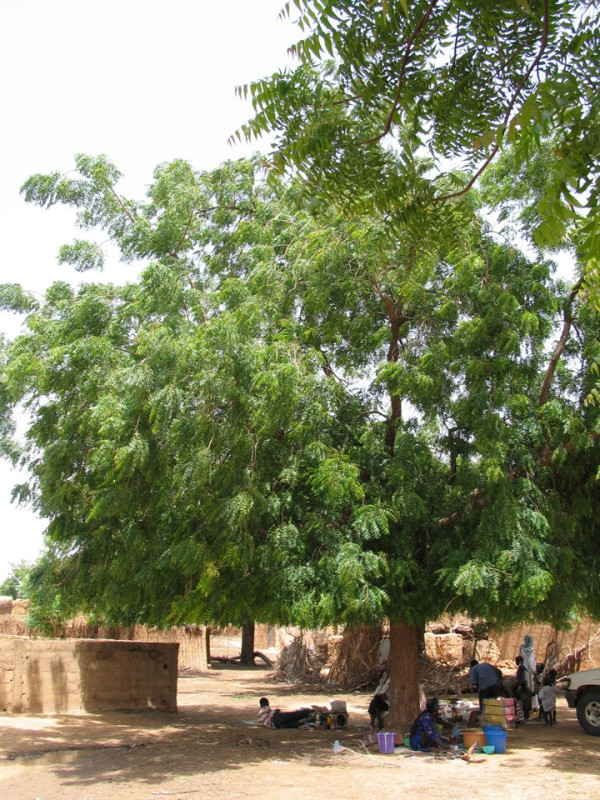
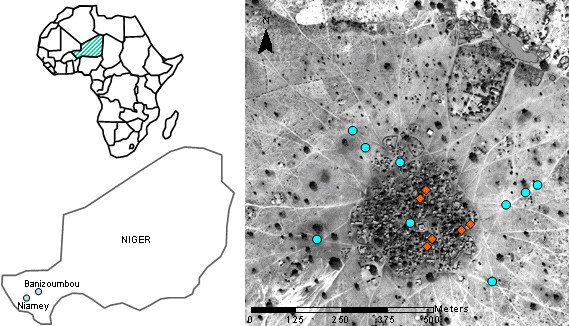
This paper describes a method whereby seeds of the neem tree can be used to reduce adult Anopheles gambiae s.l. abundance in a way that is low cost and can be implemented by residents of rural villages in western Niger. The study was conducted in Banizoumbou village, western Niger. Neem seeds were collected from around the village. Dried seeds were ground into a coarse powder, which was then sprinkled onto known Anopheles larvae breeding habitats twice weekly during the rainy season 2007. Adult mosquitoes were captured on a weekly basis in the village and captures compared to those from 2005 and 2006 over the same period. Adult mosquitoes were also captured in a nearby village, Zindarou, as a control data set and compared to those from Banizoumbou.
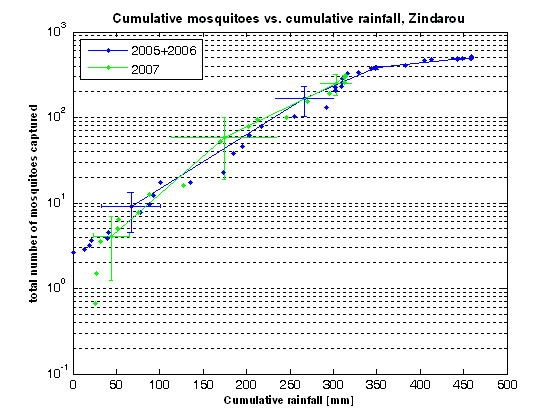
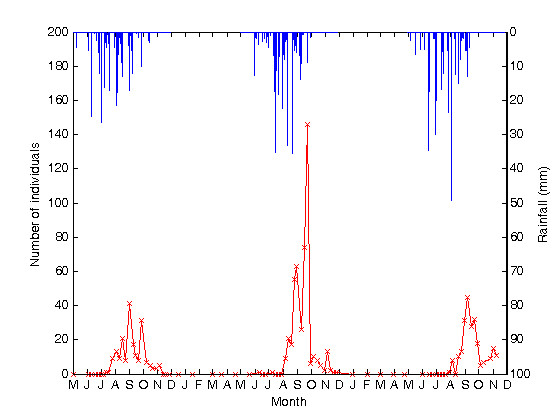
It was found that twice-weekly applications of the powder to known breeding habitats of Anopheles larvae in 2007 resulted in 49% fewer adult female Anopheles gambiae s.l. mosquitoes in Banizoumbou, compared with previous captures under similar environmental conditions and with similar habitat characteristics in 2005 and 2006. The productivity of the system in 2007 was found to be suppressed compared to the mean behaviour of 2005 and 2006 in Banizoumbou, whereas no change was found in Zindarou.
With a high abundance of neem plants in many villages in this area, the results of this study suggest that larval control using neem seed powder offers a sustainable additional tool for malaria vector control in the Sahel region of Niger.
从历史上看,控制疟疾媒介的幼虫在减少疟疾传播方面取得了成功,但随着合成杀虫剂和蚊帐的引入,这种方法在很大程度上不再受到青睐。然而,鉴于杀虫剂抗性、媒介对不断变化环境的行为适应以及接触风险最高的最贫困人群的困难,包括幼虫控制方法在内的综合疟疾控制方法仍然是取得成功的最佳机会。对印楝(印楝)种子提取物对按蚊幼虫影响的实验室研究表明,幼虫死亡率很高,成虫寿命缩短,而且产生抗性的可能性很低。
本文描述了一种方法,利用印楝树种子以低成本的方式减少成年冈比亚按蚊复合组的数量,并且尼日尔西部农村的居民可以实施该方法。该研究在尼日尔西部的巴尼祖姆布村进行。印楝种子从村庄周围收集。将干燥的种子磨成粗粉,然后在2007年雨季每周两次撒在已知的按蚊幼虫繁殖栖息地。每周在村里捕获成年蚊子,并将捕获量与2005年和2006年同期的捕获量进行比较。还在附近的津达鲁村捕获成年蚊子作为对照数据集,并与巴尼祖姆布村的进行比较。
结果发现,2007年每周两次将粉末施用于已知的按蚊幼虫繁殖栖息地,与2005年和2006年在类似环境条件和类似栖息地特征下的先前捕获量相比,巴尼祖姆布村成年雌性冈比亚按蚊复合组蚊子减少了49%。与巴尼祖姆布村2005年和2006年的平均情况相比,2007年该系统的生产力受到抑制,而在津达鲁村未发现变化。
鉴于该地区许多村庄印楝植物丰富,本研究结果表明,使用印楝种子粉进行幼虫控制为尼日尔萨赫勒地区的疟疾媒介控制提供了一种可持续的额外工具。