Centre for International Health and Development, University College London, 30 Guilford Street, London, WC1N 1EH, UK.
Hum Resour Health. 2008 Aug 12;6:16. doi: 10.1186/1478-4491-6-16.
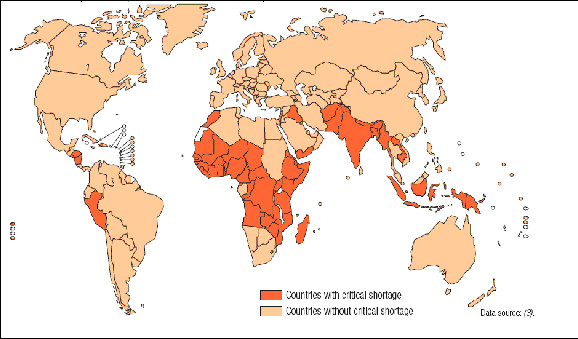
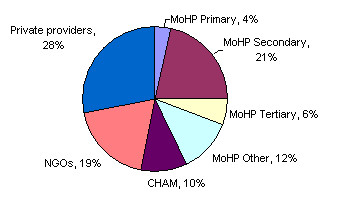
Two crises dominate the health sectors of sub-Saharan African countries: those of human resources and of HIV. Nevertheless, there is considerable variation in the extent to which these two phenomena affect sub-Saharan countries, with a few facing extreme levels of both: Lesotho, Zimbabwe, Zambia, Mozambique, the Central African Republic and Malawi. This paper reviews the continent-wide situation with respect to this double burden before considering the case of Malawi in more detail. In Malawi, there has been significant concurrent investment in both an Emergency Human Resource Programme and an antiretroviral therapy programme which was treating 60,000 people by the end of 2006. Both areas of synergy and conflict have arisen, as the two programmes have been implemented. These highlight important issues for programme planners and managers to address and emphasize that planning for the scale-up of antiretroviral therapy while simultaneously strengthening health systems and the human resource situation requires prioritization among compelling cases for support, and time (not just resources).
人力资源危机和艾滋病毒危机。然而,这两种现象在多大程度上影响了撒哈拉以南非洲国家存在着相当大的差异,其中有少数几个国家面临着这两种现象的极端程度:莱索托、津巴布韦、赞比亚、莫桑比克、中非共和国和马拉维。本文首先综述了整个非洲大陆在应对这种双重负担方面的情况,然后更详细地探讨了马拉维的情况。在马拉维,同时对紧急人力资源方案和抗逆转录病毒疗法方案进行了大量投资,到 2006 年底,该方案已治疗了 6 万人。随着这两个方案的实施,出现了协同和冲突两个方面的问题。这些问题突出了方案规划人员和管理人员需要解决的重要问题,并强调在扩大抗逆转录病毒疗法规模的同时加强卫生系统和人力资源状况,需要在支持的紧迫情况中进行优先排序,并需要时间(不仅仅是资源)。