Baums M H, Buchhorn G H, Spahn G, Poppendieck B, Schultz W, Klinger H-M
Department of Orthopaedic Surgery, University of Göttingen Medical Centre (UMG), Robert-Koch-Str. 40, 37075, Göttingen, Germany.
Knee Surg Sports Traumatol Arthrosc. 2008 Nov;16(11):1052-60. doi: 10.1007/s00167-008-0590-2. Epub 2008 Aug 29.
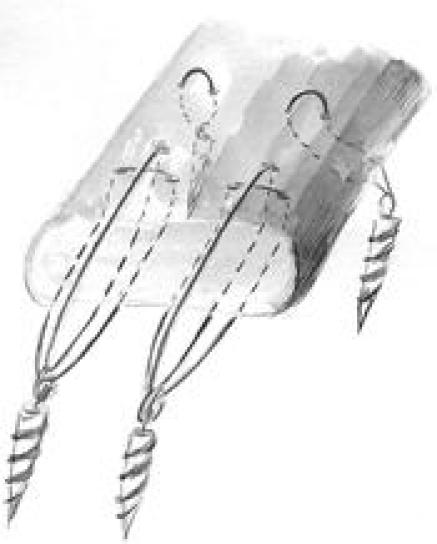
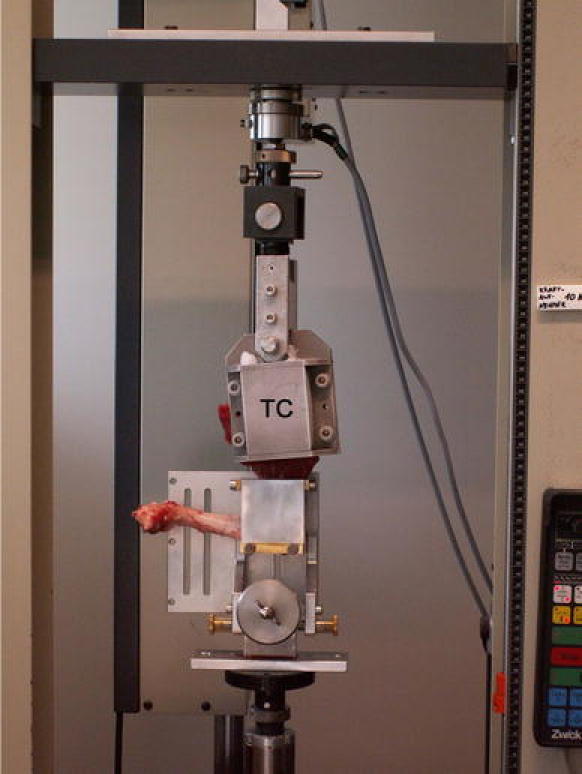
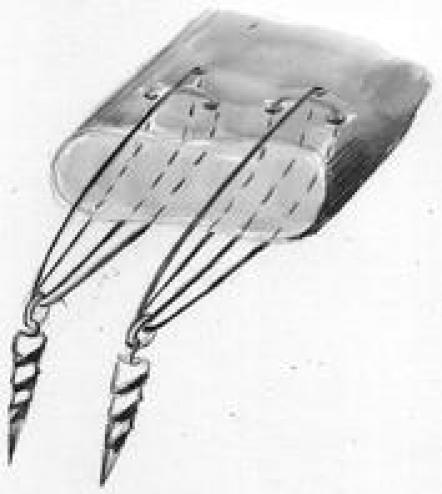
The aim of the study was to evaluate the time zero mechanical properties of single- versus double-row configuration for rotator cuff repair in an animal model with consideration of the stitch technique and suture material. Thirty-two fresh-frozen sheep shoulders were randomly assigned to four repair groups: suture anchor single-row repair coupled with (1) braided, nonabsorbable polyester suture sized USP No. 2 (SRAE) or (2) braided polyblend polyethylene suture sized No. 2 (SRAH). The double-row repair was coupled with (3) USP No. 2 (DRAE) or (4) braided polyblend polyethylene suture No. 2 (DRAH). Arthroscopic Mason-Allen stitches were used (single-row) and combined with medial horizontal mattress stitches (double-row). Shoulders were cyclically loaded from 10 to 180 N. Displacement to gap formation of 5- and 10-mm at the repair site, cycles to failure, and the mode of failure were determined. The ultimate tensile strength was verified in specimens that resisted to 3,000 cycles. DRAE and DRAH had a lower frequency of 5- (P = 0.135) and 10-mm gap formation (P = 0.135). All DRAE and DRAH resisted 3,000 cycles while only three SRAE and one SRAH resisted 3,000 cycles (P < 0.001). The ultimate tensile strength in double-row specimens was significantly higher than in others (P < 0.001). There was no significant variation in using different suture material (P > 0.05). Double-row suture anchor repair with arthroscopic Mason-Allen/medial mattress stitches provides initial strength superior to single-row repair with arthroscopic Mason-Allen stitches under isometric cyclic loading as well as under ultimate loading conditions. Our results support the concept of double-row fixation with arthroscopic Mason-Allen/medial mattress stitches in rotator cuff tears with improvement of initial fixation strength and ultimate tensile load. Use of new polyblend polyethylene suture material seems not to increase the initial biomechanical aspects of the repair construct.
本研究的目的是在动物模型中,考虑缝合技术和缝合材料,评估单排与双排肩袖修复构型的初始力学性能。32个新鲜冷冻的绵羊肩部被随机分配到四个修复组:缝合锚钉单排修复联合(1)美国药典2号编织、不可吸收聚酯缝线(SRAE)或(2)2号编织聚混物聚乙烯缝线(SRAH)。双排修复联合(3)美国药典2号(DRAE)或(4)2号编织聚混物聚乙烯缝线(DRAH)。采用关节镜下梅森-艾伦缝合法(单排)并联合内侧水平褥式缝合法(双排)。肩部从10 N至180 N进行循环加载。测定修复部位出现5 mm和10 mm间隙形成时的位移、失效循环次数以及失效模式。在耐受3000次循环的标本中验证极限拉伸强度。DRAE和DRAH出现5 mm(P = 0.135)和10 mm间隙形成的频率较低(P = 0.135)。所有DRAE和DRAH均耐受3000次循环,而只有3个SRAE和1个SRAH耐受3000次循环(P < 0.001)。双排标本的极限拉伸强度显著高于其他组(P < 0.001)。使用不同缝合材料无显著差异(P > 0.05)。在等长循环加载以及极限加载条件下,关节镜下梅森-艾伦/内侧褥式缝合的双排缝合锚钉修复提供的初始强度优于关节镜下梅森-艾伦缝合的单排修复。我们的结果支持在肩袖撕裂中采用关节镜下梅森-艾伦/内侧褥式缝合进行双排固定的概念,其可提高初始固定强度和极限拉伸负荷。使用新型聚混物聚乙烯缝合材料似乎并未增加修复结构的初始生物力学性能。