Holick Michael F
Department of Medicine, Section of Endocrinology, Nutrition, and Diabetes, Vitamin D, Skin and Bone Research Laboratory, Boston University Medical Center, Boston, MA, USA.
Mol Aspects Med. 2008 Dec;29(6):361-8. doi: 10.1016/j.mam.2008.08.008. Epub 2008 Sep 2.
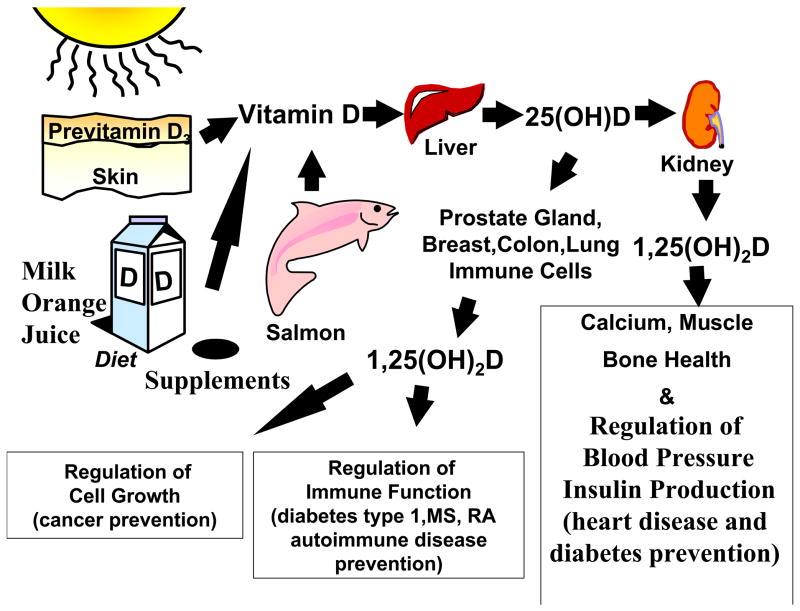
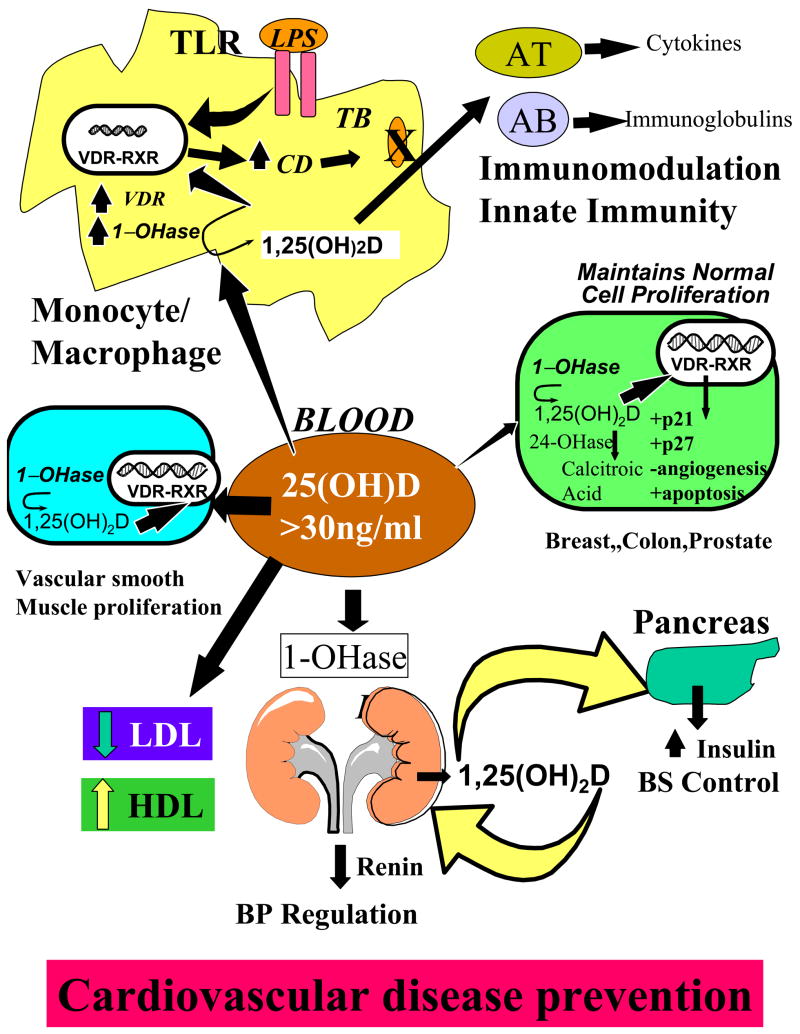
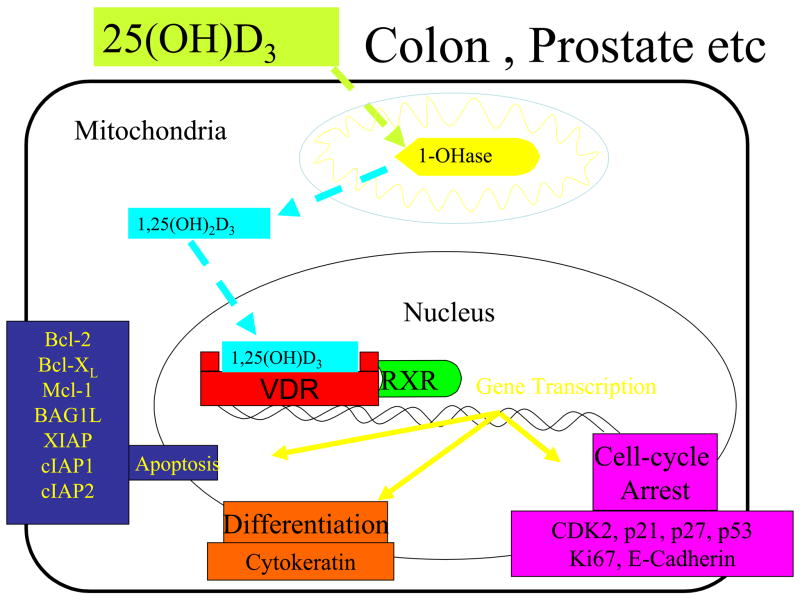
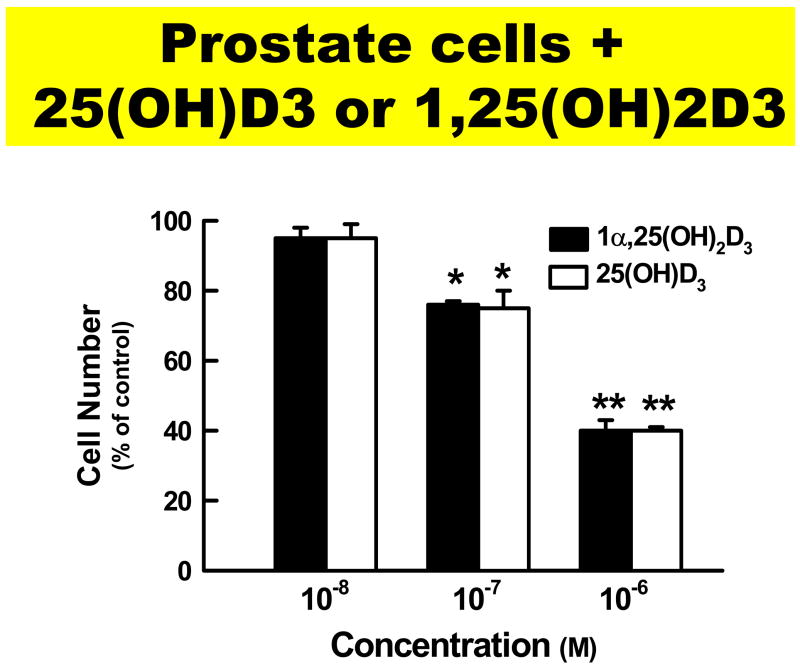
Vitamin D, the sunshine vitamin, is important for childhood bone health. Over the past two decades, it is now recognized that vitamin D not only is important for calcium metabolism and maintenance of bone health throughout life, but also plays an important role in reducing risk of many chronic diseases including type I diabetes, multiple sclerosis, rheumatoid arthritis, deadly cancers, heart disease and infectious diseases. How vitamin D is able to play such an important role in health is based on observation that all tissues and cells in the body have a vitamin D receptor, and, thus, respond to its active form 1,25-dihydroxyvitamin D. However, this did not explain how living at higher latitudes and being at risk of vitamin D deficiency increased risk of these deadly diseases since it was also known that the 1,25-dihydroxyvitamin D levels are normal or even elevated when a person is vitamin D insufficient. Moreover, increased intake of vitamin D or exposure to more sunlight will not induce the kidneys to produce more 1,25-dihydroxyvitamin D. The revelation that the colon, breast, prostate, macrophages and skin among other organs have the enzymatic machinery to produce 1,25-dihydroxyvitamin D provides further insight as to how vitamin D plays such an essential role for overall health and well being. This review will put into perspective many of the new biologic actions of vitamin D and on how 1,25-dihydroxyvitamin D is able to regulate directly or indirectly more than 200 different genes that are responsible for a wide variety of biologic processes.
维生素D,即阳光维生素,对儿童骨骼健康至关重要。在过去二十年里,人们现已认识到,维生素D不仅对一生的钙代谢和骨骼健康维持很重要,而且在降低包括I型糖尿病、多发性硬化症、类风湿性关节炎、致命癌症、心脏病和传染病在内的许多慢性疾病风险方面也发挥着重要作用。维生素D之所以能在健康方面发挥如此重要的作用,是基于这样的观察:体内所有组织和细胞都有维生素D受体,因此能对其活性形式1,25-二羟基维生素D作出反应。然而,这并不能解释为何生活在高纬度地区且有维生素D缺乏风险会增加这些致命疾病的风险,因为人们也知道,当一个人维生素D不足时,其1,25-二羟基维生素D水平是正常的甚至是升高的。此外,增加维生素D摄入量或更多地晒太阳并不会促使肾脏产生更多的1,25-二羟基维生素D。结肠、乳腺、前列腺、巨噬细胞和皮肤等器官具有产生1,25-二羟基维生素D的酶机制,这一发现为维生素D如何对整体健康和幸福发挥如此重要的作用提供了进一步的见解。本综述将阐述维生素D的许多新生物学作用,以及1,25-二羟基维生素D如何能够直接或间接调节200多种不同的基因,这些基因负责各种各样的生物学过程。