Wang Jian-Hua, Wells Clive, Wu Li
Department of Microbiology and Molecular Genetics, Medical College of Wisconsin, 8701 Watertown Plank Road, Milwaukee, WI 53226, USA.
Virology. 2008 Nov 10;381(1):143-54. doi: 10.1016/j.virol.2008.08.028. Epub 2008 Sep 18.
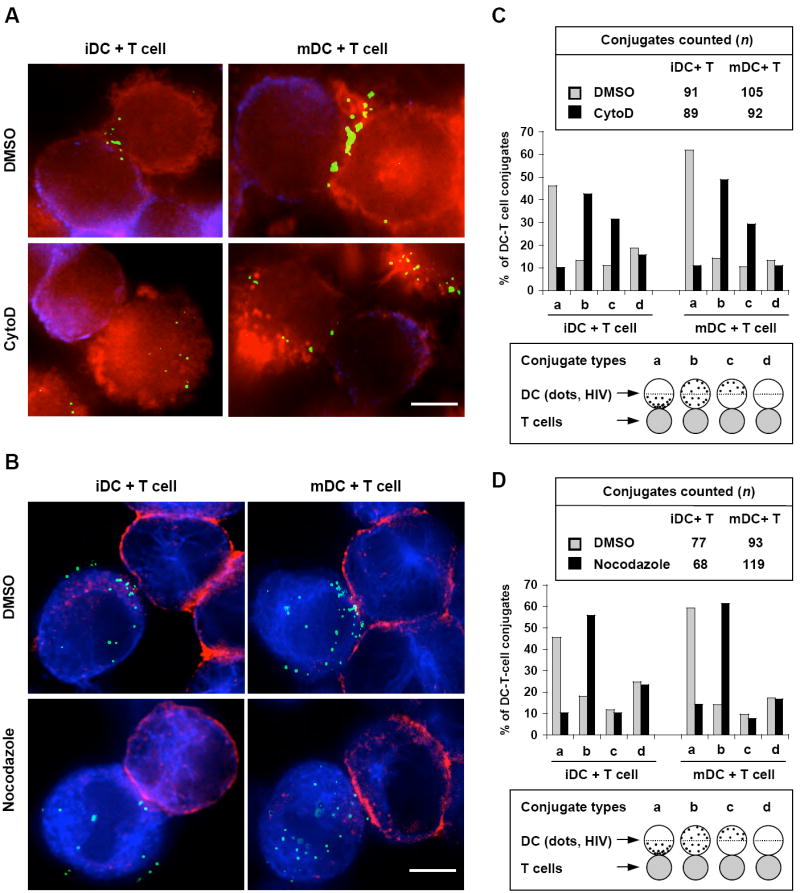
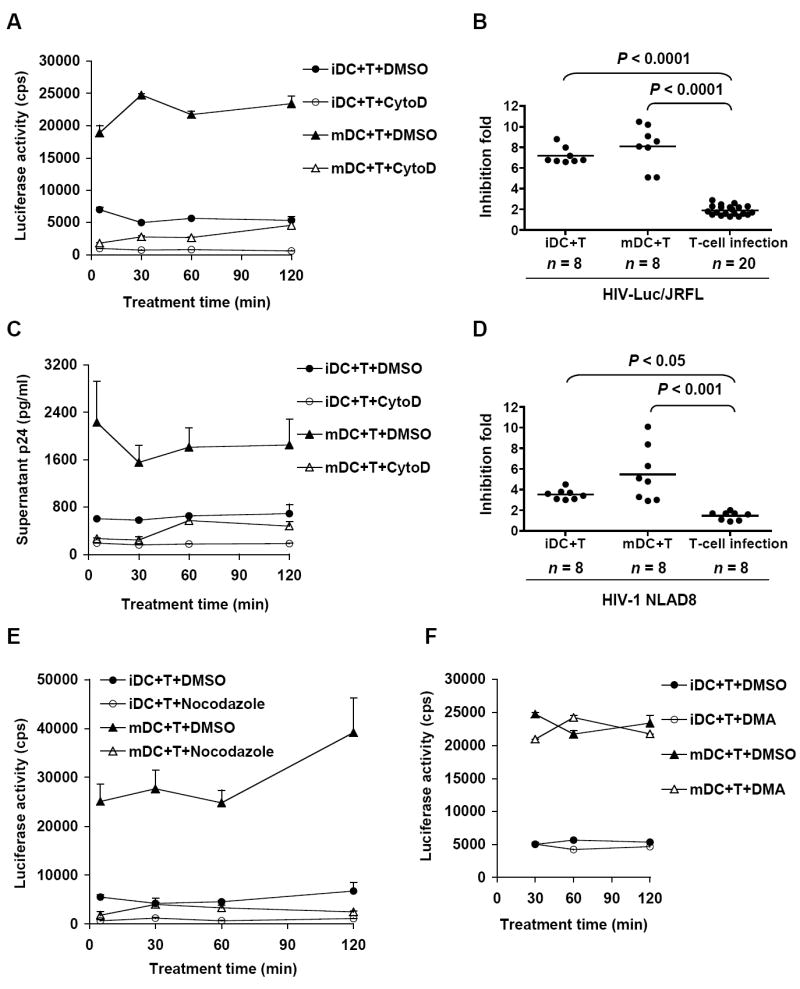
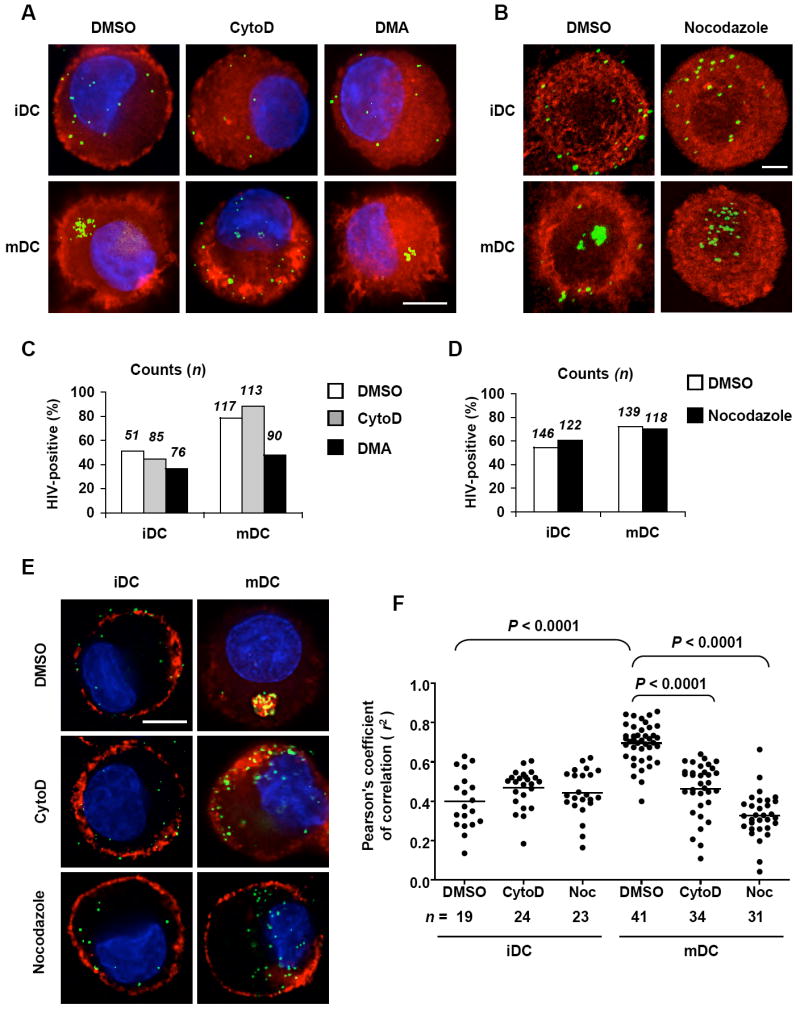
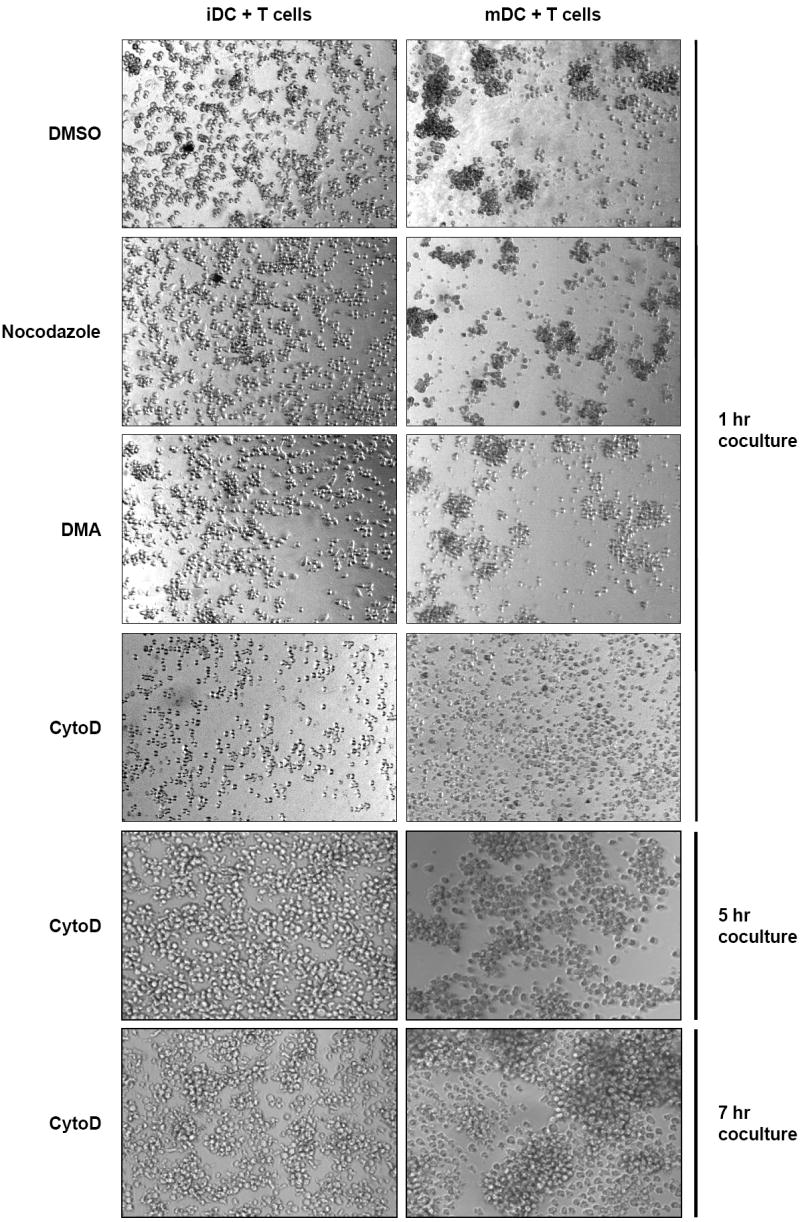
Dendritic cells (DCs) are among the first immune cells to encounter HIV-1 at the initial infection. DCs efficiently transfer HIV-1 to CD4+ T cells via infectious or virological synapses formed between DCs and T cells. Retroviruses exploit the cytoskeletal network to facilitate viral infection and dissemination; however, the role of the cytoskeleton in DC-mediated HIV-1 transmission is unknown. Here, we report that intact cytoskeleton is essential for DC-mediated HIV-1 transmission to CD4+ T cells. We found that macropinocytosis of HIV-1 contributes to DC-mediated HIV-1 endocytosis and transmission. Blocking HIV-1 macropinocytosis and disrupting actin or microtubules in DCs with specific inhibitors significantly prevented DC-mediated HIV-1 trans-infection of CD4+ T cells. Altered HIV-1 trafficking and impaired formation of virological synapses primarily accounted for the inhibition of viral transmission by cytoskeletal inhibitors. Our results provide new insights into the mechanisms underlying DC-mediated HIV-1 transmission to CD4+ T cells via the cytoskeletal network.
树突状细胞(DCs)是在初次感染时最早接触HIV-1的免疫细胞之一。DCs通过DCs与T细胞之间形成的感染性或病毒学突触,有效地将HIV-1传递给CD4+ T细胞。逆转录病毒利用细胞骨架网络促进病毒感染和传播;然而,细胞骨架在DC介导的HIV-1传播中的作用尚不清楚。在此,我们报告完整的细胞骨架对于DC介导的HIV-1向CD4+ T细胞的传递至关重要。我们发现HIV-1的巨胞饮作用有助于DC介导的HIV-1内吞作用和传递。用特异性抑制剂阻断HIV-1的巨胞饮作用并破坏DCs中的肌动蛋白或微管,可显著阻止DC介导的HIV-1对CD4+ T细胞的转染。HIV-1运输的改变和病毒学突触形成的受损主要是细胞骨架抑制剂抑制病毒传播的原因。我们的结果为DC通过细胞骨架网络介导HIV-1向CD4+ T细胞传递的潜在机制提供了新的见解。