• 文献检索
  • 文档翻译
  • 深度研究
  • 学术资讯
  • Suppr Zotero 插件Zotero 插件
  • 邀请有礼
  • 套餐&价格
  • 历史记录
应用&插件
Suppr Zotero 插件Zotero 插件浏览器插件Mac 客户端Windows 客户端微信小程序
定价
高级版会员购买积分包购买API积分包
服务
文献检索文档翻译深度研究API 文档MCP 服务
关于我们
关于 Suppr公司介绍联系我们用户协议隐私条款
关注我们

Suppr 超能文献

核心技术专利:CN118964589B侵权必究
粤ICP备2023148730 号-1Suppr @ 2026

文献检索

告别复杂PubMed语法,用中文像聊天一样搜索,搜遍4000万医学文献。AI智能推荐,让科研检索更轻松。

立即免费搜索

文件翻译

保留排版,准确专业,支持PDF/Word/PPT等文件格式,支持 12+语言互译。

免费翻译文档

深度研究

AI帮你快速写综述,25分钟生成高质量综述,智能提取关键信息,辅助科研写作。

立即免费体验

动员的造血干细胞产量取决于物种特异性的昼夜节律时间。

Mobilized hematopoietic stem cell yield depends on species-specific circadian timing.

作者信息

Lucas Daniel, Battista Michela, Shi Patricia A, Isola Luis, Frenette Paul S

出版信息

Cell Stem Cell. 2008 Oct 9;3(4):364-6. doi: 10.1016/j.stem.2008.09.004.

DOI:10.1016/j.stem.2008.09.004
PMID:18940728
原文链接:https://pmc.ncbi.nlm.nih.gov/articles/PMC4089094/
Abstract

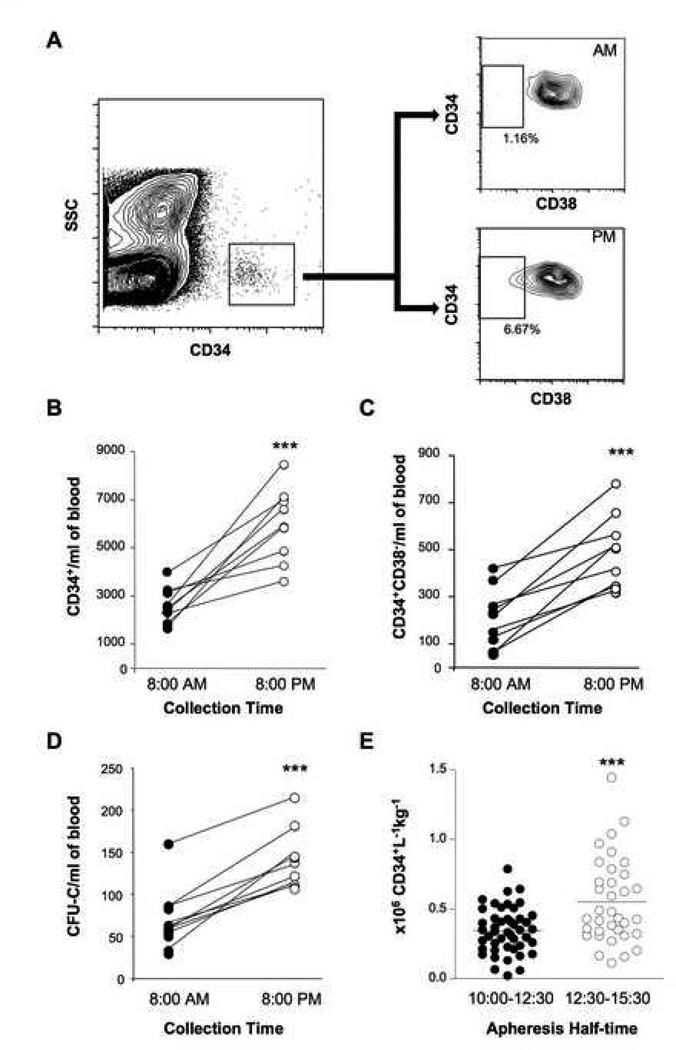
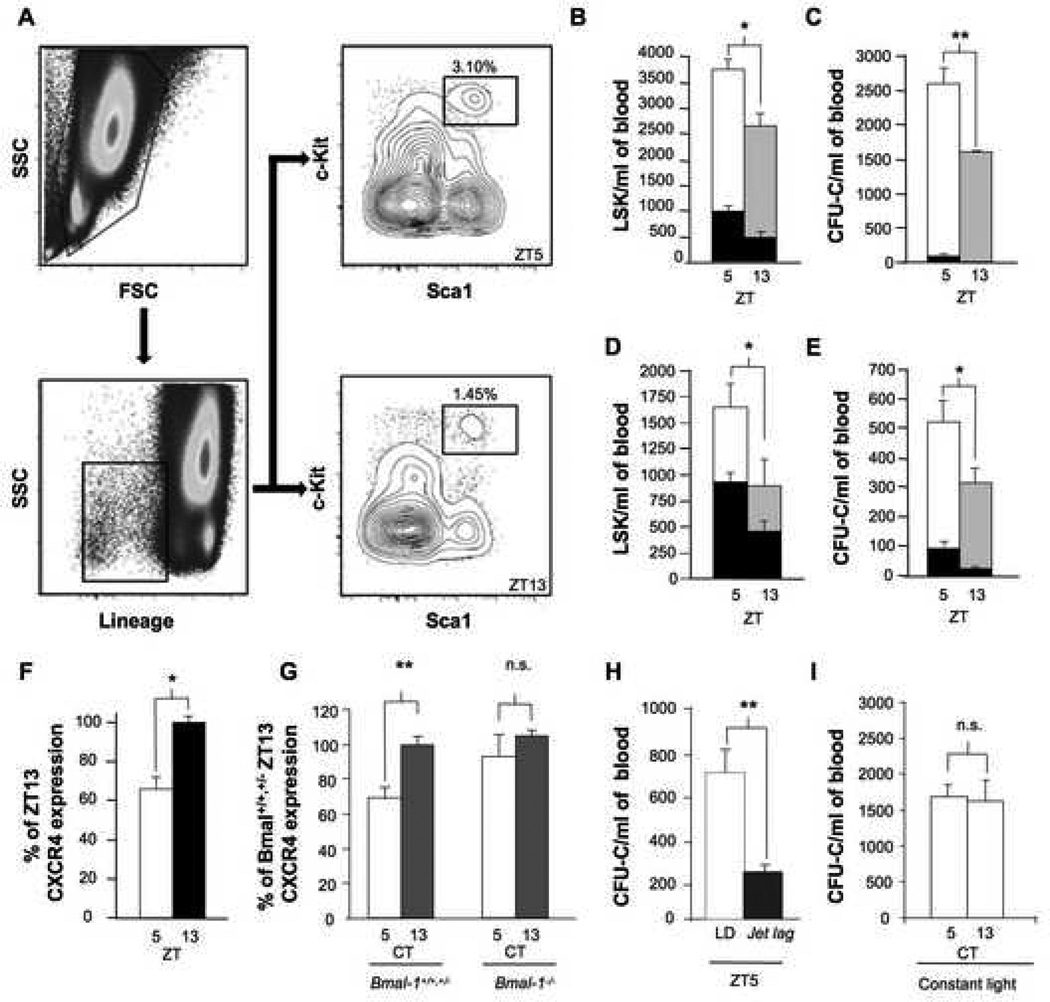
Endogenous rhythmicity likely evolved as a mechanism allowing organisms to anticipate predictable daily changes in the environment (Rutter et al., 2002). Under homeostasis, murine hematopoietic stem cell (HSC) egress is orchestrated by rhythmic beta 3 adrenergic signals delivered by the sympathetic nervous system (SNS) that regulate Cxcl12 expression in stromal cells (Mendez-Ferrer et al., 2008). Here, we show that CXCR4 is also regulated under circadian control whose rhythm is synchronized with its ligand, CXCL12, to optimize HSC trafficking. These circadian oscillations are inverted in humans compared to the mouse and continue to influence the yield even when stem cell mobilization is enforced. Our results suggest that the human HSC yield for clinical transplantation might be significantly greater if patients were harvested during the evening compared to the morning.

摘要

内源性节律可能是作为一种机制进化而来的,该机制使生物体能够预测环境中可预测的每日变化(Rutter等人,2002年)。在稳态下,小鼠造血干细胞(HSC)的流出由交感神经系统(SNS)传递的节律性β3肾上腺素能信号精心安排,该信号调节基质细胞中Cxcl12的表达(Mendez-Ferrer等人,2008年)。在这里,我们表明CXCR4也受昼夜节律控制,其节律与其配体CXCL12同步,以优化HSC运输。与小鼠相比,人类的这些昼夜节律振荡是相反的,并且即使在强制进行干细胞动员时,这些节律仍会影响产量。我们的结果表明,如果在晚上而不是早上采集患者的样本,那么用于临床移植的人类HSC产量可能会显著更高。
https://cdn.ncbi.nlm.nih.gov/pmc/blobs/9694/4089094/3f090c1561e9/nihms74263f2.jpg
https://cdn.ncbi.nlm.nih.gov/pmc/blobs/9694/4089094/e8fb705b4147/nihms74263f1.jpg
https://cdn.ncbi.nlm.nih.gov/pmc/blobs/9694/4089094/3f090c1561e9/nihms74263f2.jpg
https://cdn.ncbi.nlm.nih.gov/pmc/blobs/9694/4089094/e8fb705b4147/nihms74263f1.jpg
https://cdn.ncbi.nlm.nih.gov/pmc/blobs/9694/4089094/3f090c1561e9/nihms74263f2.jpg

相似文献

1
Mobilized hematopoietic stem cell yield depends on species-specific circadian timing.动员的造血干细胞产量取决于物种特异性的昼夜节律时间。
Cell Stem Cell. 2008 Oct 9;3(4):364-6. doi: 10.1016/j.stem.2008.09.004.
2
Sphingosine-1-phosphate facilitates trafficking of hematopoietic stem cells and their mobilization by CXCR4 antagonists in mice.鞘氨醇-1-磷酸促进造血干细胞的运输及其通过 CXCR4 拮抗剂在小鼠中的动员。
Blood. 2012 Jan 19;119(3):707-16. doi: 10.1182/blood-2011-04-348904. Epub 2011 Nov 2.
3
Cytokines and hematopoietic stem cell mobilization.细胞因子与造血干细胞动员
J Cell Biochem. 2006 Oct 15;99(3):690-705. doi: 10.1002/jcb.21043.
4
CXCR4 and mobilization of hematopoietic precursors.CXCR4与造血前体细胞的动员
Methods Enzymol. 2009;460:57-90. doi: 10.1016/S0076-6879(09)05203-3.
5
Plerixafor, a CXCR4 antagonist for the mobilization of hematopoietic stem cells.普乐沙福,一种用于动员造血干细胞的CXCR4拮抗剂。
Expert Opin Biol Ther. 2008 Nov;8(11):1797-804. doi: 10.1517/14712598.8.11.1797.
6
Rapid mobilization of murine and human hematopoietic stem and progenitor cells with AMD3100, a CXCR4 antagonist.使用CXCR4拮抗剂AMD3100快速动员小鼠和人类造血干细胞及祖细胞。
J Exp Med. 2005 Apr 18;201(8):1307-18. doi: 10.1084/jem.20041385.
7
Circadian rhythms, adrenergic hormones and trafficking of hematopoietic stem cells.昼夜节律、肾上腺素能激素与造血干细胞的运输。
Expert Opin Ther Targets. 2010 May;14(5):567-75. doi: 10.1517/14728221003769887.
8
Haematopoietic stem cell release is regulated by circadian oscillations.造血干细胞的释放受昼夜节律振荡的调节。
Nature. 2008 Mar 27;452(7186):442-7. doi: 10.1038/nature06685. Epub 2008 Feb 6.
9
Cooperation of beta(2)- and beta(3)-adrenergic receptors in hematopoietic progenitor cell mobilization.β2-和β3-肾上腺素能受体在造血祖细胞动员中的协同作用。
Ann N Y Acad Sci. 2010 Mar;1192:139-44. doi: 10.1111/j.1749-6632.2010.05390.x.
10
Trafficking of stem cells.干细胞的运输
Methods Mol Biol. 2011;750:3-24. doi: 10.1007/978-1-61779-145-1_1.

引用本文的文献

1
Bone Marrow Niche Aging: Are Adipocytes Detrimental Cells in the Bone Marrow?骨髓生态位衰老:脂肪细胞是骨髓中的有害细胞吗?
Cells. 2025 May 30;14(11):814. doi: 10.3390/cells14110814.
2
The mutual impacts of stem cells and sleep: opportunities for improved stem cell therapy.干细胞与睡眠的相互影响:改善干细胞治疗的机遇
Stem Cell Res Ther. 2025 Mar 29;16(1):157. doi: 10.1186/s13287-025-04235-3.
3
, or spaceflight-induced thymic involution.或太空飞行引起的胸腺退化。

本文引用的文献

1
Haematopoietic stem cell release is regulated by circadian oscillations.造血干细胞的释放受昼夜节律振荡的调节。
Nature. 2008 Mar 27;452(7186):442-7. doi: 10.1038/nature06685. Epub 2008 Feb 6.
2
Blood stem cell mobilization and collection in patients with lymphoproliferative diseases: practical issues.淋巴增殖性疾病患者的造血干细胞动员与采集:实际问题
Eur J Haematol. 2008 Apr;80(4):287-95. doi: 10.1111/j.1600-0609.2007.01026.x. Epub 2007 Dec 21.
3
Signals from the sympathetic nervous system regulate hematopoietic stem cell egress from bone marrow.
Front Immunol. 2025 Jan 24;15:1534444. doi: 10.3389/fimmu.2024.1534444. eCollection 2024.
4
Nonselective β-Adrenergic Receptor Inhibitors Impair Hematopoietic Regeneration in Mice and Humans after Hematopoietic Cell Transplants.非选择性β-肾上腺素能受体抑制剂会损害小鼠和人类造血细胞移植后的造血再生。
Cancer Discov. 2025 Apr 2;15(4):748-766. doi: 10.1158/2159-8290.CD-24-0719.
5
Sleep and Immune System Crosstalk: Implications for Inflammatory Homeostasis and Disease Pathogenesis.睡眠与免疫系统的相互作用:对炎症稳态和疾病发病机制的影响。
Ann Neurosci. 2024 Sep 20:09727531241275347. doi: 10.1177/09727531241275347.
6
Systemic and local regulation of hematopoietic homeostasis in health and disease.系统和局部调节造血稳态在健康和疾病中的作用。
Nat Cardiovasc Res. 2024 Jun;3(6):651-665. doi: 10.1038/s44161-024-00482-4. Epub 2024 Jun 12.
7
Role of Neurotransmitters in Steady State Hematopoiesis, Aging, and Leukemia.神经递质在稳态造血、衰老和白血病中的作用。
Stem Cell Rev Rep. 2025 Jan;21(1):2-27. doi: 10.1007/s12015-024-10761-z. Epub 2024 Jul 8.
8
Circadian Control of the Response of Macrophages to Plasmodium Spp.-Infected Red Blood Cells.生物钟对巨噬细胞对感染疟原虫的红细胞反应的控制。
Immunohorizons. 2024 Jun 1;8(6):442-456. doi: 10.4049/immunohorizons.2400021.
9
Made to order: emergency myelopoiesis and demand-adapted innate immune cell production.定制化:应急性髓系造血与需求适应型固有免疫细胞生成。
Nat Rev Immunol. 2024 Aug;24(8):596-613. doi: 10.1038/s41577-024-00998-7. Epub 2024 Mar 11.
10
Chrono-tailored drug delivery systems: recent advances and future directions.时间定制药物传递系统:最新进展和未来方向。
Drug Deliv Transl Res. 2024 Jul;14(7):1756-1775. doi: 10.1007/s13346-024-01539-4. Epub 2024 Feb 28.
来自交感神经系统的信号调节造血干细胞从骨髓中流出。
Cell. 2006 Jan 27;124(2):407-21. doi: 10.1016/j.cell.2005.10.041.
4
Diurnal variation of circulating human myeloid progenitor cells.循环人髓系祖细胞的昼夜变化。
Exp Hematol. 1980 Aug;8(7):954-60.
5
SLAM family receptors distinguish hematopoietic stem and progenitor cells and reveal endothelial niches for stem cells.信号淋巴细胞激活分子家族受体可区分造血干细胞和祖细胞,并揭示干细胞的内皮龛位。
Cell. 2005 Jul 1;121(7):1109-21. doi: 10.1016/j.cell.2005.05.026.
6
Rapid mobilization of murine and human hematopoietic stem and progenitor cells with AMD3100, a CXCR4 antagonist.使用CXCR4拮抗剂AMD3100快速动员小鼠和人类造血干细胞及祖细胞。
J Exp Med. 2005 Apr 18;201(8):1307-18. doi: 10.1084/jem.20041385.
7
Circadian variations in expression of the trkB receptor in adult rat hippocampus.成年大鼠海马体中trkB受体表达的昼夜节律变化。
Brain Res. 2003 Dec 19;994(1):67-72. doi: 10.1016/j.brainres.2003.09.018.
8
The biological clock tunes the organs of the body: timing by hormones and the autonomic nervous system.生物钟调节身体各器官:通过激素和自主神经系统来计时。
J Endocrinol. 2003 Apr;177(1):17-26. doi: 10.1677/joe.0.1770017.
9
Temporal expression of seven clock genes in the suprachiasmatic nucleus and the pars tuberalis of the sheep: evidence for an internal coincidence timer.绵羊视交叉上核和结节部中七个生物钟基因的时序表达:内源性巧合计时器的证据
Proc Natl Acad Sci U S A. 2002 Oct 15;99(21):13890-5. doi: 10.1073/pnas.212517599. Epub 2002 Oct 8.
10
Metabolism and the control of circadian rhythms.新陈代谢与昼夜节律的调控
Annu Rev Biochem. 2002;71:307-31. doi: 10.1146/annurev.biochem.71.090501.142857. Epub 2001 Nov 9.