Engler Carola, Kandzia Romy, Marillonnet Sylvestre
Icon Genetics GmbH, Biozentrum Halle, Halle, Germany.
PLoS One. 2008;3(11):e3647. doi: 10.1371/journal.pone.0003647. Epub 2008 Nov 5.
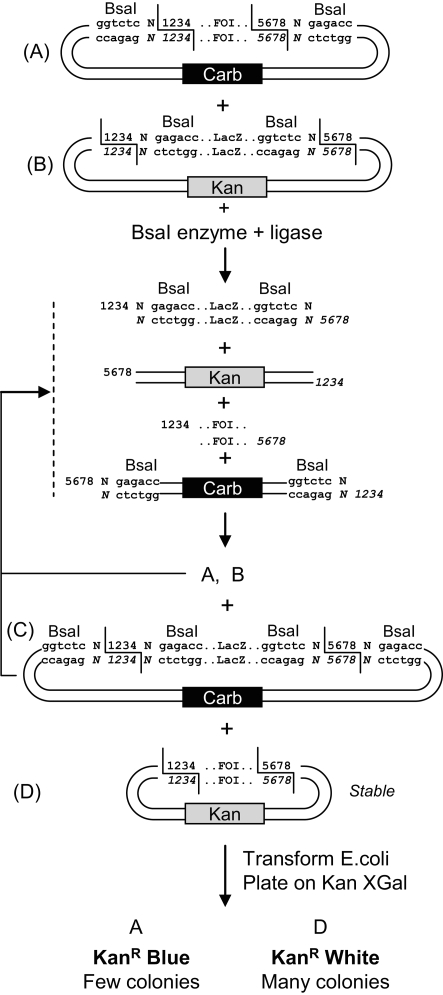
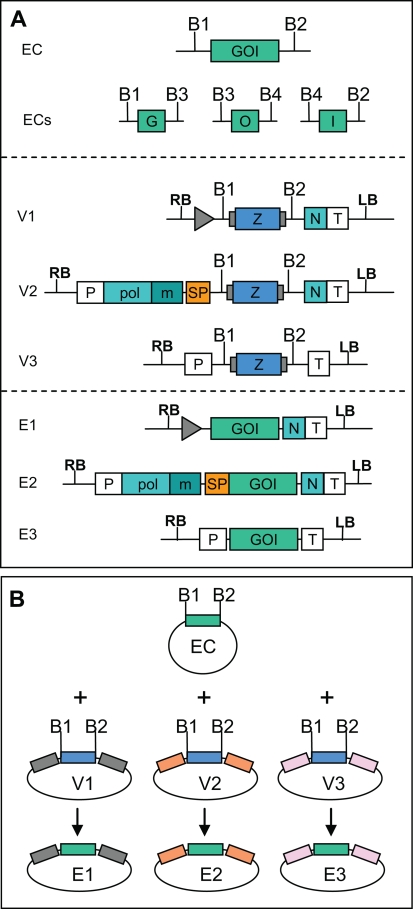
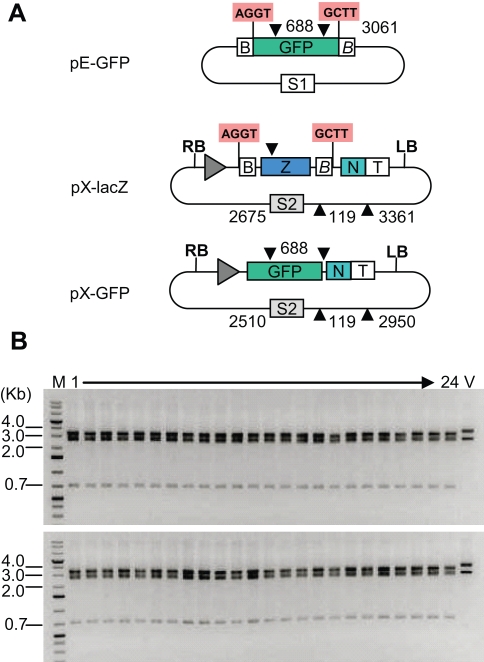
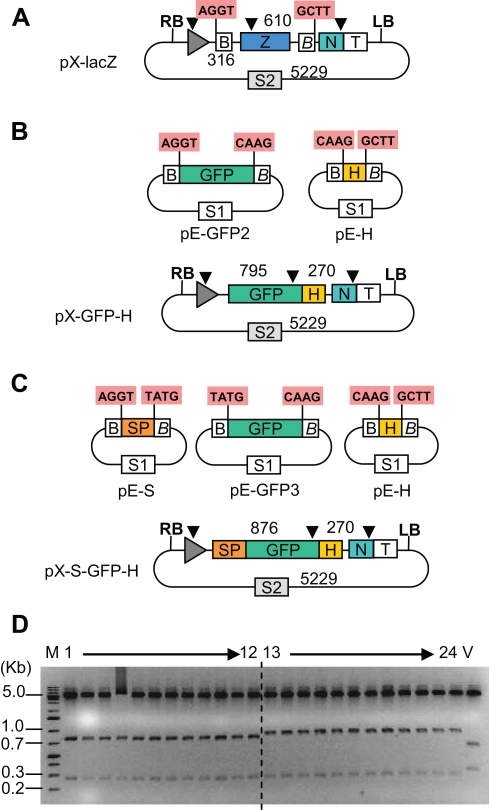
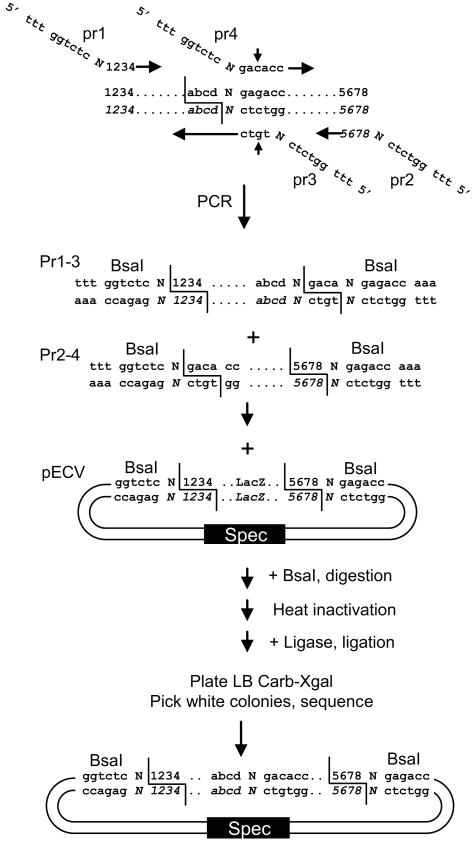
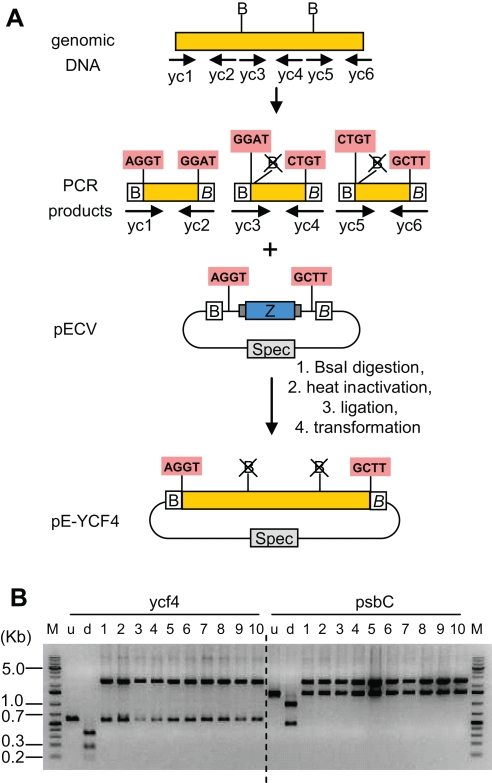
Current cloning technologies based on site-specific recombination are efficient, simple to use, and flexible, but have the drawback of leaving recombination site sequences in the final construct, adding an extra 8 to 13 amino acids to the expressed protein. We have devised a simple and rapid subcloning strategy to transfer any DNA fragment of interest from an entry clone into an expression vector, without this shortcoming. The strategy is based on the use of type IIs restriction enzymes, which cut outside of their recognition sequence. With proper design of the cleavage sites, two fragments cut by type IIs restriction enzymes can be ligated into a product lacking the original restriction site. Based on this property, a cloning strategy called 'Golden Gate' cloning was devised that allows to obtain in one tube and one step close to one hundred percent correct recombinant plasmids after just a 5 minute restriction-ligation. This method is therefore as efficient as currently used recombination-based cloning technologies but yields recombinant plasmids that do not contain unwanted sequences in the final construct, thus providing precision for this fundamental process of genetic manipulation.
当前基于位点特异性重组的克隆技术高效、易用且灵活,但存在在最终构建体中留下重组位点序列的缺点,会给表达的蛋白质额外增加8到13个氨基酸。我们设计了一种简单快速的亚克隆策略,可将任何感兴趣的DNA片段从入门克隆转移到表达载体中,而不存在此缺点。该策略基于使用IIs型限制性内切酶,其在识别序列之外进行切割。通过对切割位点进行适当设计,由IIs型限制性内切酶切割的两个片段可以连接成一个缺少原始限制位点的产物。基于这一特性,设计了一种称为“金门”克隆的克隆策略,只需进行5分钟的限制性连接,就能在一管一步操作中获得接近100%正确的重组质粒。因此,该方法与目前使用的基于重组的克隆技术一样高效,但产生的重组质粒在最终构建体中不包含不需要的序列,从而为这一基因操作的基本过程提供了精确性。